
Selling or buying a vehicle in Wisconsin? The title fee is $69.50 — one of the higher fees in the country — and the seller should file a notice of sale with WisDOT within 30 days.
This free template is formatted for Wisconsin’s requirements and works alongside Form MV1 and the signed title at any WisDOT DMV partner location.
Click Get This Template below to open it in Google Docs, then click Use Template to save a copy to your Drive.
For templates for all 50 states, visit the Motor Vehicle Bill of Sale Templates →
On this page:
- What Is a Wisconsin Motor Vehicle Bill of Sale?
- Is a Bill of Sale Required in Wisconsin?
- Wisconsin-Specific Requirements
- Free Wisconsin Motor Vehicle Bill of Sale Template
- How to Fill Out the Template
- How to Transfer a Car Title in Wisconsin
- Frequently Asked Questions
What Is a Wisconsin Motor Vehicle Bill of Sale?
A Wisconsin motor vehicle bill of sale is a written record of a private vehicle sale.
Wisconsin requires a bill of sale as part of the title transfer process — it documents the purchase price and transaction details. The buyer submits it alongside the signed original title and Form MV1 (Title/License Plate Application) to a WisDOT DMV partner location.
Is a Bill of Sale Required in Wisconsin?
Yes. Wisconsin requires a bill of sale as part of the documentation needed to transfer a vehicle title. It is submitted to the DMV along with the signed original title and Form MV1. The purchase price on the bill of sale is used to calculate state and local sales tax.
Wisconsin-Specific Requirements
1. Both Parties Sign the Title
All owners listed on the front of the original title must print and sign their name and date the document on the back. All buyers who wish to be listed on the new title must also print and sign their name and date the document. The odometer reading must be filled in with both parties witnessing its accuracy — an altered odometer reading makes the title and the sale invalid.
2. Only Buyer Completes Form MV1
Only the new owner (buyer) needs to fill out Form MV1 (Title/License Plate Application). The seller does not complete this form. The buyer must ensure the VIN on the application matches the VIN on the original title exactly — if a mistake is made, start over with a new form.
3. Title Fee: $69.50
The Wisconsin title fee is $69.50 — one of the highest title fees in the country. State sales tax is charged on the purchase price minus any trade-in value. Additional local sales tax may apply depending on county or city. Payment is made by check or money order payable to the Registration Fee Trust (credit cards are accepted online but not for in-person title transfers).
4. Seller: Notice of Sale Within 30 Days
The seller should file a notice of sale with WisDOT within 30 days of the sale. This can be done through the WisDOT website at wisconsindot.gov. Filing protects the seller from liability for violations and other charges after the sale date.
5. Online Transfer Option (eMV Public)
Wisconsin offers an online title transfer option through eMV Public for eligible Wisconsin-titled vehicles. The buyer can apply for title and registration online if the vehicle has a Wisconsin title with no active lien. This eliminates a DMV visit for qualifying transactions.
6. Odometer Disclosure
The odometer reading must be completed on the back of the title by both parties. A separate Vehicle Transfer and Odometer Mileage Statement (Form MV2488) may be needed for certain transactions. Do not alter the odometer reading — any alteration voids the title and the sale.
7. Notarization
Wisconsin does not require notarization for a standard private party vehicle bill of sale. Notarization is optional but recommended for high-value sales. If the buyer is under 18 purchasing their first car, a parent or guardian must sign the bottom of the MV1 application and have their signature notarized.
Free Wisconsin Motor Vehicle Bill of Sale Template
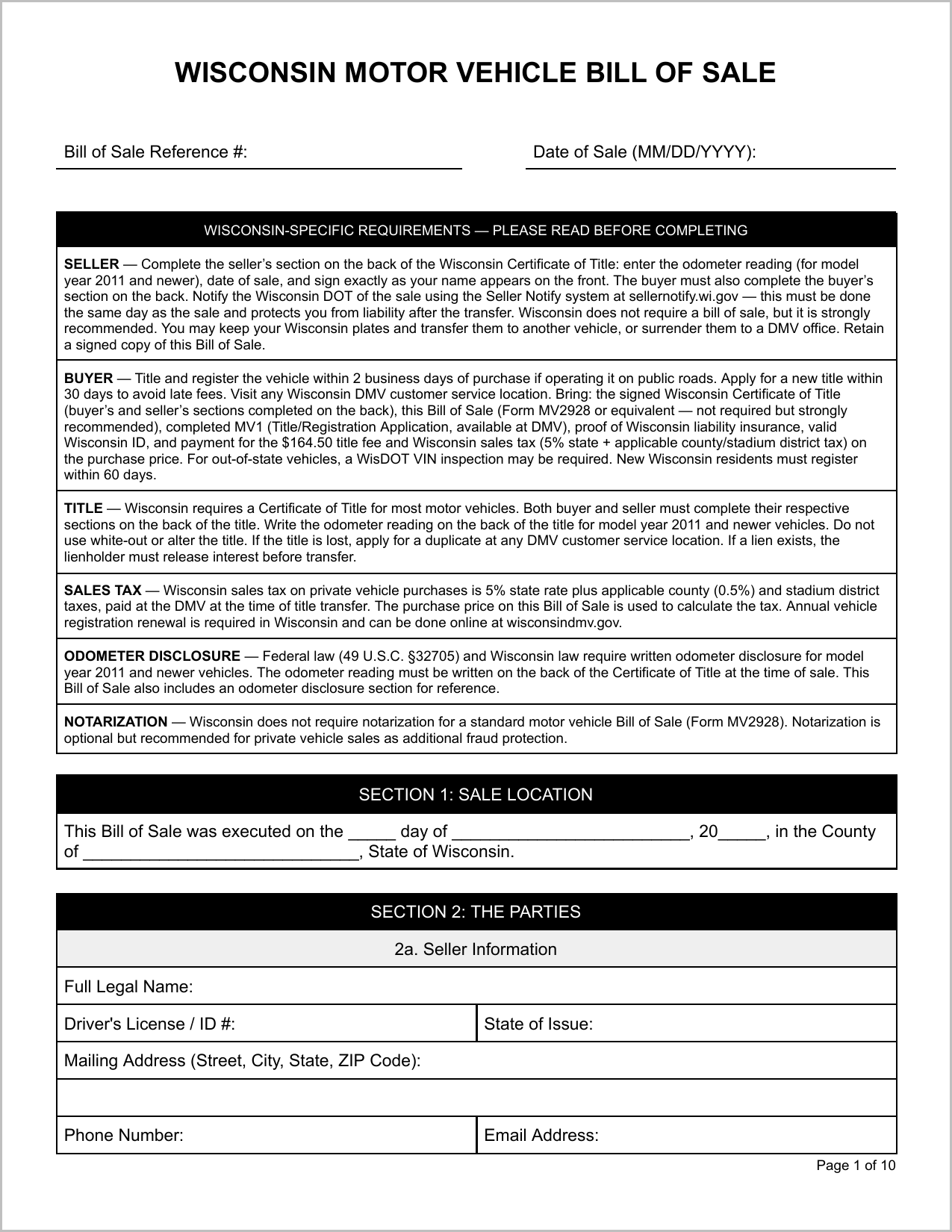
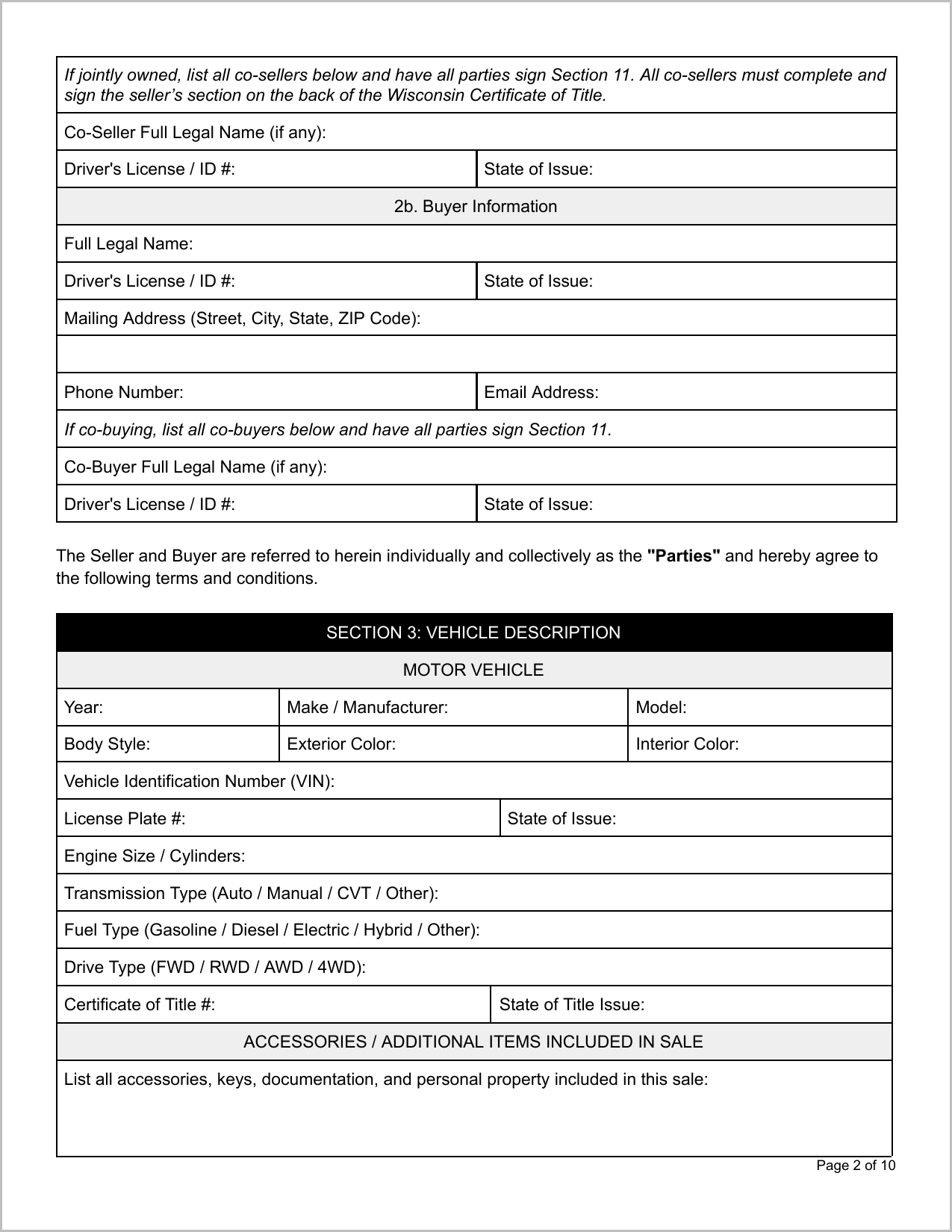
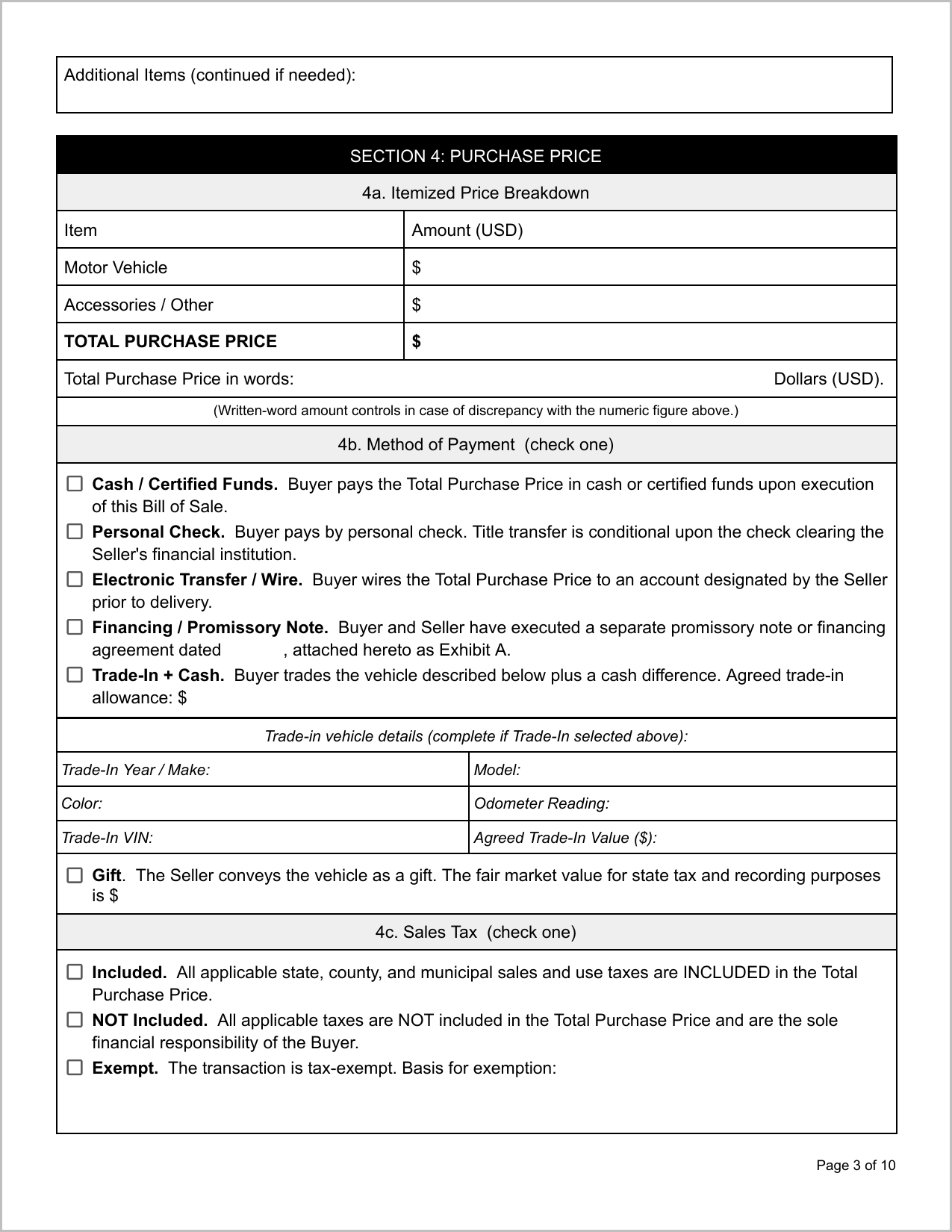
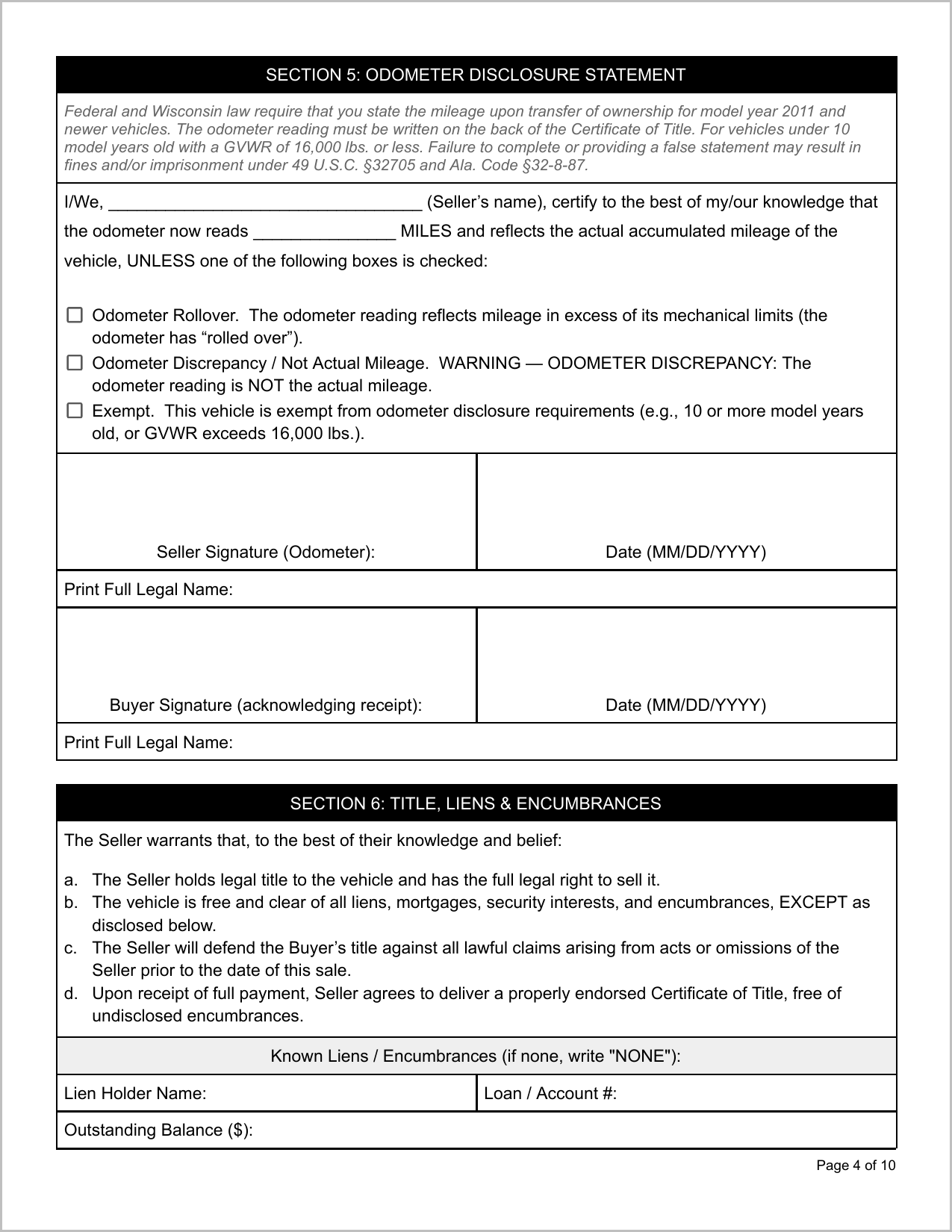
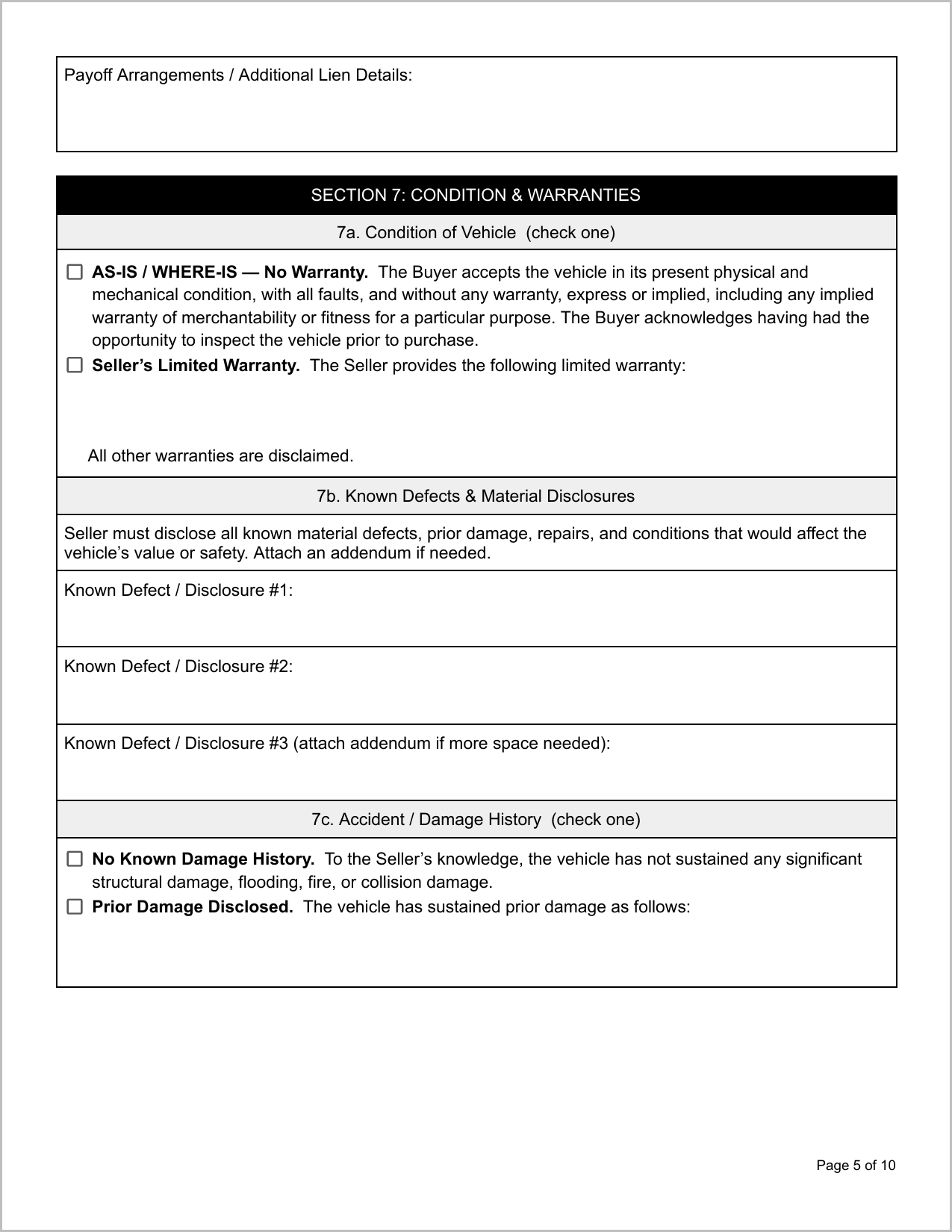
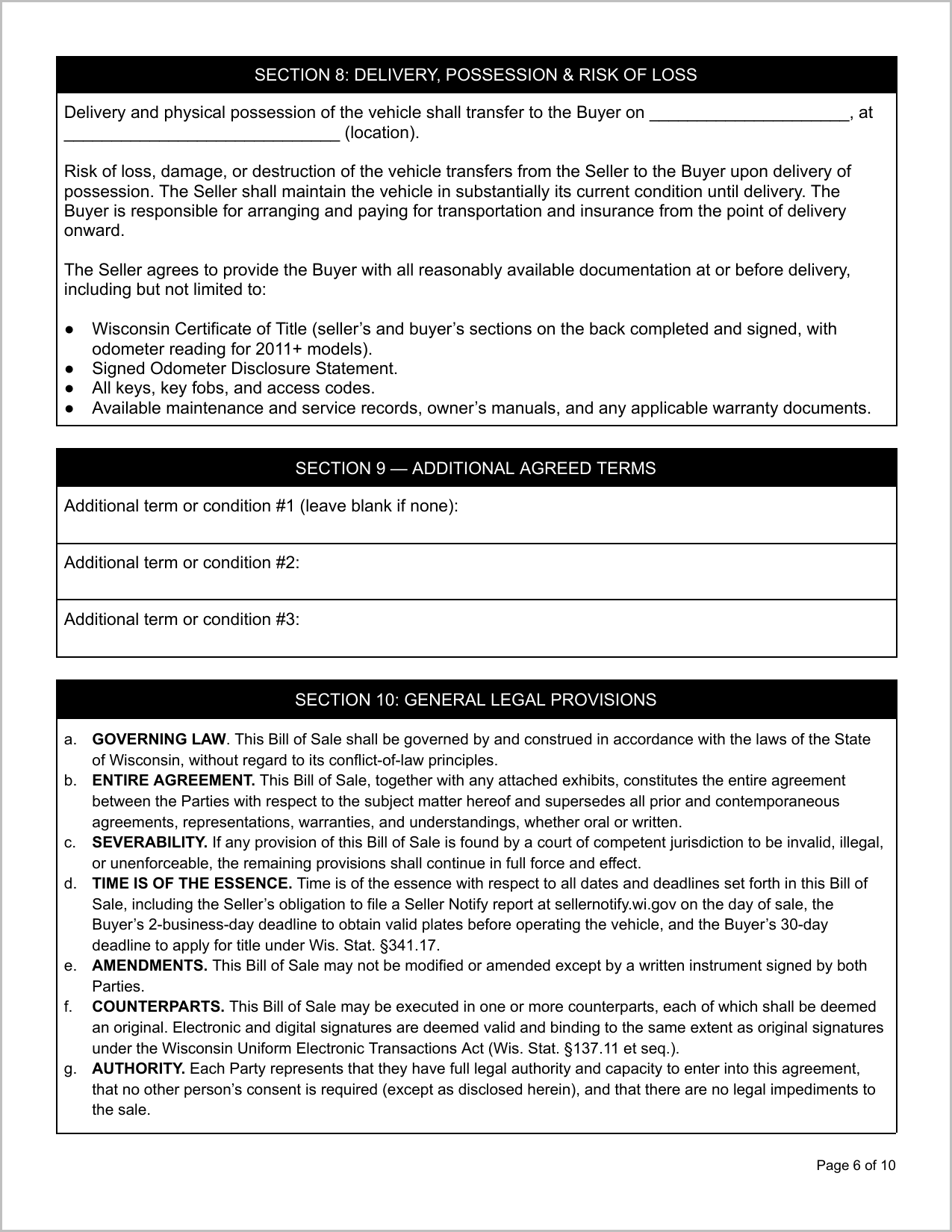
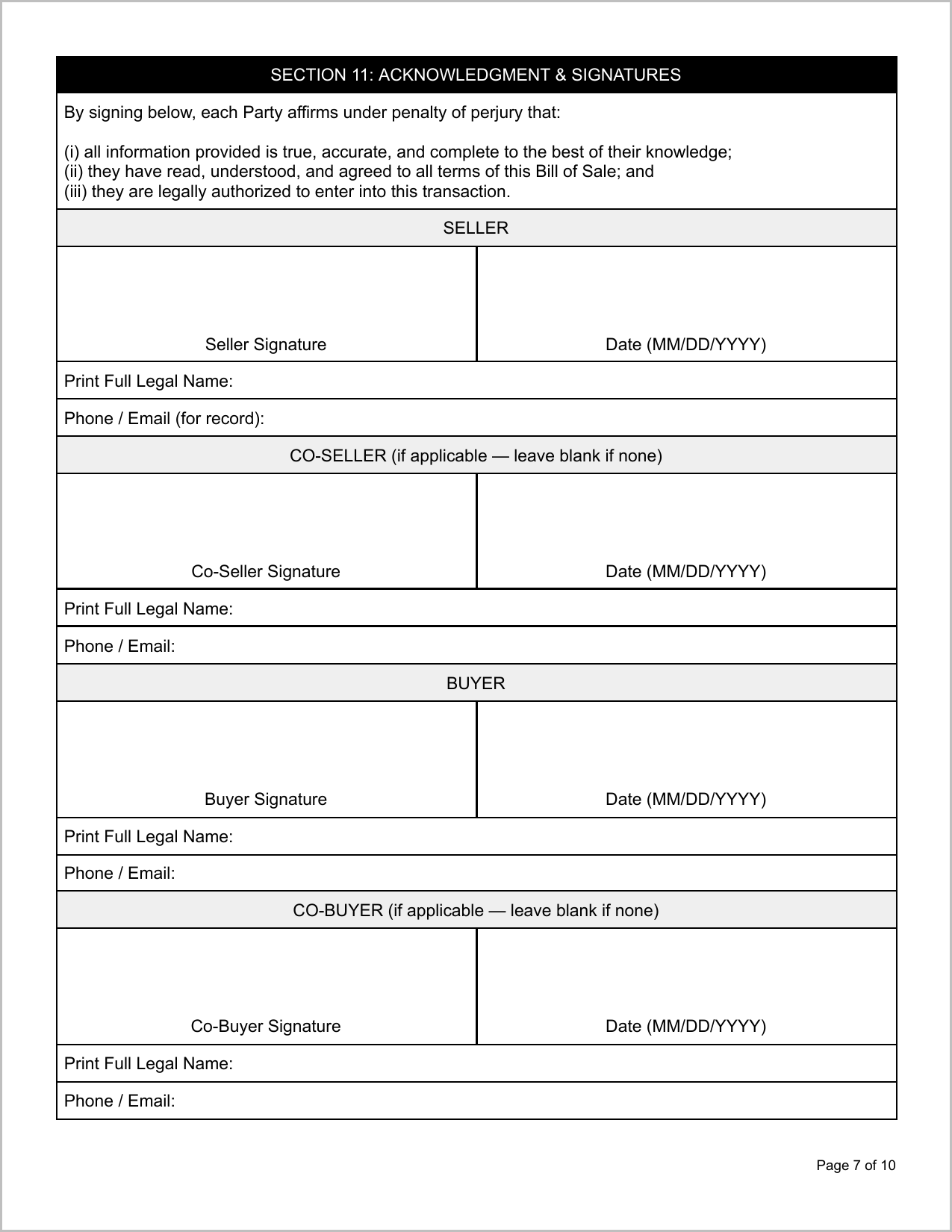
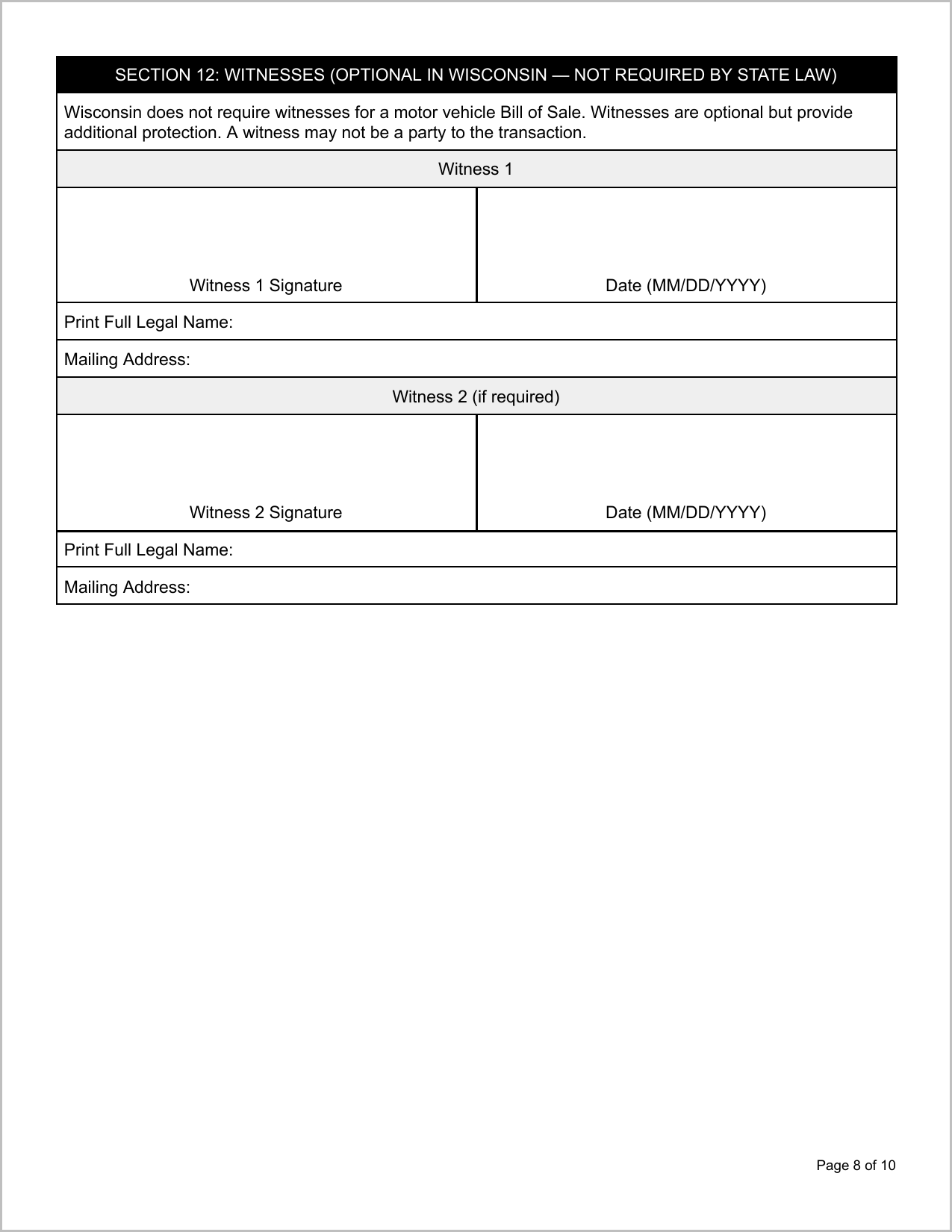
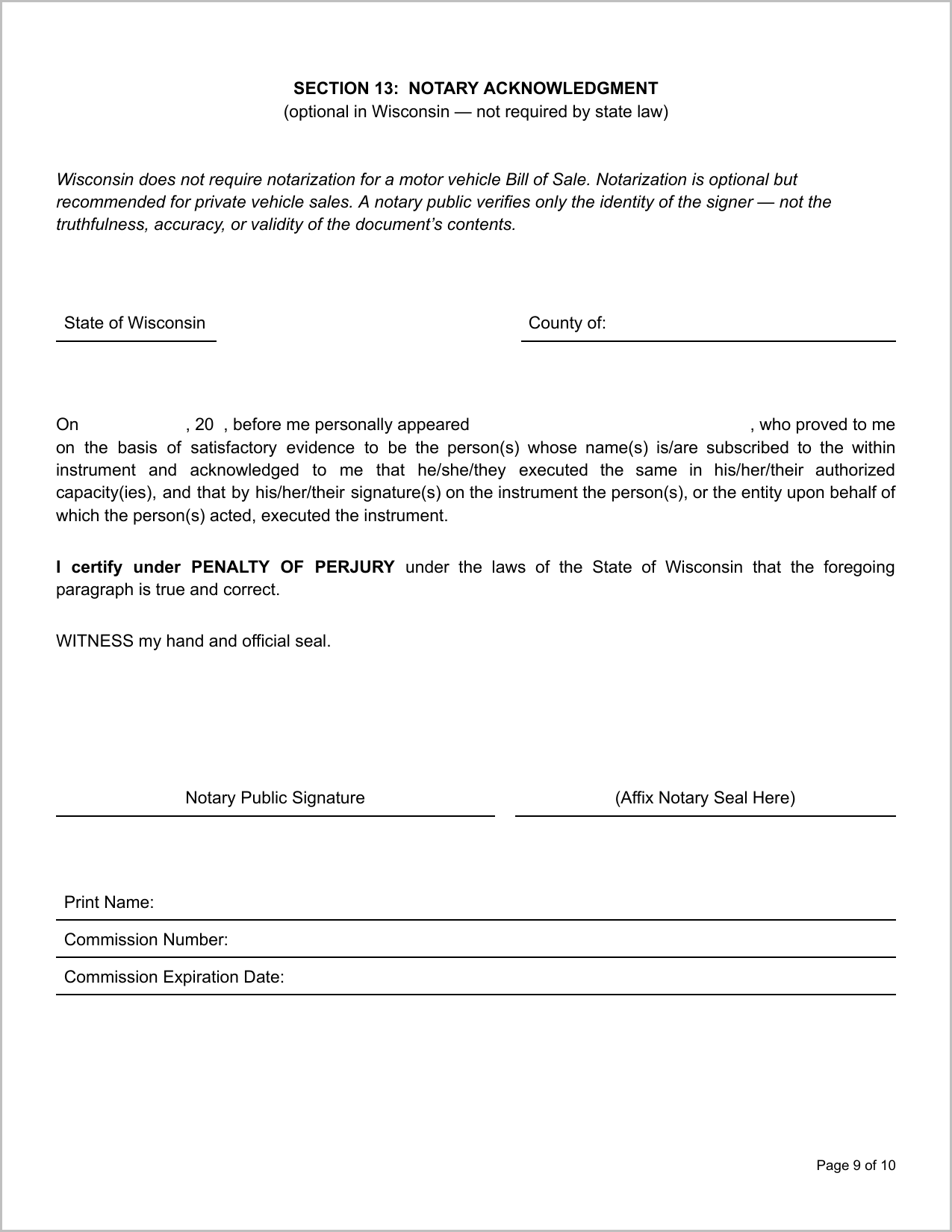
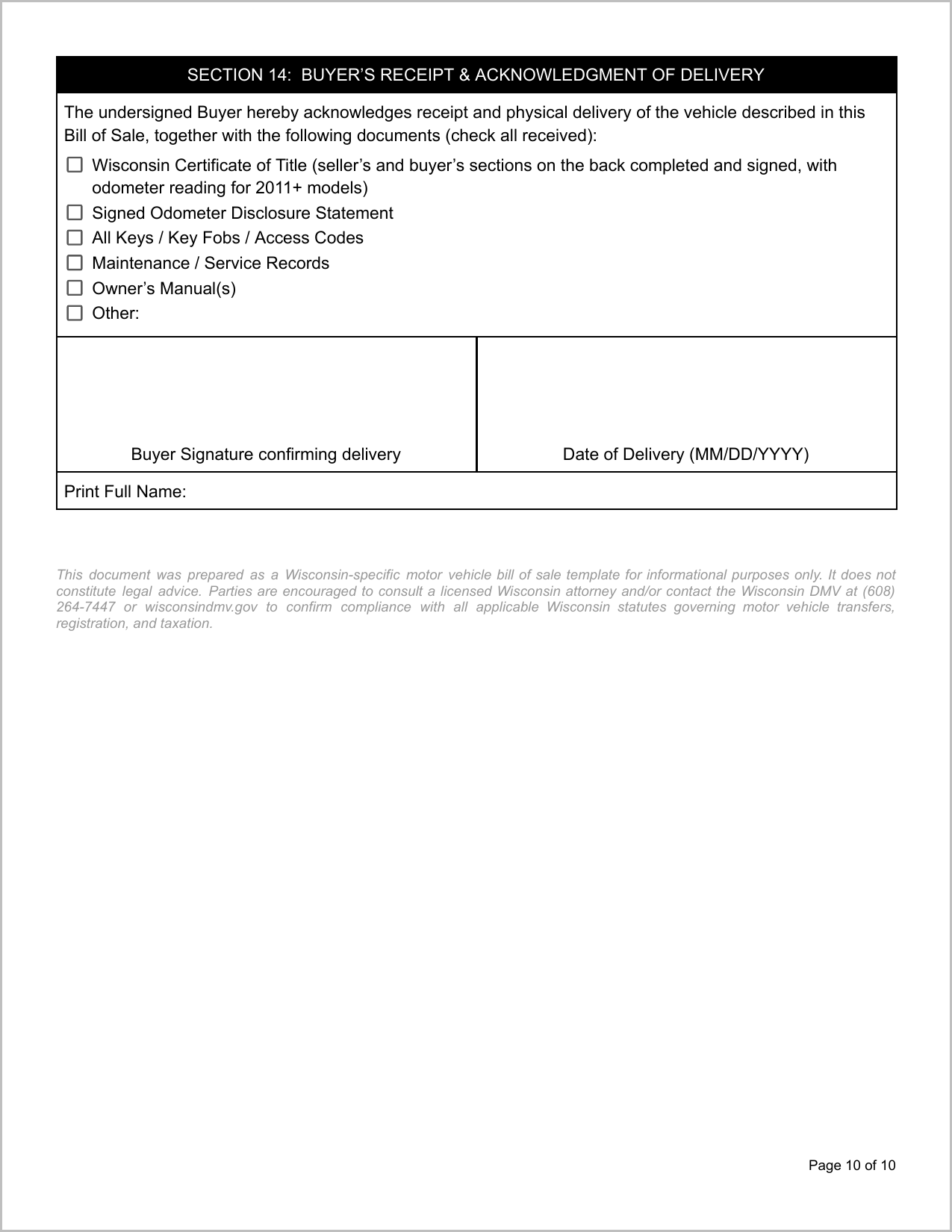
This template opens in Google Docs. Click Use Template to save a copy to your Drive, fill it out digitally, or print and complete by hand.
How to Fill Out the Template
Enter the seller’s name exactly as it appears on the Certificate of Title. Enter the buyer’s name exactly as they want it on the new title.
In Section 3, copy the VIN character by character — it must match the VIN on the title exactly. Enter the full agreed purchase price in Section 4 — Wisconsin calculates state and local sales tax on this figure.
Both parties sign Section 11. Also ensure the odometer reading is completed on the back of the title with both parties witnessing it.
For a complete field-by-field walkthrough of every section, see: How to Fill Out a Motor Vehicle Bill of Sale →
How to Transfer a Car Title in Wisconsin
For the Seller
Print and sign your name on the back of the title. Complete the odometer reading with both parties witnessing. File a notice of sale with WisDOT within 30 days at wisconsindot.gov.
For the Buyer
Submit the signed original title, this bill of sale, completed Form MV1, and payment for the $69.50 title fee, state and local sales tax, and registration fees to any WisDOT DMV partner location or by mail to WisDOT, P.O. Box 7949, Madison WI 53707-7949. Alternatively, complete the transfer online through eMV Public for eligible Wisconsin-titled vehicles.
Lost Title
Apply for a replacement title using Form MV2119 before proceeding. Contact WisDOT at wisconsindot.gov/dmv.
Frequently Asked Questions
The Wisconsin title fee is $69.50 — one of the highest title fees in the country. State sales tax is also charged on the purchase price minus any trade-in value, plus additional local sales tax depending on your county or city. Payment by check or money order payable to the Registration Fee Trust.
Yes, for eligible Wisconsin-titled vehicles with no active lien. Wisconsin’s eMV Public online system allows the buyer to apply for title and registration online without a DMV visit. Access it through the MV1 Online Application Guide at wisconsindot.gov.
Altering the odometer reading makes both the title and the sale invalid. Do not change or cross out the odometer reading — if an error is made, both parties must complete a corrected title or start the process over. Odometer fraud is also a federal crime.
No. Only the buyer (new owner) completes Form MV1. The seller signs the back of the original title and files the notice of sale with WisDOT within 30 days. The seller does not complete the MV1 application.
Not for standard adult private party sales. Notarization is required when the buyer is under 18 purchasing their first car — a parent or guardian must sign the bottom of the MV1 application and have their signature notarized. For all other sales, notarization is optional.
Yes. Wisconsin does not require a specific state-issued bill of sale form. Any bill of sale with the seller and buyer information, vehicle description, VIN, purchase price, date of sale, and both parties’ signatures is acceptable alongside the signed original title and Form MV1.
This template and all information on this page are provided for informational purposes only and do not constitute legal advice. Contact WisDOT at wisconsindot.gov/dmv to confirm current requirements before completing your transaction.