
Selling or buying a vehicle in North Carolina? The seller’s signature on the title must be notarized — and the buyer has just 28 days to complete the title transfer at an NCDMV office.
This free template is formatted for North Carolina’s requirements and works alongside the notarized Certificate of Title at any NCDMV license plate agency.
Click Get This Template below to open it in Google Docs, then click Use Template to save a copy to your Drive.
For templates for all 50 states, visit the Motor Vehicle Bill of Sale Templates →
On this page:
- What Is a North Carolina Motor Vehicle Bill of Sale?
- Is a Bill of Sale Required in North Carolina?
- North Carolina-Specific Requirements
- Free North Carolina Motor Vehicle Bill of Sale Template
- How to Fill Out the Template
- How to Transfer a Car Title in North Carolina
- Frequently Asked Questions
What Is a North Carolina Motor Vehicle Bill of Sale?
A North Carolina motor vehicle bill of sale is a written record of a private vehicle sale.
In North Carolina, a bill of sale is not required by state law for private party transfers — the signed and notarized Certificate of Title is the primary ownership document. However, a bill of sale is strongly recommended and useful for verifying the purchase price and protecting both parties.
Is a Bill of Sale Required in North Carolina?
A bill of sale is not legally required for North Carolina private party vehicle transfers — the notarized title assignment is the primary document. However, a bill of sale is needed to verify the purchase price for the highway use tax calculation, and the NCDMV recommends it for all private transactions. North Carolina accepts a handwritten bill of sale on plain paper.
North Carolina-Specific Requirements
1. 28-Day Deadline
The buyer must complete the title transfer within 28 calendar days of notarizing the title or receiving the vehicle — whichever occurs later. A $20 late fee applies after 28 days. After day 60, the NCDMV can block all registration privileges.
2. ⚠️ Notarized Title Required
North Carolina law requires the seller’s signature on the Certificate of Title to be notarized. The Title Application (Form MVR-1) must also be signed and notarized by all owners.
Do not pre-sign the title — bring it unsigned to a notary and sign in their presence. The seller should also protect themselves by completing Form MVR-46F to remove the vehicle from their registration file after the sale.
3. Highway Use Tax: 3%
North Carolina replaced traditional sales tax on vehicles with a 3% Highway Use Tax on the purchase price. The buyer pays this tax at the time of title transfer. Certain family transfers (spouse, parent/child, stepparent/stepchild) are exempt from highway use tax.
4. License Plates Stay with the Seller
North Carolina license plates stay with the seller. Remove your plates before handing over the vehicle. The buyer can purchase a 10-day temporary tag ($10) at any license plate agency to drive home legally on the day of purchase.
5. Seller: File Form MVR-46F
The seller should complete Form MVR-46F to remove the vehicle from their registration file. Without this, if the buyer never completes the transfer, the seller could remain on the hook for toll violations, parking tickets, or other liabilities tied to the vehicle.
6. Insurance Required
North Carolina requires proof of NC liability insurance at the time of title transfer. Insurance agents must submit a Form FS-1 electronically to the NCDMV to verify coverage.
Free North Carolina Motor Vehicle Bill of Sale Template
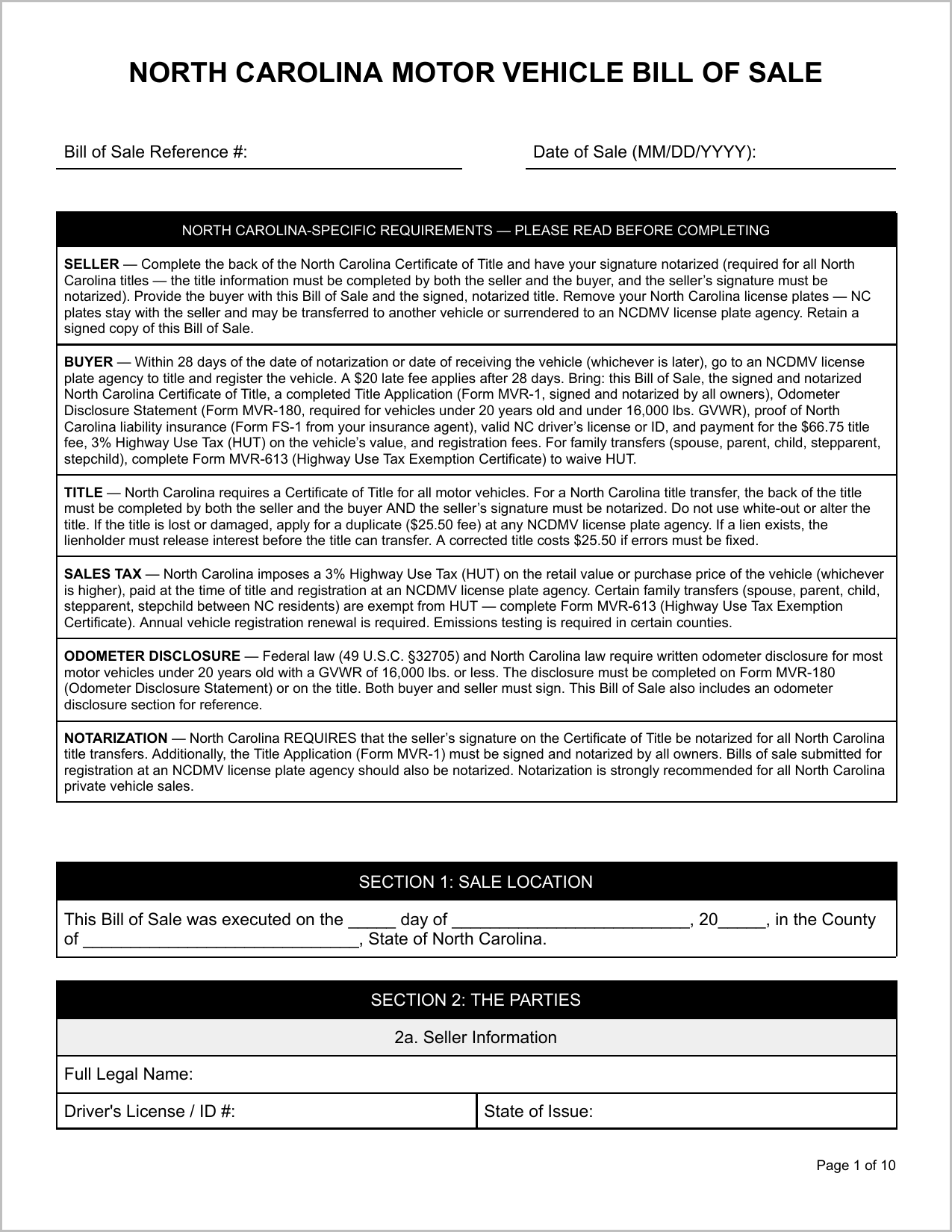
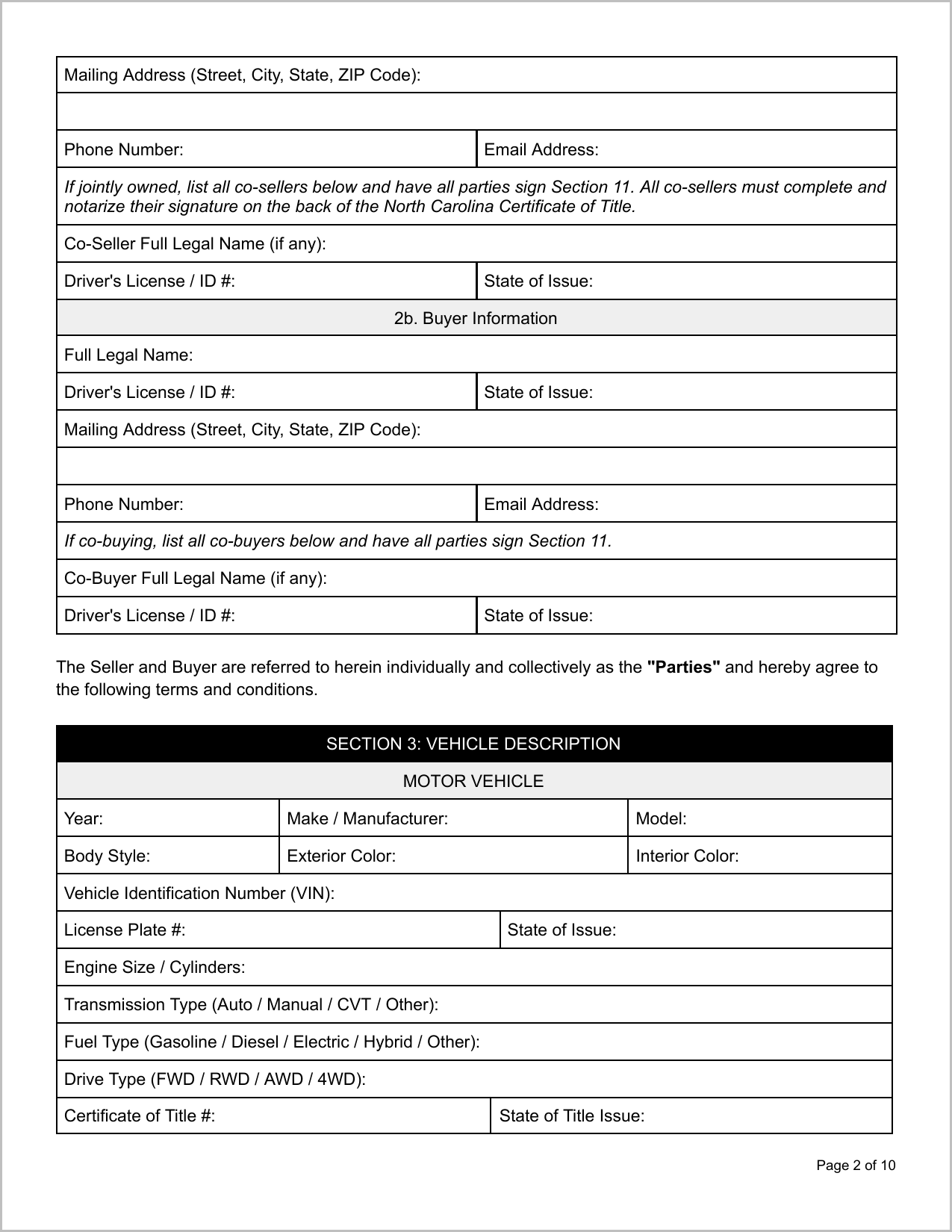
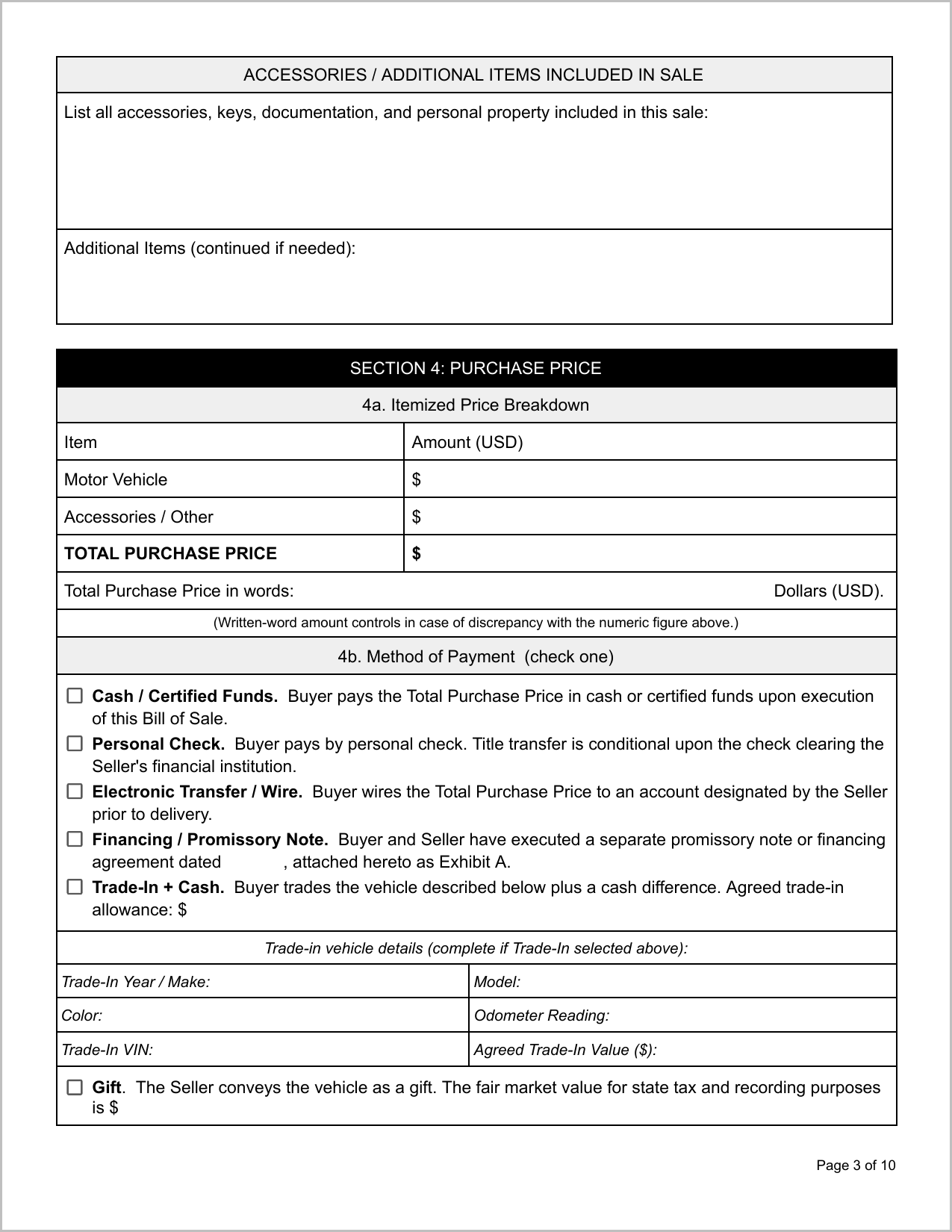
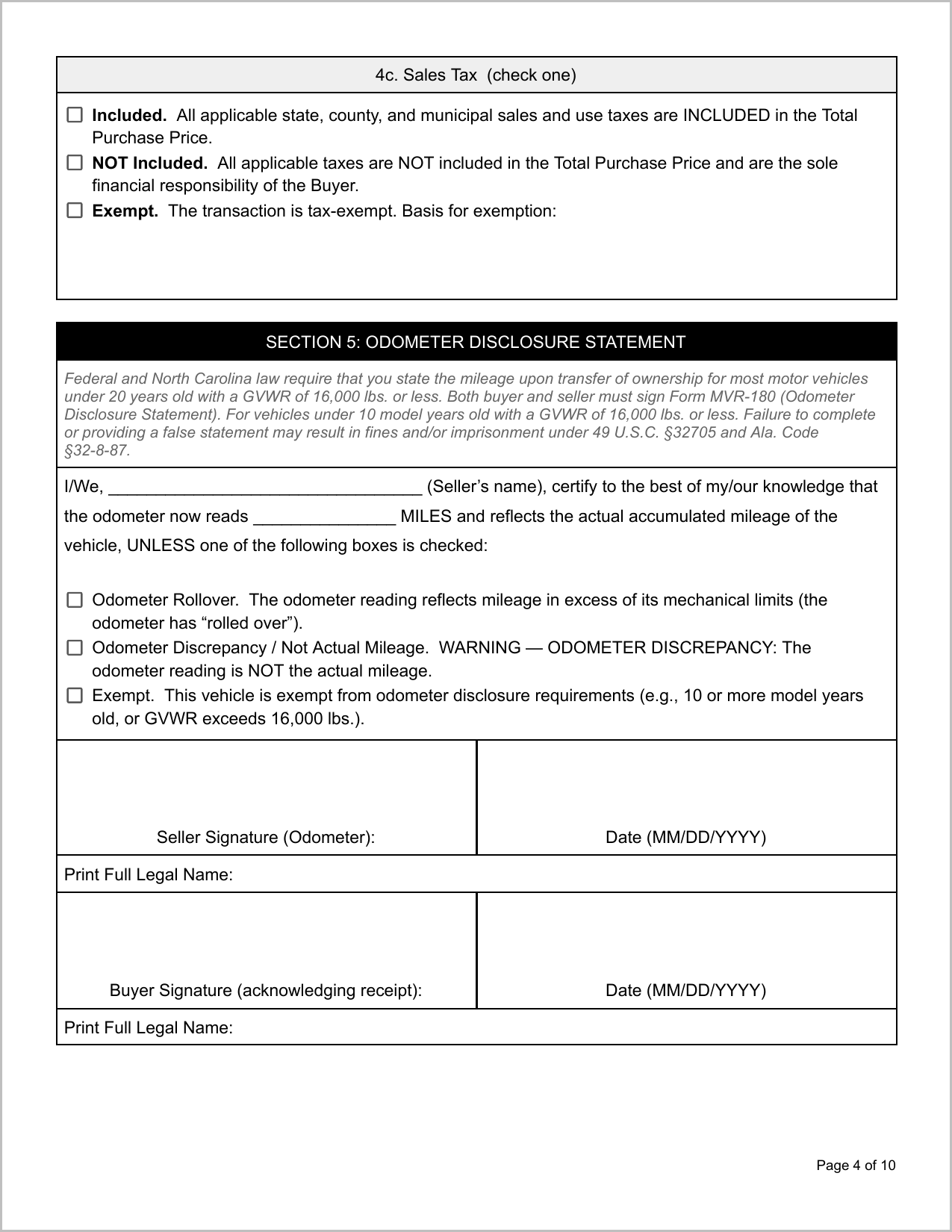
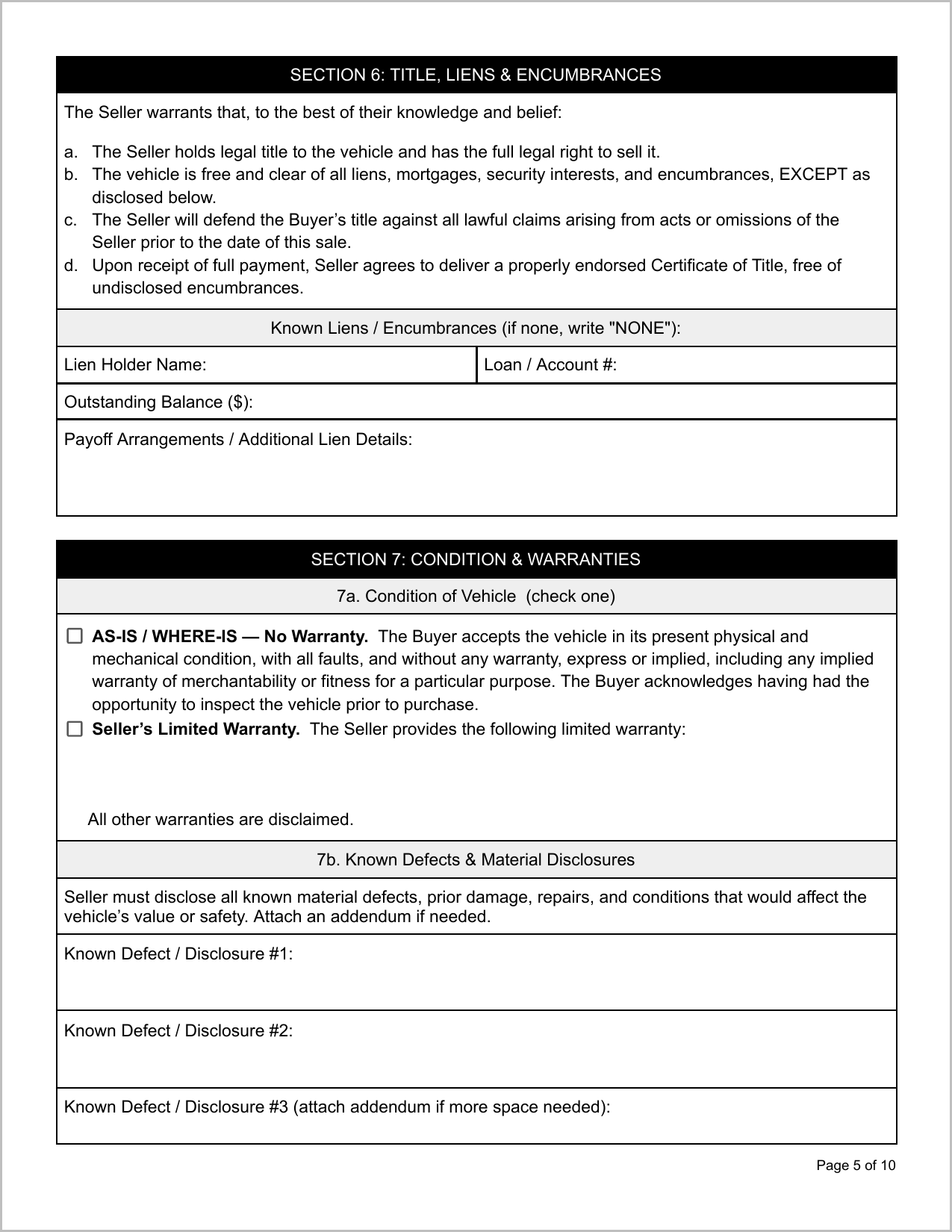
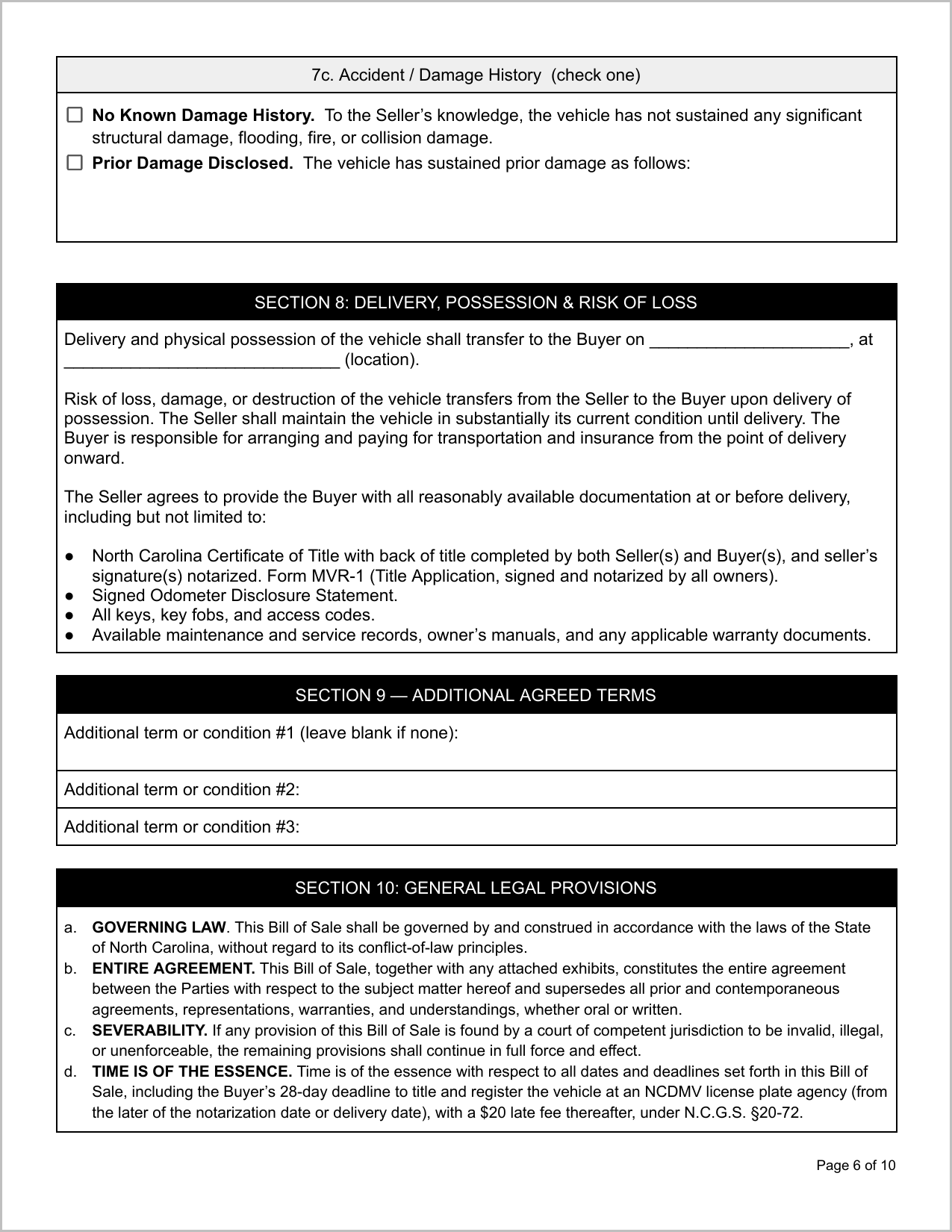
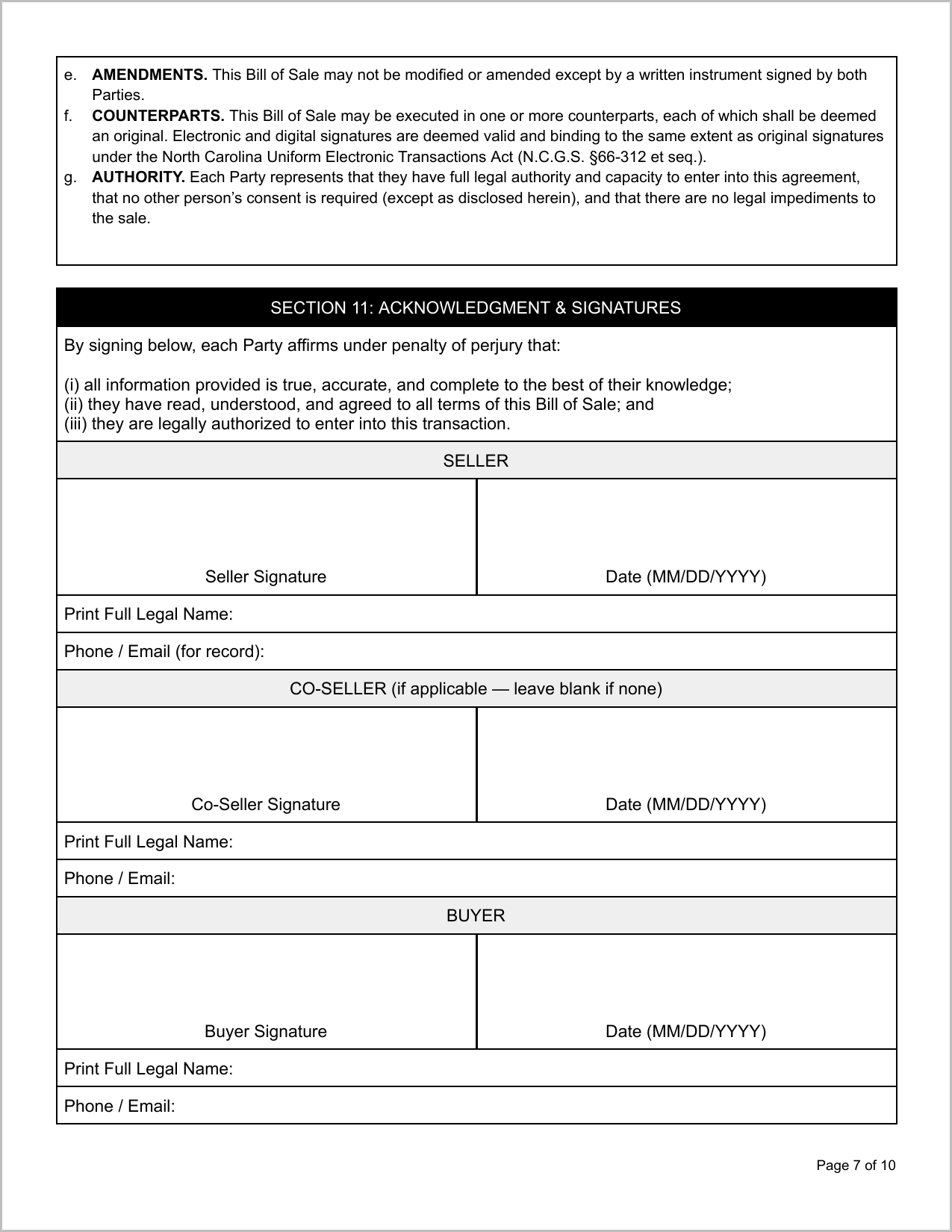
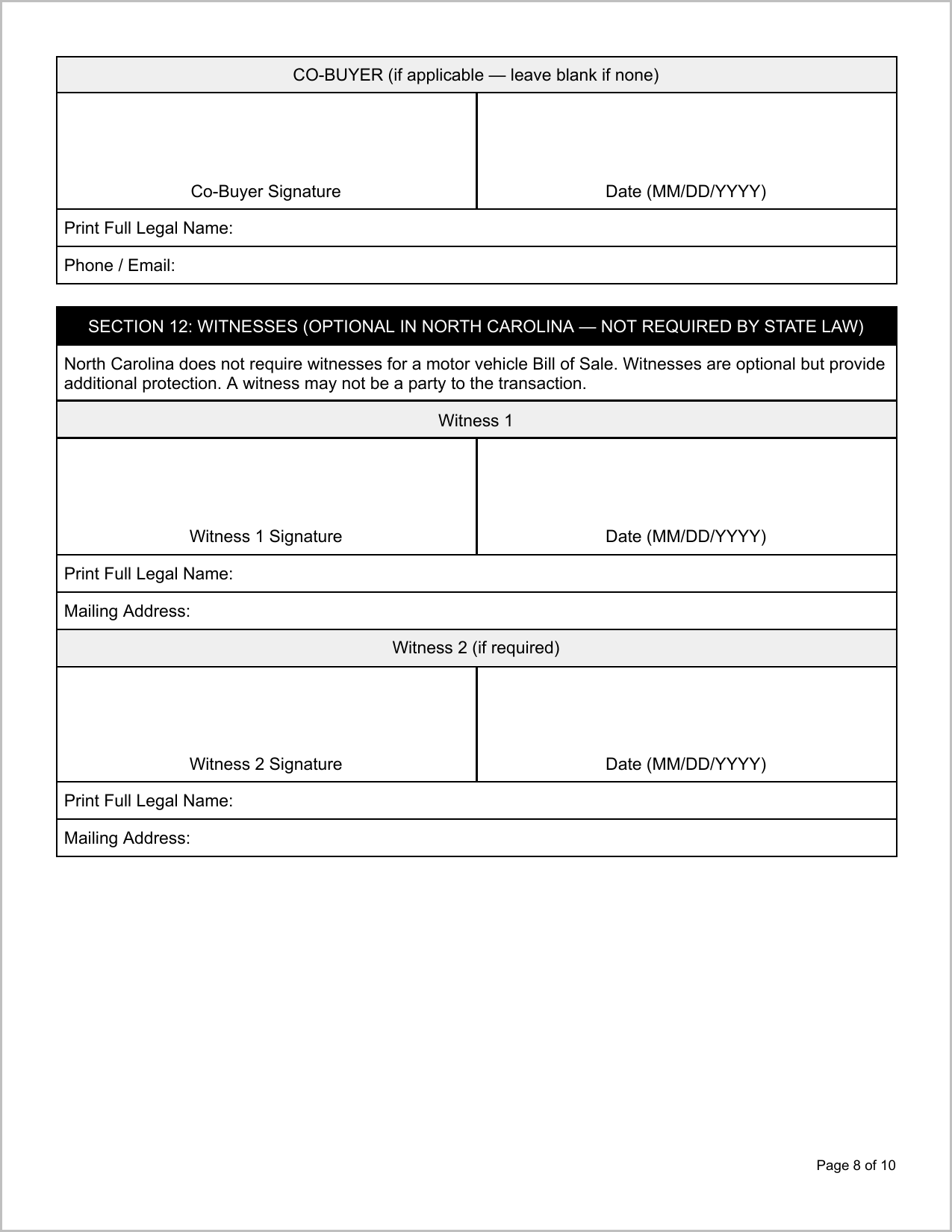
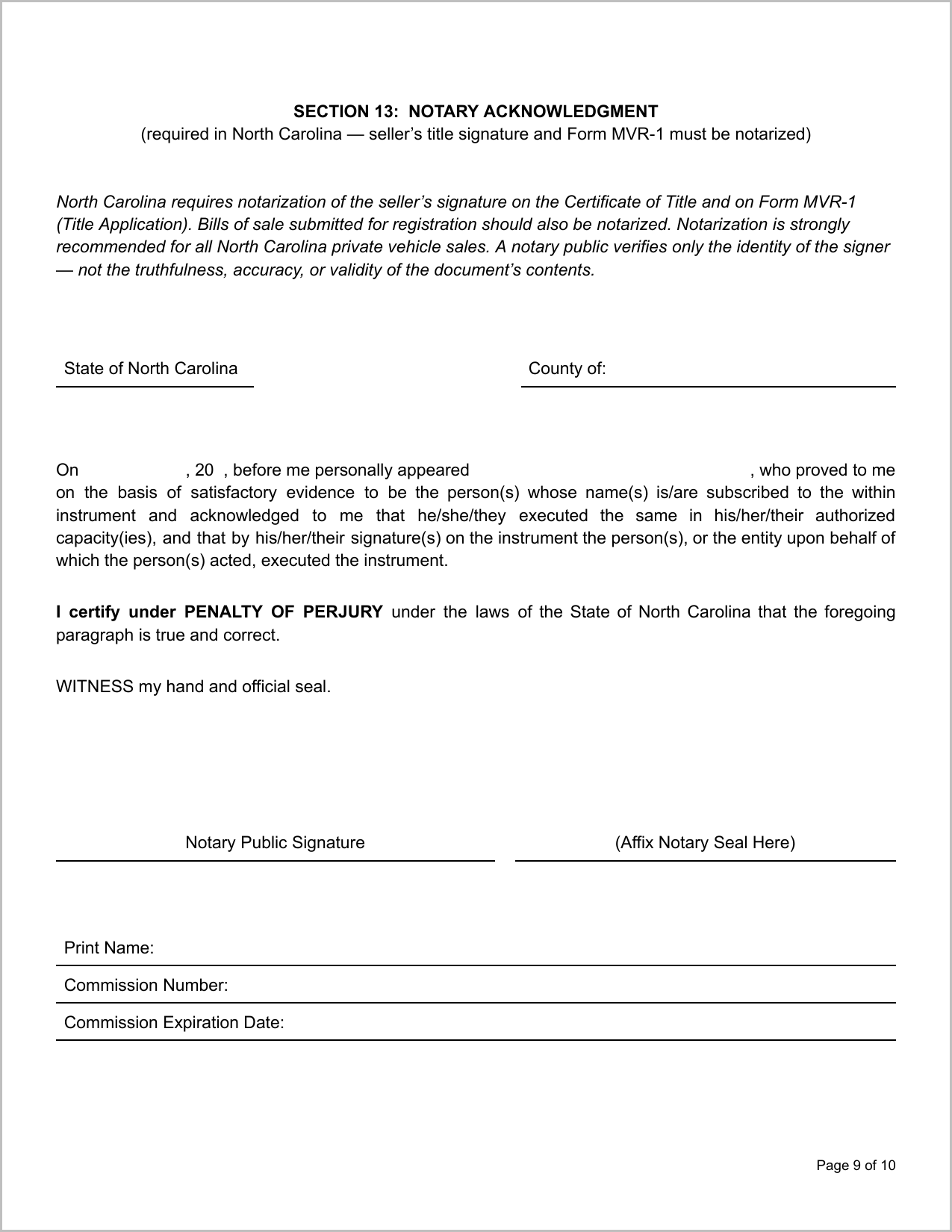
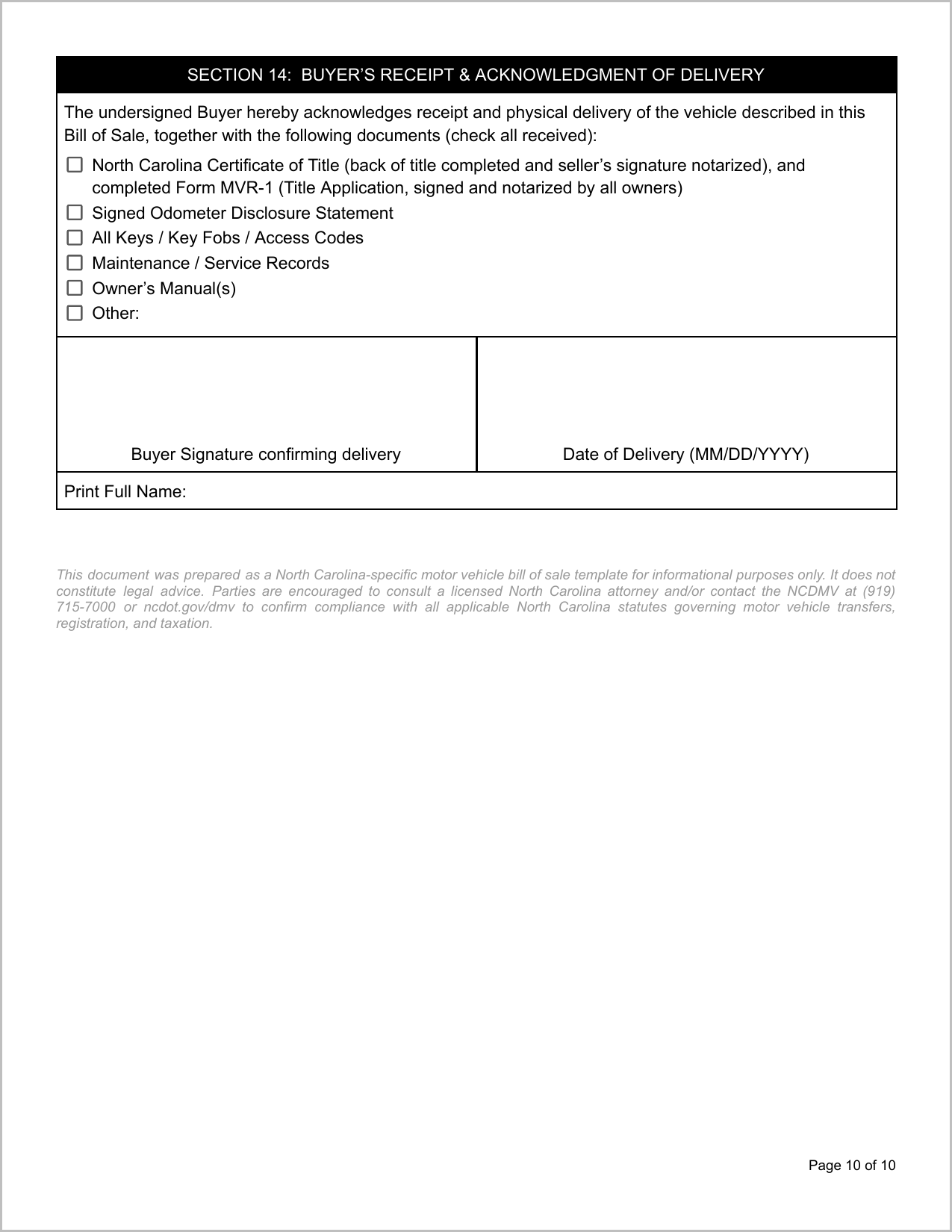
This template opens in Google Docs. Click Use Template to save a copy to your Drive, fill it out digitally, or print and complete by hand.
How to Fill Out the Template
Enter the seller’s name exactly as it appears on the Certificate of Title. Enter the buyer’s name and address exactly as they want it on the new title.
In Section 3, copy the VIN character by character. Enter the full agreed purchase price in Section 4 — NC calculates 3% highway use tax on this figure.
Both parties sign Section 11. The seller must also sign the title assignment section before a notary — do not pre-sign the title.
For a complete field-by-field walkthrough of every section, see: How to Fill Out a Motor Vehicle Bill of Sale →
How to Transfer a Car Title in North Carolina
For the Seller
Complete the assignment section on the back of the NC Certificate of Title — including buyer’s name and address, date of sale, odometer reading, and damage disclosure — and have your signature notarized.
Remove your license plates before handing over the vehicle. Complete Form MVR-46F to remove the vehicle from your registration file.
For the Buyer
Within 28 days of taking possession, visit an NCDMV license plate agency with the notarized title, notarized Form MVR-1 (Title Application), this bill of sale, proof of NC insurance (Form FS-1), valid NC driver’s license, and payment for the title fee ($56 minimum) and 3% highway use tax. A 10-day temporary tag ($10) can be purchased on the day of sale.
Lost Title
Request a duplicate title at any NCDMV license plate agency or by mailing to the NCDMV before the sale proceeds. Contact the NCDMV at ncdot.gov/dmv.
Frequently Asked Questions
Yes. North Carolina law requires the seller’s signature on the Certificate of Title to be notarized. The Title Application (Form MVR-1) must also be signed and notarized by all owners. Do not pre-sign the title — bring it unsigned to a notary and sign in their presence.
28 calendar days from the date of notarizing the title or receiving the vehicle, whichever is later. A $20 late fee applies after 28 days. After 60 days, the NCDMV can block all registration privileges until the transfer and penalties are paid.
3% of the purchase price. North Carolina replaced traditional sales tax on vehicles with the highway use tax. Certain family transfers — between spouses and between parent/child or stepparent/stepchild — are exempt from the highway use tax.
Form MVR-46F is the form the seller files with the NCDMV to remove the vehicle from their registration file after the sale. Filing it protects the seller from toll violations, parking tickets, and other liabilities if the buyer fails to complete the title transfer.
Yes. The buyer can purchase a 10-day temporary tag ($10) at any NCDMV license plate agency on the day of the sale to drive the vehicle legally while completing the title transfer process.
Yes. North Carolina accepts a handwritten bill of sale on plain paper — no specific state form is required. Include full names, addresses, VIN, date, purchase price, and both signatures. Notarization of the bill of sale itself is not required, only the title assignment requires notarization.
This template and all information on this page are provided for informational purposes only and do not constitute legal advice. Contact the NCDMV at ncdot.gov/dmv or (919) 715-7000 to confirm current requirements before completing your transaction.