
Selling or buying a vehicle in Kansas? Both buyer and seller must sign the bill of sale — and both swear under penalty of perjury that the stated price is accurate.
This free template is formatted for Kansas’s requirements, including the Form TR-312 fields and the 60-day title application deadline.
Click Get This Template below to open it in Google Docs, then click Use Template to save a copy to your Drive.
For templates for all 50 states, visit the Motor Vehicle Bill of Sale Templates →
On this page:
- What Is a Kansas Motor Vehicle Bill of Sale?
- Is a Bill of Sale Required in Kansas?
- Kansas-Specific Requirements
- Free Kansas Motor Vehicle Bill of Sale Template
- How to Fill Out the Template
- How to Transfer a Car Title in Kansas
- Frequently Asked Questions
What Is a Kansas Motor Vehicle Bill of Sale?
A Kansas motor vehicle bill of sale is a written record of a private vehicle sale.
Kansas’s official form is Form TR-312 (Bill of Sale). Both buyer and seller must sign, swearing under penalty of perjury that the stated purchase price is true and accurate. The form also includes an antique vehicle section for vehicles 35 model years old or older that have no Kansas title.
Is a Bill of Sale Required in Kansas?
A bill of sale is required in most Kansas private vehicle sales. Specifically, Form TR-312 is required when:
- The title is non-conforming — meaning there is no space on the title for the purchase price or odometer reading
- The vehicle is an antique (35 model years old or older) and no Kansas title exists
- An out-of-state title is being transferred to Kansas
For all other Kansas title transfers, the back of the title includes space for the purchase price, date, and odometer reading — so a separate bill of sale may not always be required. However, one is strongly recommended for all private sales.
Kansas-Specific Requirements
1. 60-Day Deadline
The buyer must apply for a Certificate of Title at the county treasurer’s motor vehicle office within 60 days of the purchase date. A penalty is assessed starting on day 61. Out-of-state transfers must be registered within the first 90 days of moving to Kansas.
2. Both Parties Must Sign Under Oath
Both the buyer and seller must sign Form TR-312 — and by doing so, both swear under penalty of perjury that the stated purchase price is true and accurate. Kansas law provides severe penalties for making false statements under oath.
3. Sales Tax: 6.5% + Local
Kansas charges 6.5% state sales tax plus applicable local taxes on the purchase price. Tax is paid at the county treasurer’s office at the time of title application. Property tax must also be paid at the time of registration unless applying for a temporary plate.
4. Seller Notification (Form TR-216)
Sellers should file a Seller’s Notification of Sale (Form TR-216) with the Kansas Division of Vehicles after the sale to protect against liability for the vehicle. This is recommended but not legally mandatory.
5. Out-of-State Vehicles: MVE-1 Required
If the vehicle has an out-of-state title, a Motor Vehicle Examination Certificate (Form MVE-1) — completed by the Kansas Highway Patrol, county sheriff, or their designee — is required before title can be issued. The MVE-1 inspection typically costs $20.
6. Antique Vehicles (35+ Model Years Old)
For antique vehicles sold without a Kansas title, the antique section of Form TR-312 is used to transfer ownership. An MVE-1 inspection is also required for all 1950 and newer antique vehicles sold on a bill of sale.
7. Notarization
Kansas does not require notarization for a standard private party vehicle bill of sale or title transfer. A notarized lien release is required if a lien is recorded on the title.
Free Kansas Motor Vehicle Bill of Sale Template
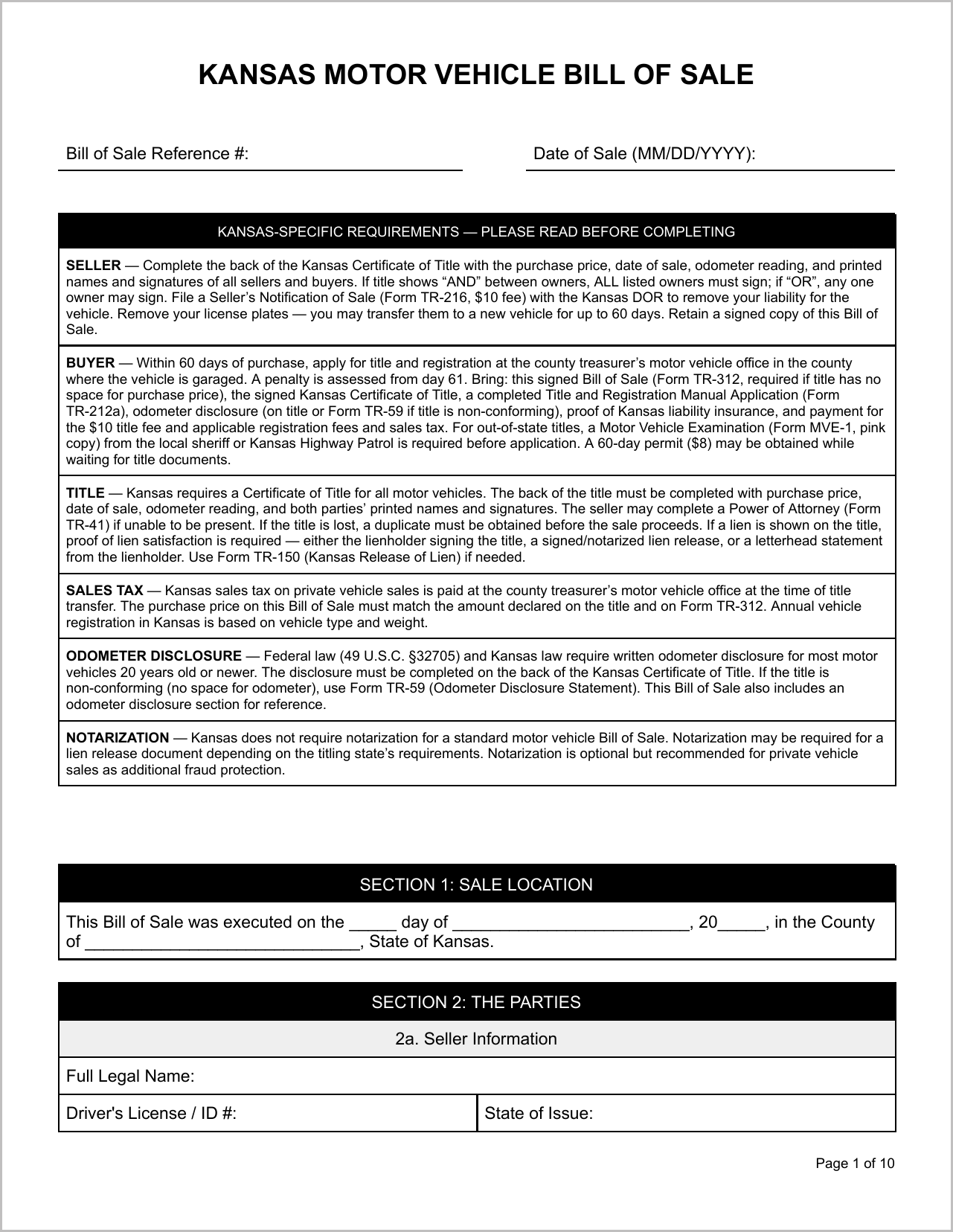
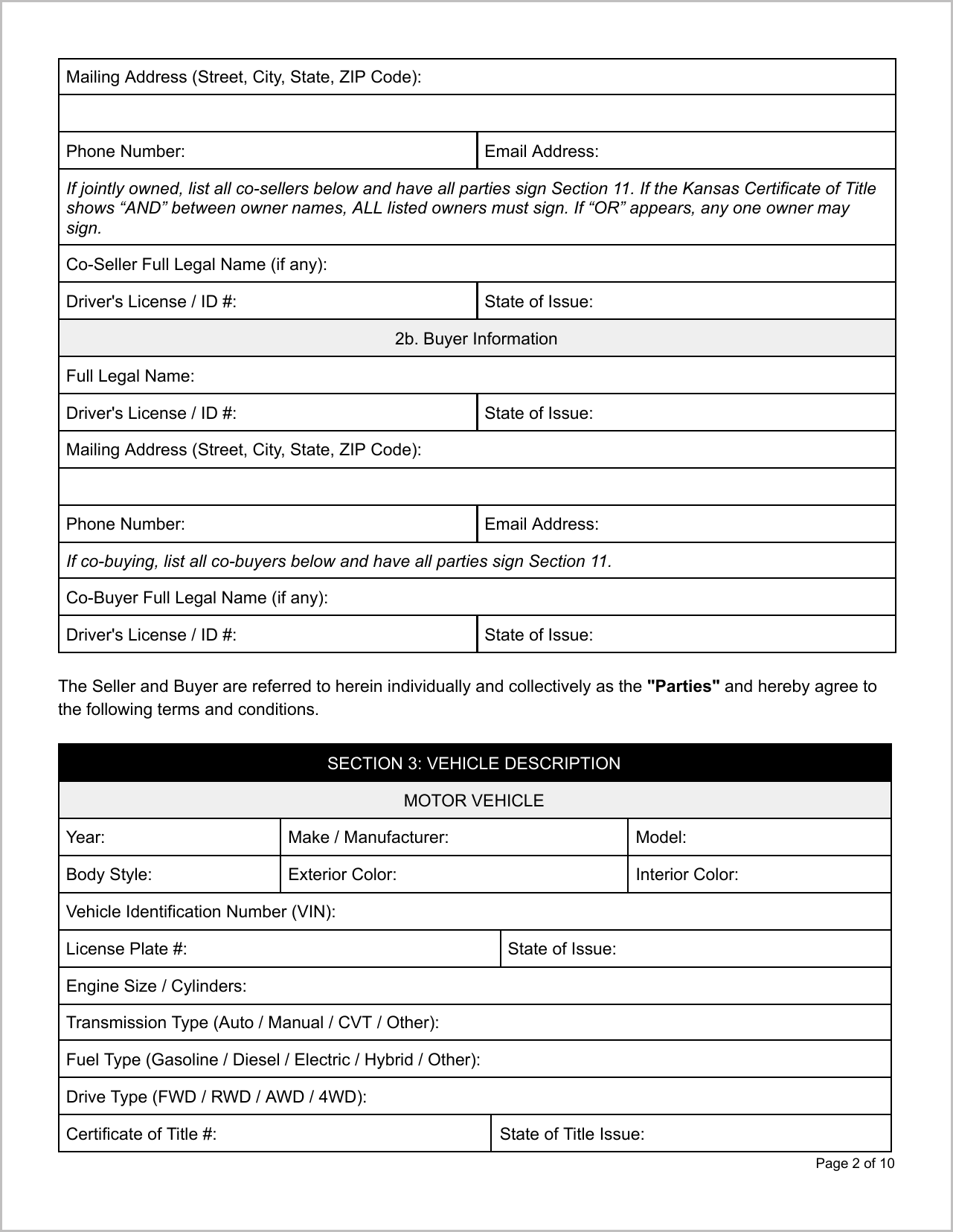
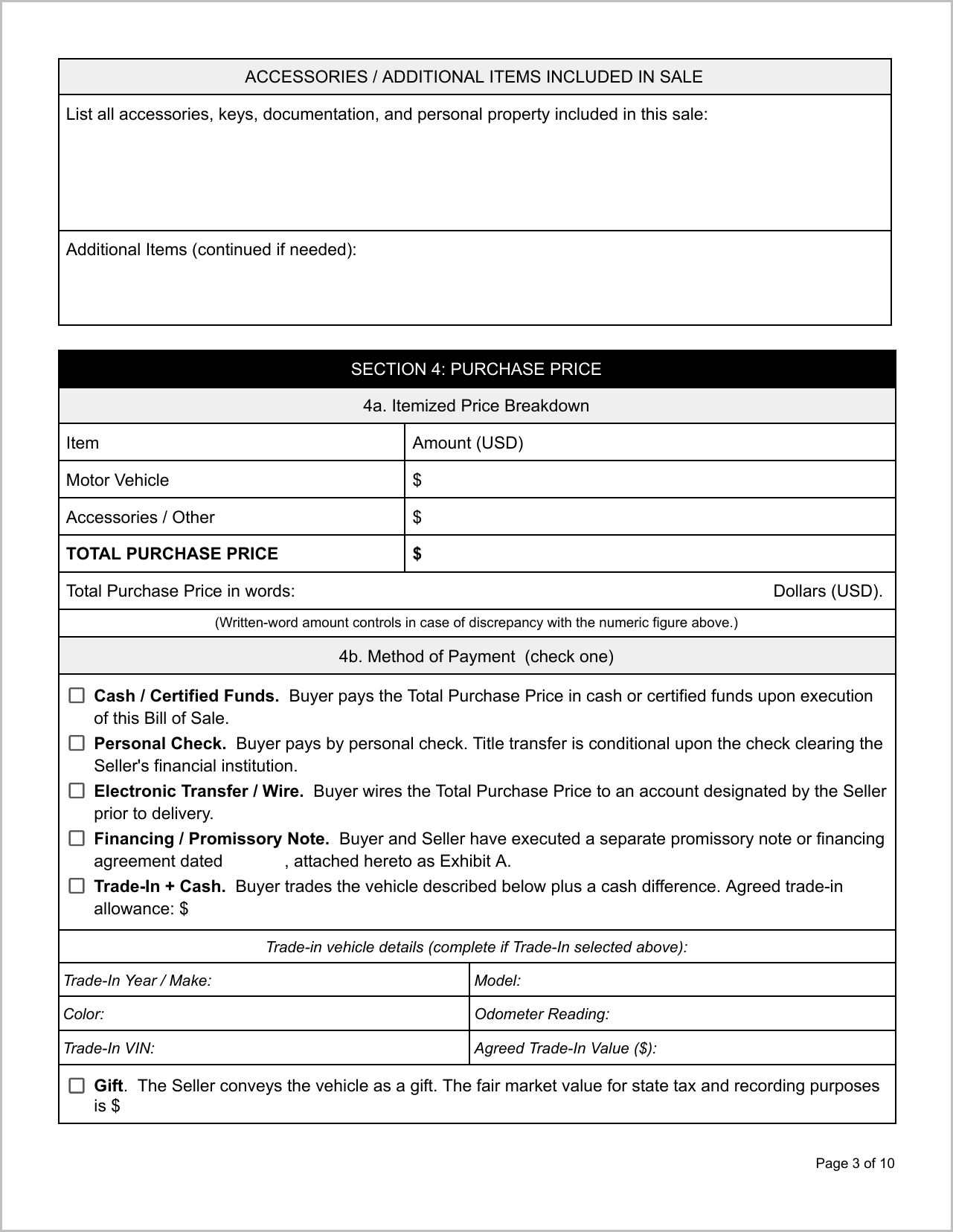
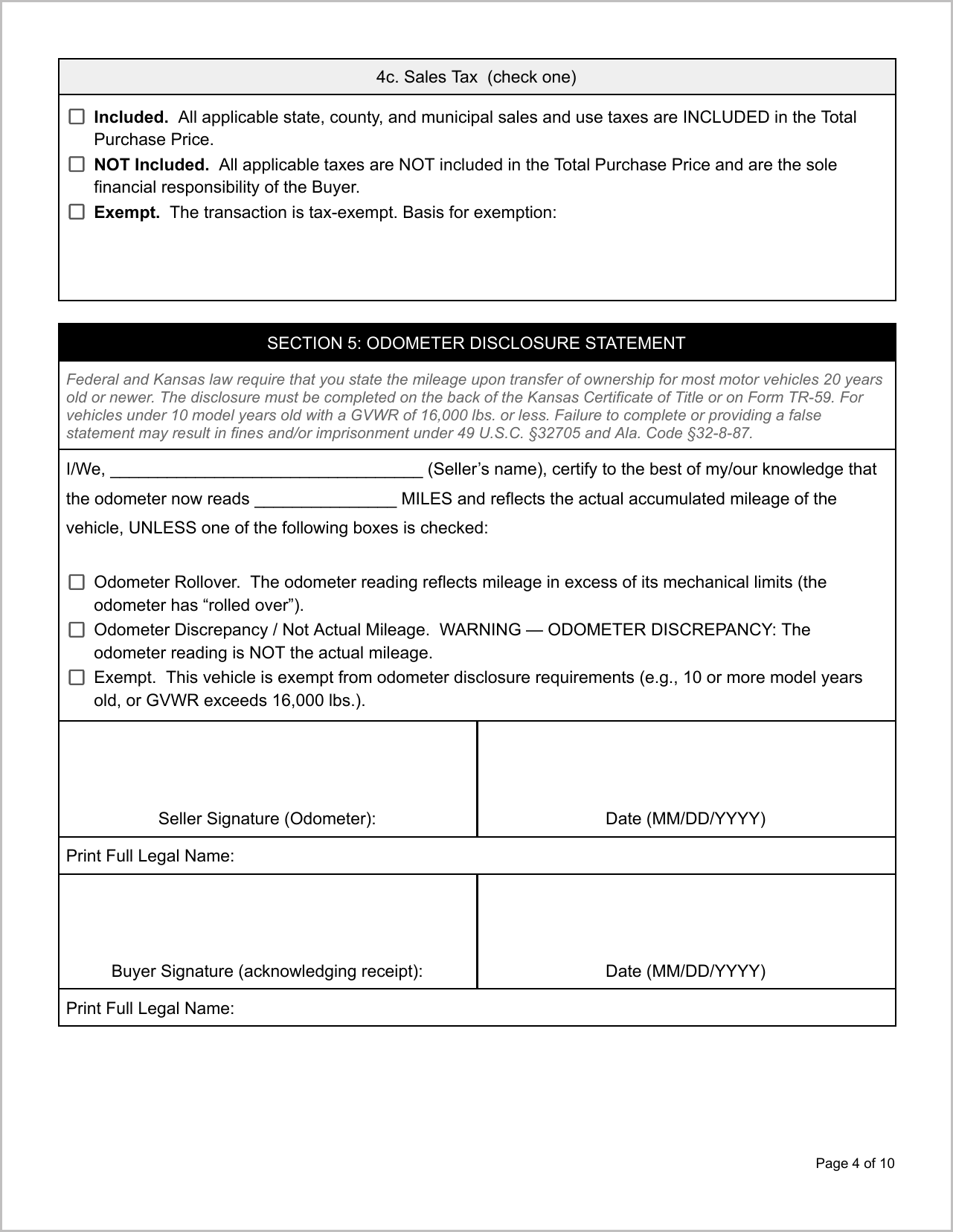
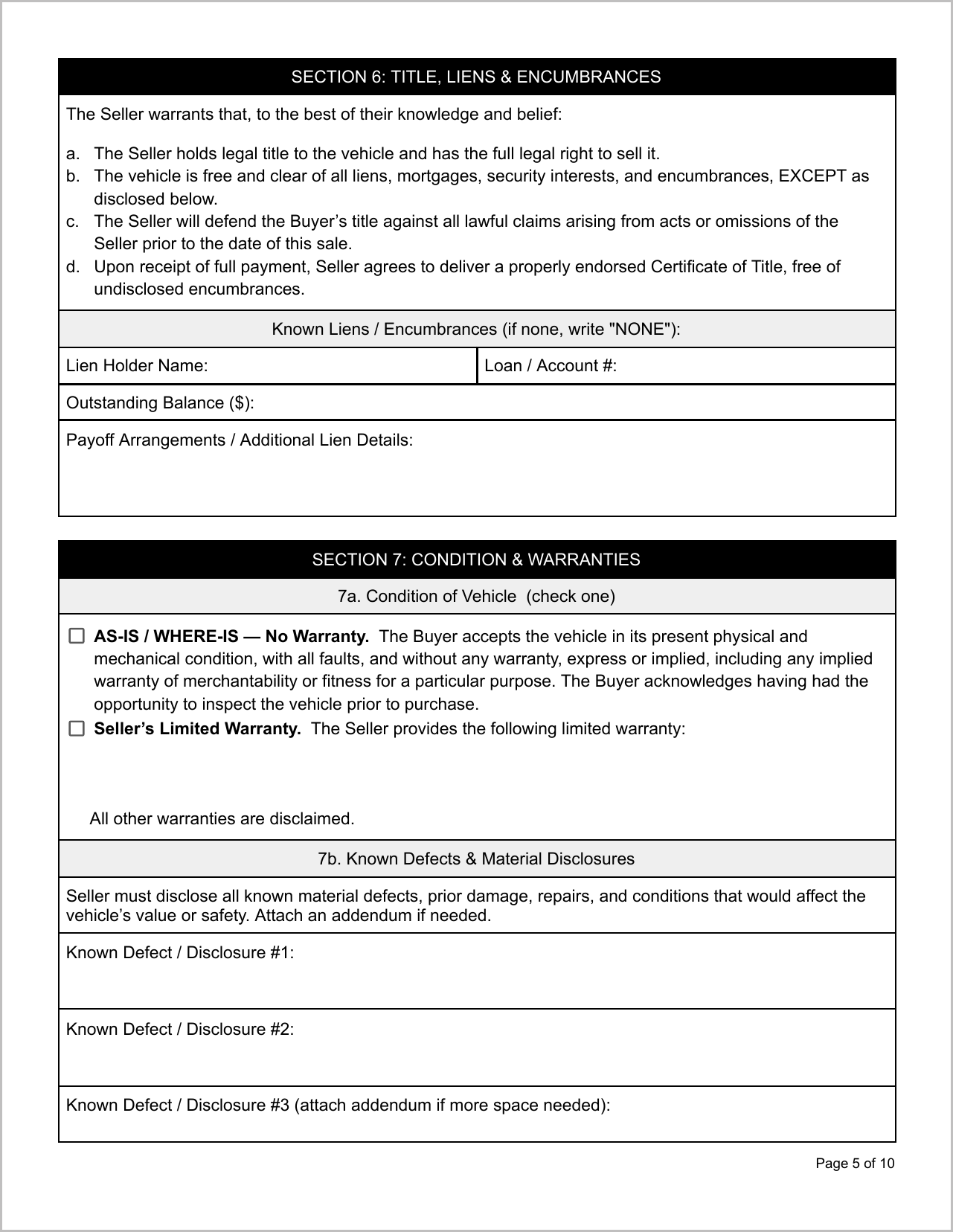
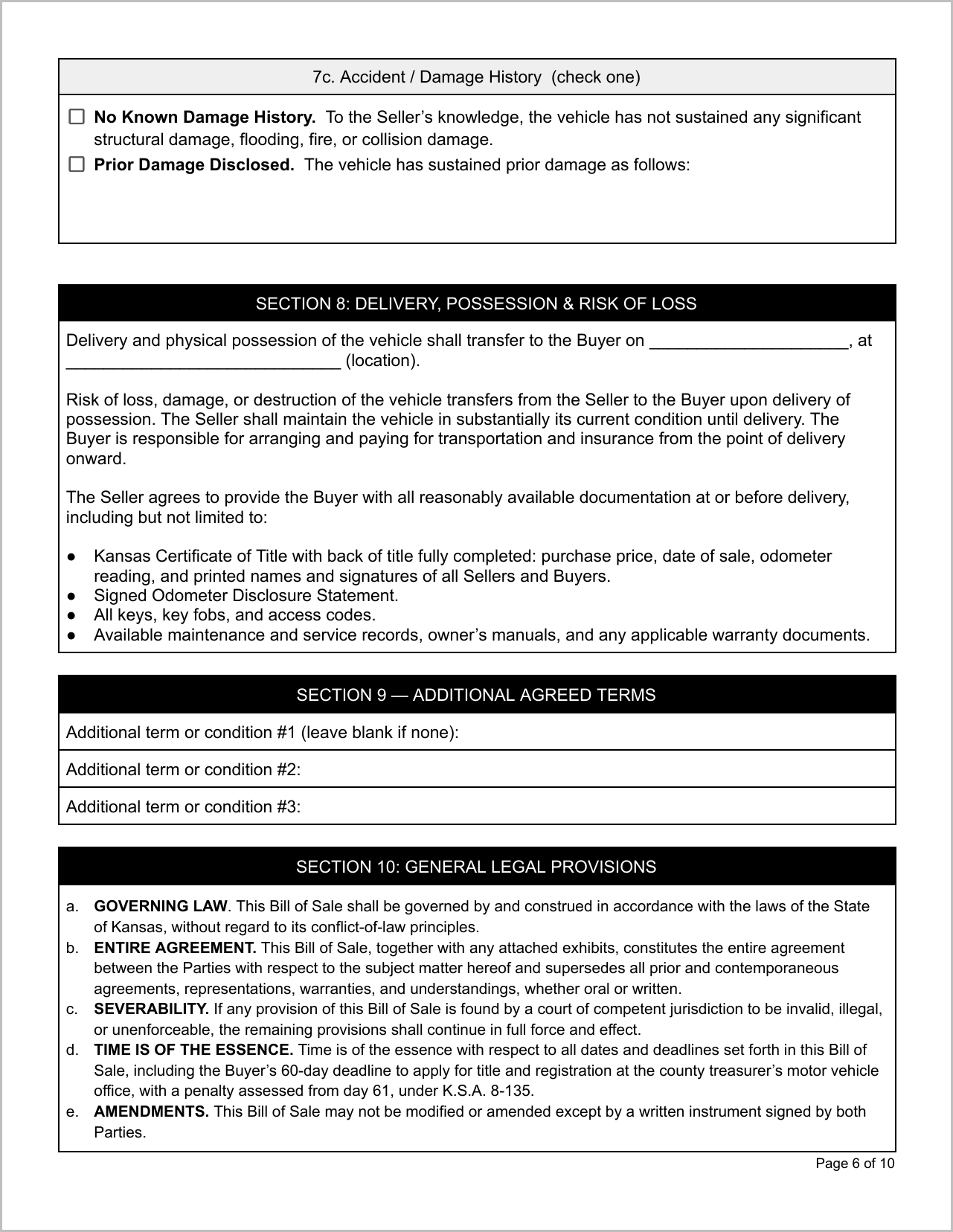
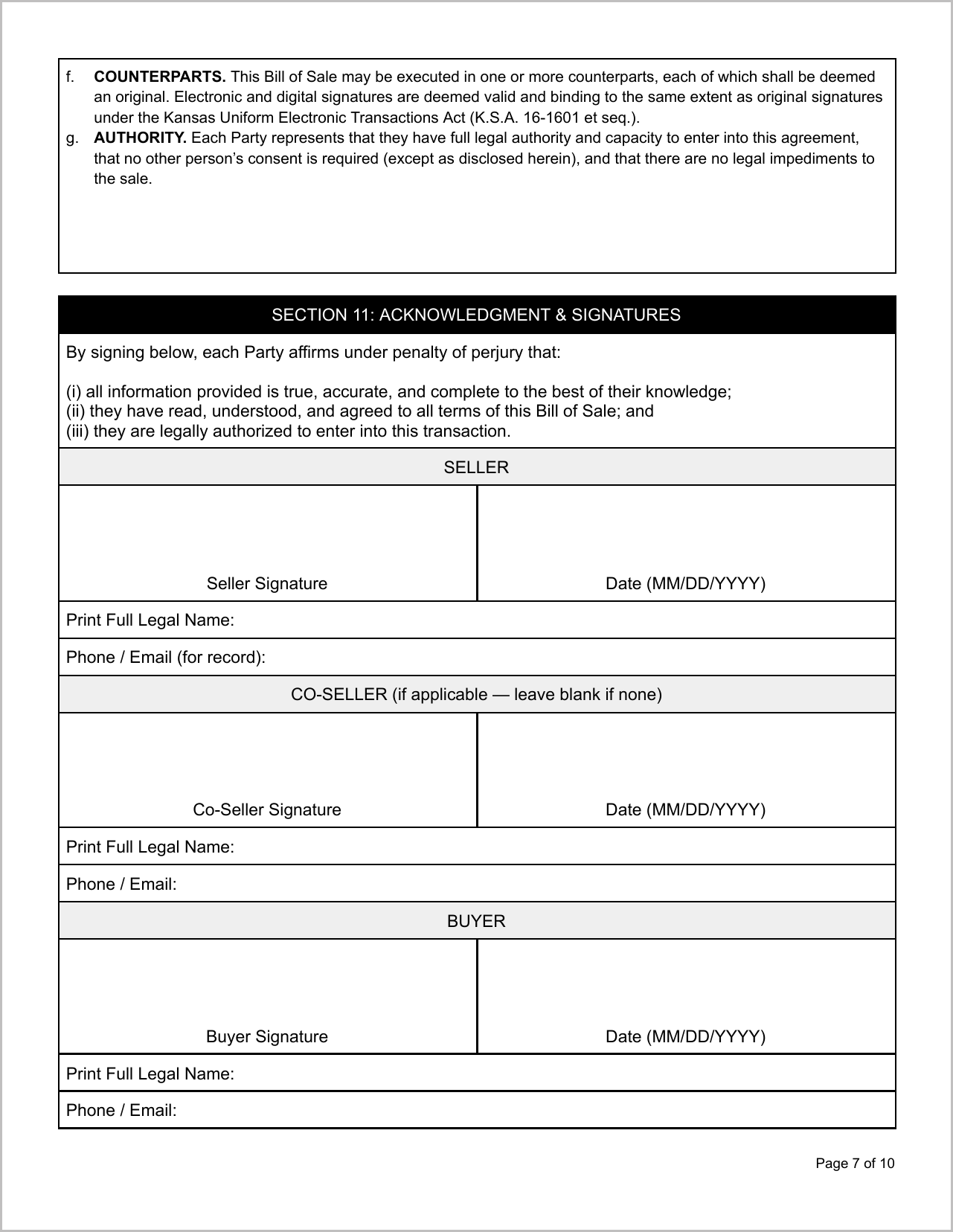
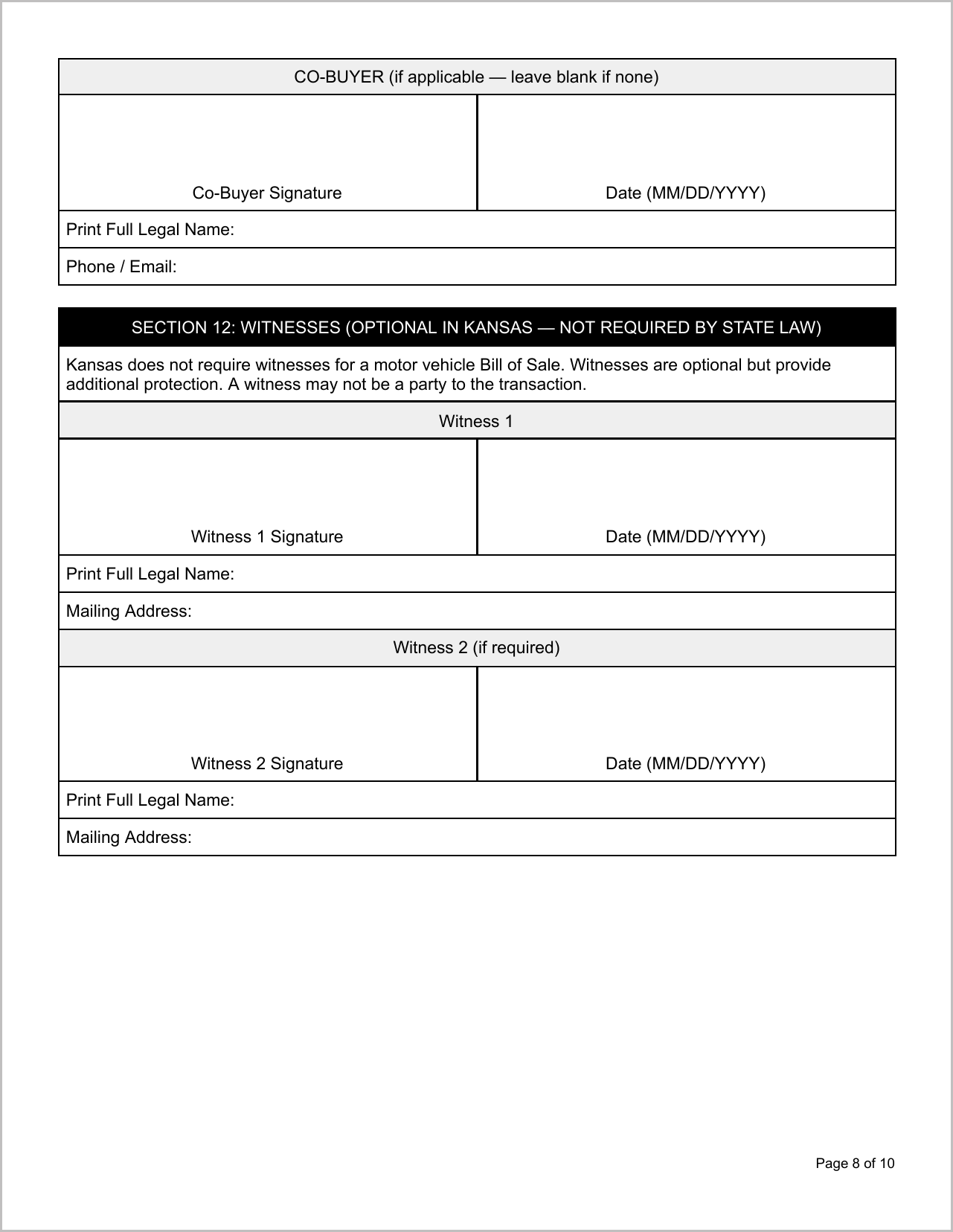
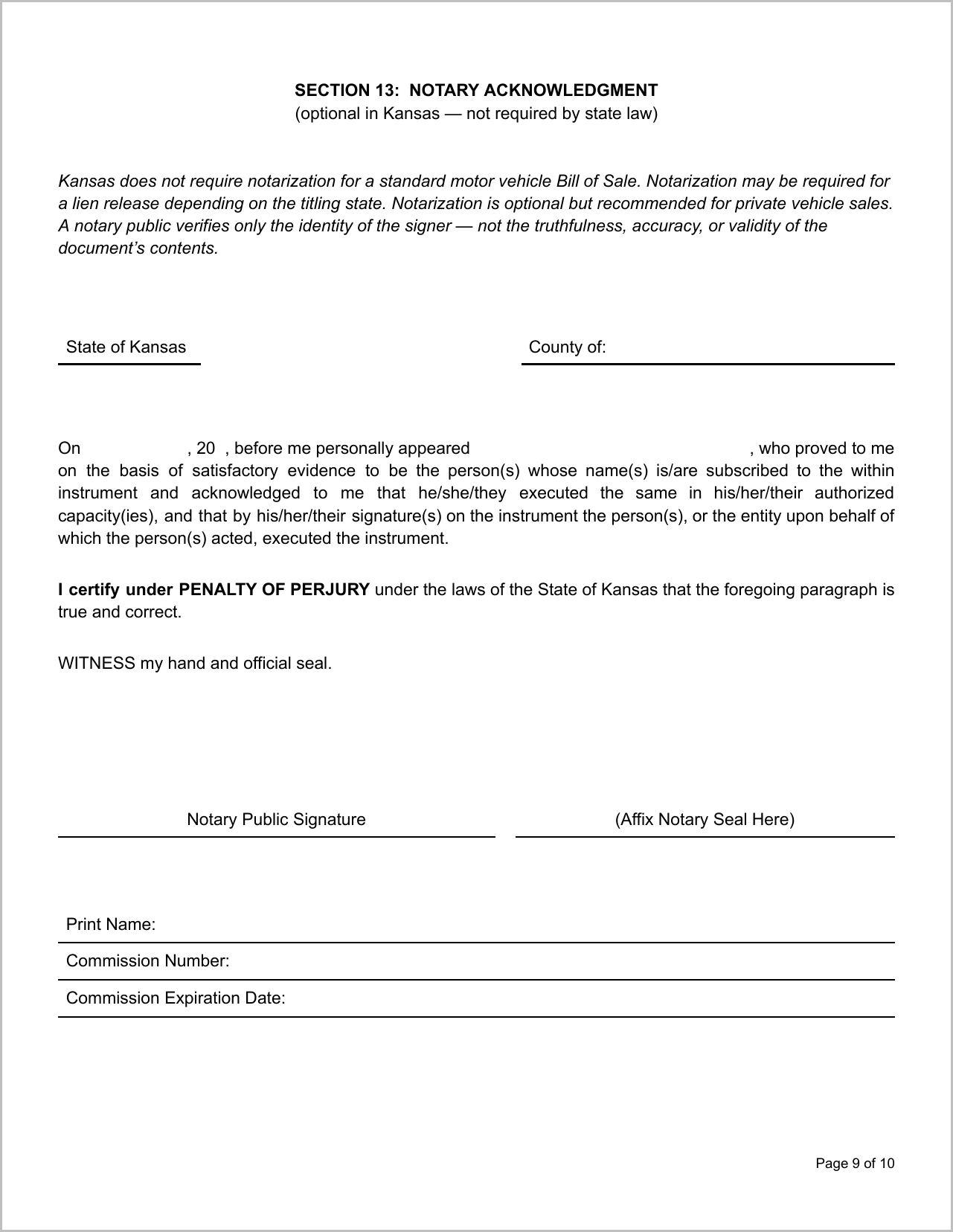
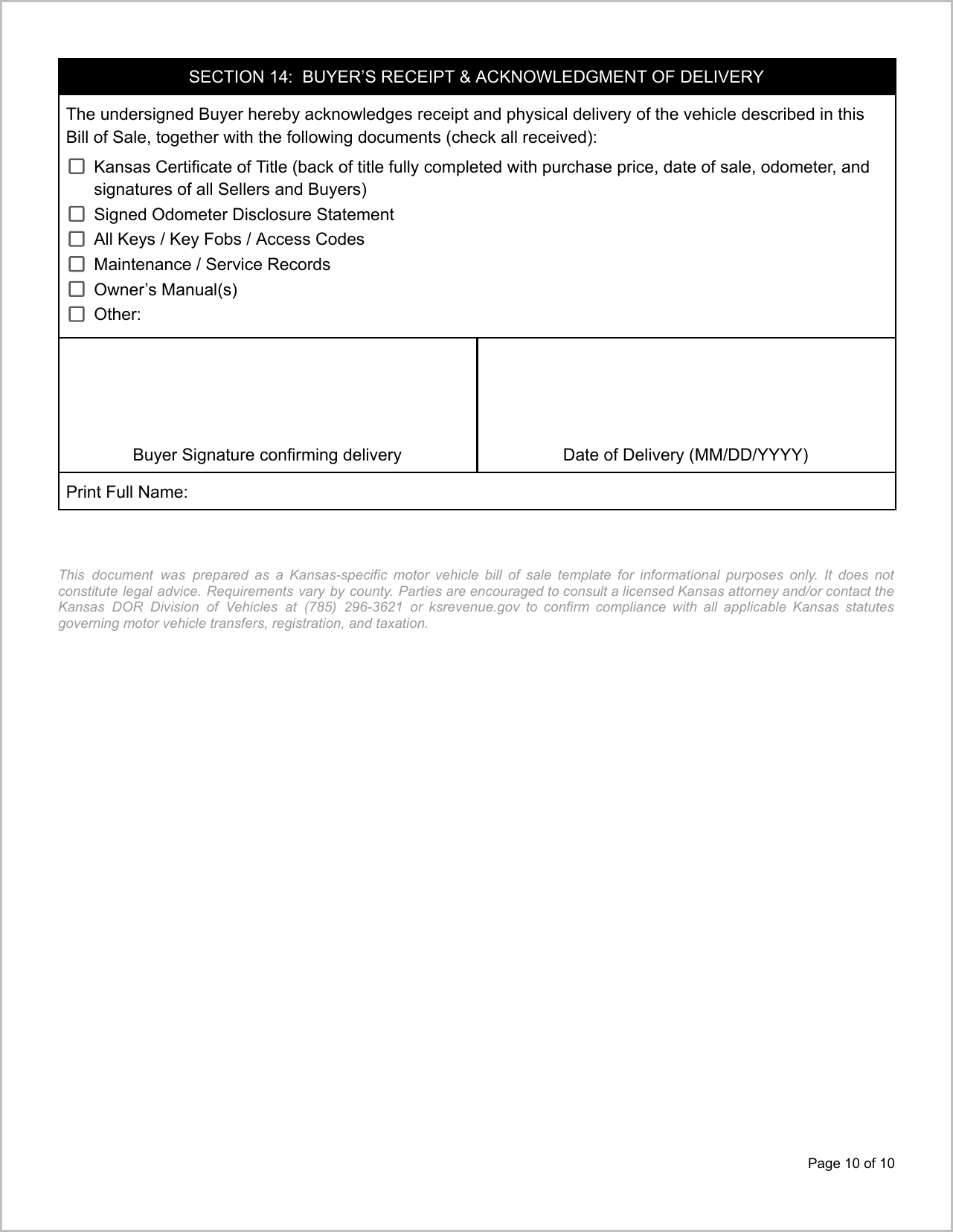
This template opens in Google Docs. Click Use Template to save a copy to your Drive, fill it out digitally, or print and complete by hand.
How to Fill Out the Template
Enter the seller’s name exactly as it appears on the Certificate of Title. Enter the buyer’s name and address exactly as they want it on the new title.
In Section 3, copy the VIN character by character from the dashboard plate and the title. Enter the actual agreed purchase price in Section 4 — both parties sign under penalty of perjury that this figure is accurate.
Both parties must sign Section 11. The seller should also file Form TR-216 after the sale.
For a complete field-by-field walkthrough of every section, see: How to Fill Out a Motor Vehicle Bill of Sale →
How to Transfer a Car Title in Kansas
For the Seller
Complete the assignment section on the back of the title — including purchase price, date, odometer reading, and signatures of all listed owners. File Form TR-216 (Seller’s Notification of Sale) with the Kansas Division of Vehicles to protect against post-sale liability.
For the Buyer
Within 60 days of purchase, visit the county treasurer’s motor vehicle office in the county where the vehicle will be garaged with the assigned title, this bill of sale (Form TR-312 or equivalent), proof of Kansas insurance, valid ID, and payment for the $10 title fee, $6.50 transfer fee, 6.5% sales tax, and property tax.
Lost Title
Apply for a secured or duplicate title (Form TR-720B) at any Kansas county treasurer’s motor vehicle office before proceeding with the sale.
Frequently Asked Questions
60 days from the date of purchase. A penalty is assessed starting on day 61. The title application must be submitted to the county treasurer’s motor vehicle office in the county where the vehicle will be garaged. Out-of-state transfers must be completed within 90 days of moving to Kansas.
Yes. Kansas Form TR-312 requires both the buyer and seller to sign under penalty of perjury, affirming that the stated purchase price is true and accurate. Kansas law provides severe penalties for making false statements under oath.
Kansas charges 6.5% state sales tax plus applicable local taxes on the purchase price. Tax is paid at the county treasurer’s office at the time of title application. Property tax is also due at time of registration unless applying for a temporary plate.
No. Kansas does not require notarization for a standard private party vehicle bill of sale or title transfer. A notarized lien release is required if a lien is recorded on the title.
Form MVE-1 (Motor Vehicle Examination Certificate) is a VIN inspection required for all out-of-state vehicles being titled in Kansas. It must be completed by the Kansas Highway Patrol, a county sheriff, or their designee. The inspection typically costs $20.
Yes. Kansas’s official form is TR-312, but any bill of sale that includes the buyer and seller names and addresses, vehicle description, VIN, purchase price, date of sale, and signatures of both parties is acceptable for title transfer purposes.
This template and all information on this page are provided for informational purposes only and do not constitute legal advice. Contact your county treasurer’s motor vehicle office or the Kansas Division of Vehicles at ksrevenue.gov to confirm current requirements before completing your transaction.