
Selling or buying a vehicle in California? The state has two critical deadlines — the seller must file a Notice of Transfer within 5 days, and the buyer must complete the title transfer within 10 days.
This free template is formatted for California’s requirements and works alongside the Certificate of Title and Form REG 138.
Click Get This Template below to open it in Google Docs, then click Use Template to save a copy to your Drive.
For templates for all 50 states, visit the Motor Vehicle Bill of Sale Templates →
On this page:
- What Is a California Motor Vehicle Bill of Sale?
- Is a Bill of Sale Required in California?
- California-Specific Requirements
- Free California Motor Vehicle Bill of Sale Template
- How to Fill Out the Template
- How to Transfer a Car Title in California
- Frequently Asked Questions
What Is a California Motor Vehicle Bill of Sale?
A California motor vehicle bill of sale is a written record of a private vehicle sale.
In California, it works alongside the Certificate of Title — it does not replace it. The DMV provides its own optional Form REG 135 (Bill of Sale), but any complete and signed bill of sale is acceptable.
Is a Bill of Sale Required in California?
California does not require a bill of sale for most standard private vehicle transfers — the signed Certificate of Title is the primary ownership document.
However, a bill of sale is required when the title is missing and Form REG 227 (Application for Replacement or Transfer of Title) is used. It is also required when the seller’s name on the title differs from the current selling party, and additional bills of sale showing the chain of ownership must be provided.
Even when not required, a bill of sale is strongly recommended — it documents the purchase price for use tax purposes and protects both parties.
California-Specific Requirements
1. Seller: Notice of Transfer Within 5 Days
The seller must submit a Notice of Transfer and Release of Liability (NRL) — Form REG 138 — to the California DMV within 5 calendar days of the sale.
This can be done online at dmv.ca.gov or by mailing Form REG 138. Filing the NRL removes the seller from liability for parking tickets, traffic violations, and civil litigation after the sale date.
2. Buyer: Title Transfer Within 10 Days
The buyer must complete the title transfer at a California DMV office within 10 calendar days of the sale. Penalties apply after 10 days.
3. What the Buyer Must Bring to the DMV
- Signed California Certificate of Title (seller’s signature releasing ownership)
- This Bill of Sale (Form REG 135 or equivalent)
- Smog certification (required for most vehicles more than four model years old — see exemptions)
- Valid California driver’s license or photo ID
- Payment for $15 base title transfer fee plus use tax and registration fees
4. Use Tax
California charges use tax on private vehicle purchases. The rate varies by county — typically around 7.25% to 10.25% depending on location. Tax is paid at the DMV at the time of registration based on the purchase price declared on the bill of sale.
5. Smog Certification
The seller is generally responsible for providing a current smog certificate for vehicles more than four model years old. Exemptions apply for diesel vehicles, electric vehicles, vehicles sold to a family member, and natural gas vehicles over 14,000 lbs.
6. License Plates
California license plates stay with the vehicle — they do not go with the seller. The seller removes their stickers but leaves the plates on the car for the buyer.
7. Notarization
California does not require notarization for a standard private party vehicle bill of sale. Notarization is optional but recommended for high-value sales.
Free California Motor Vehicle Bill of Sale Template
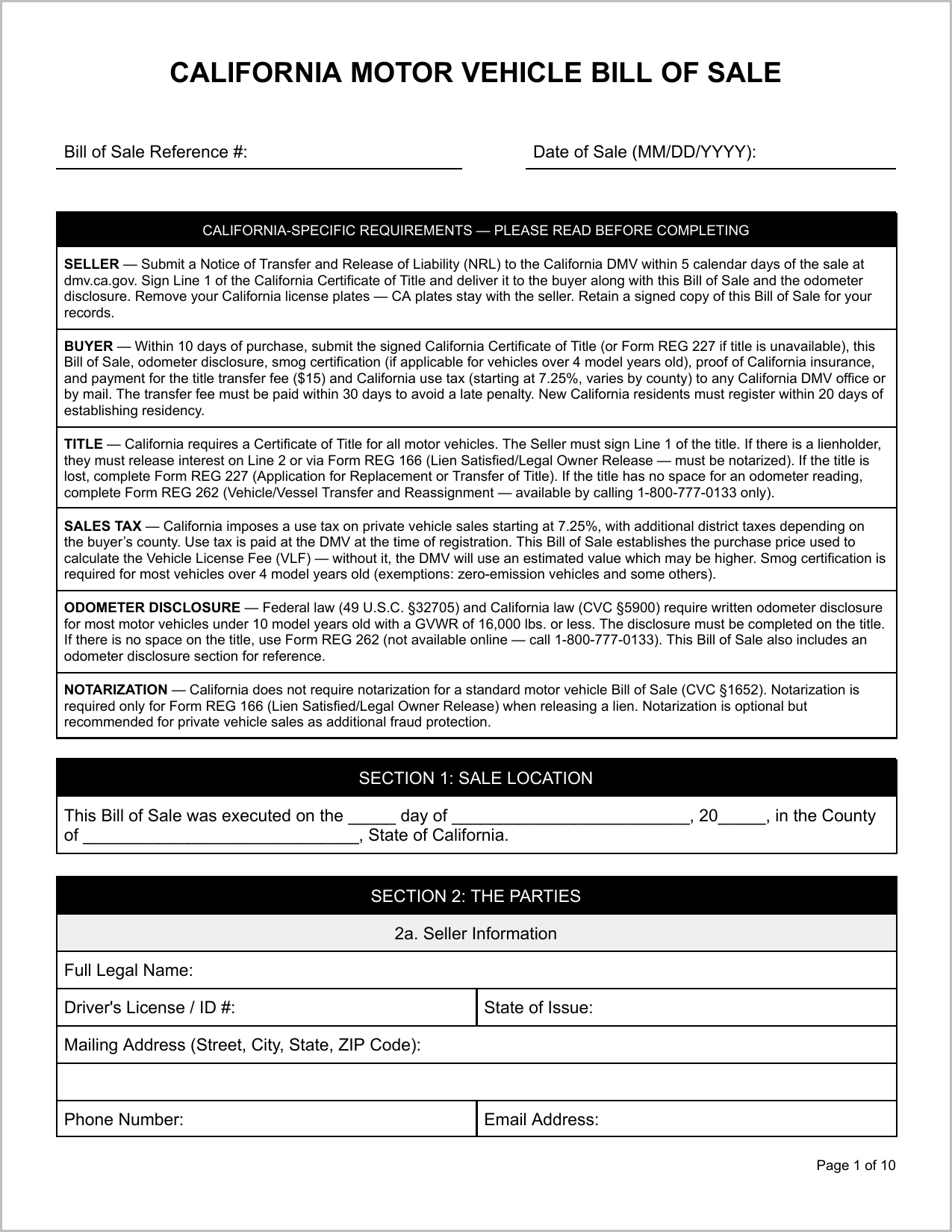
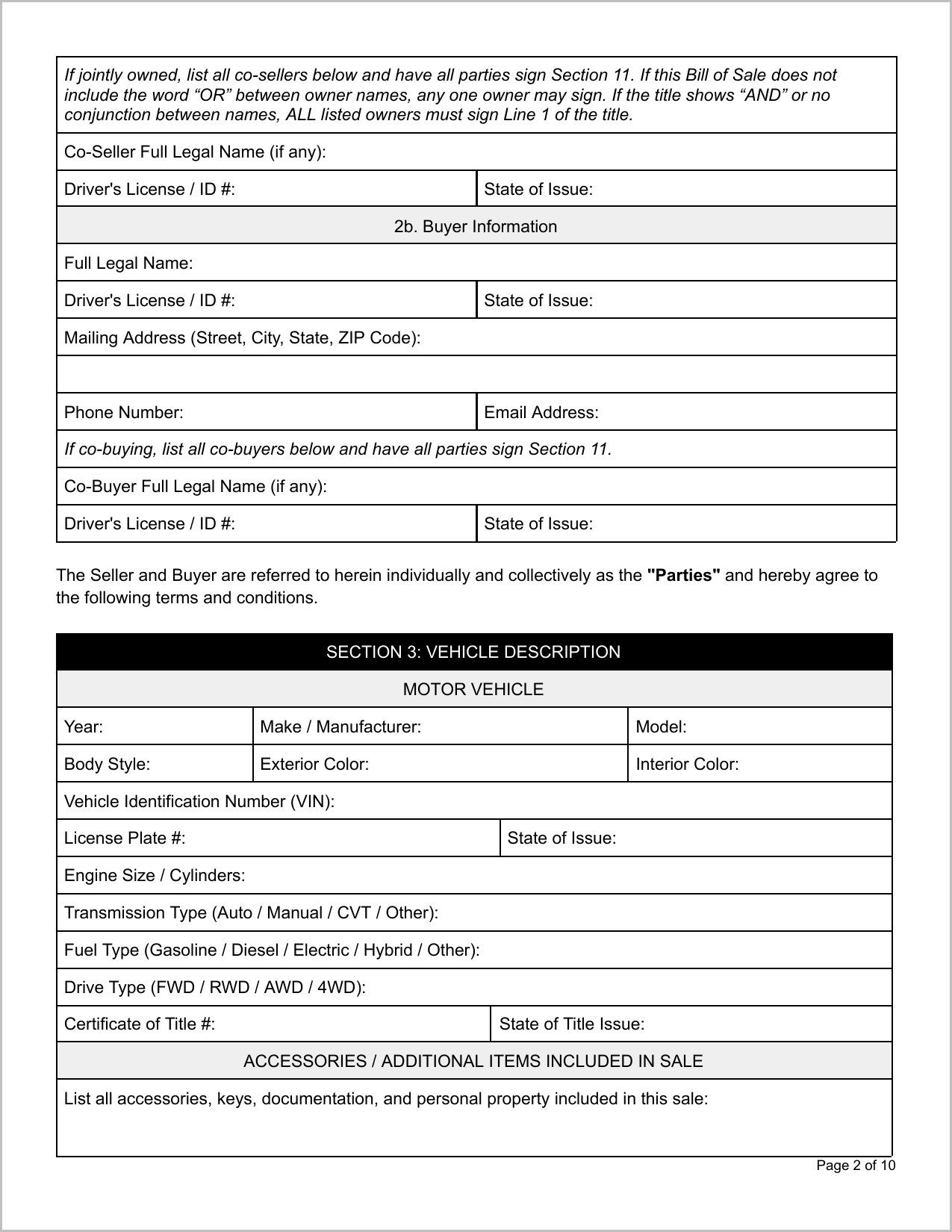
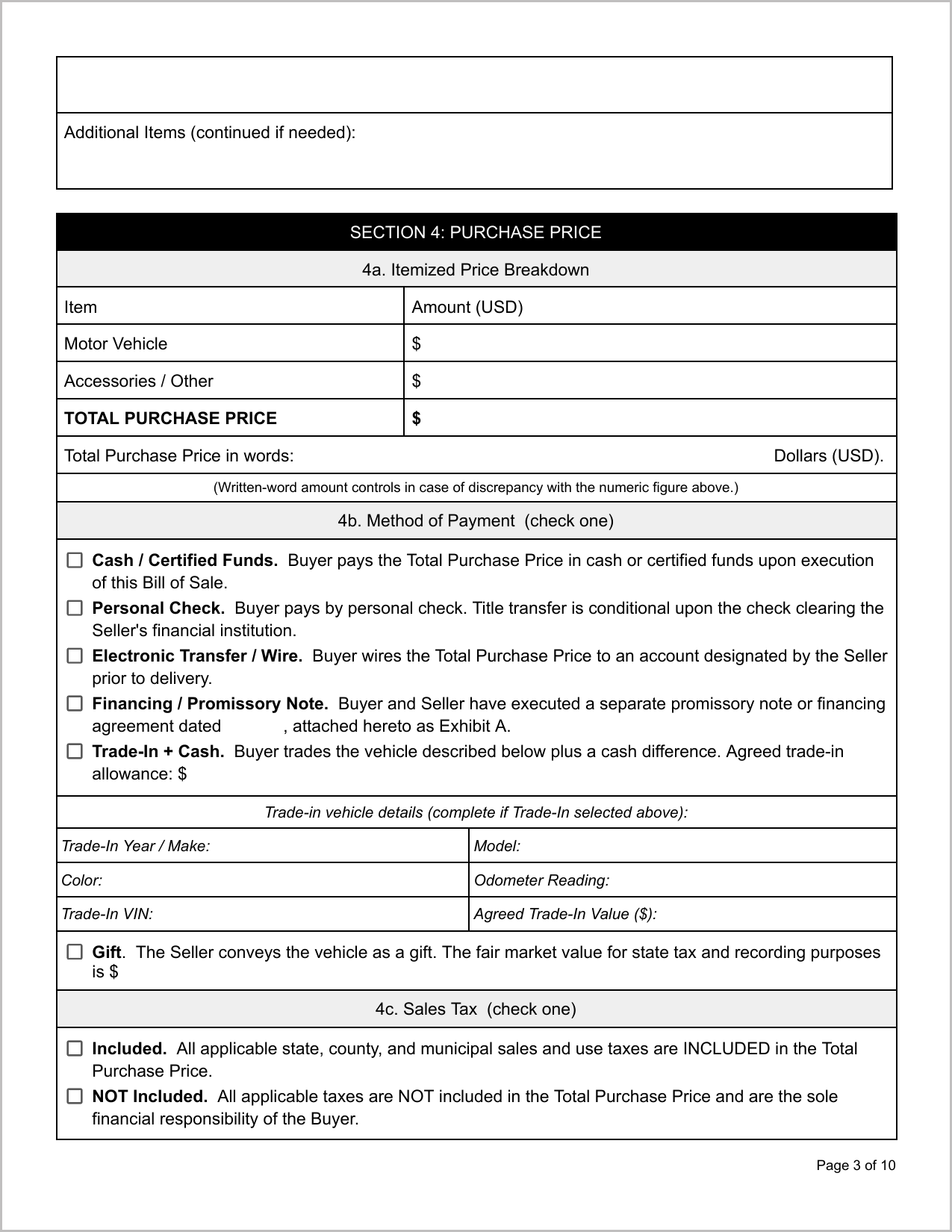
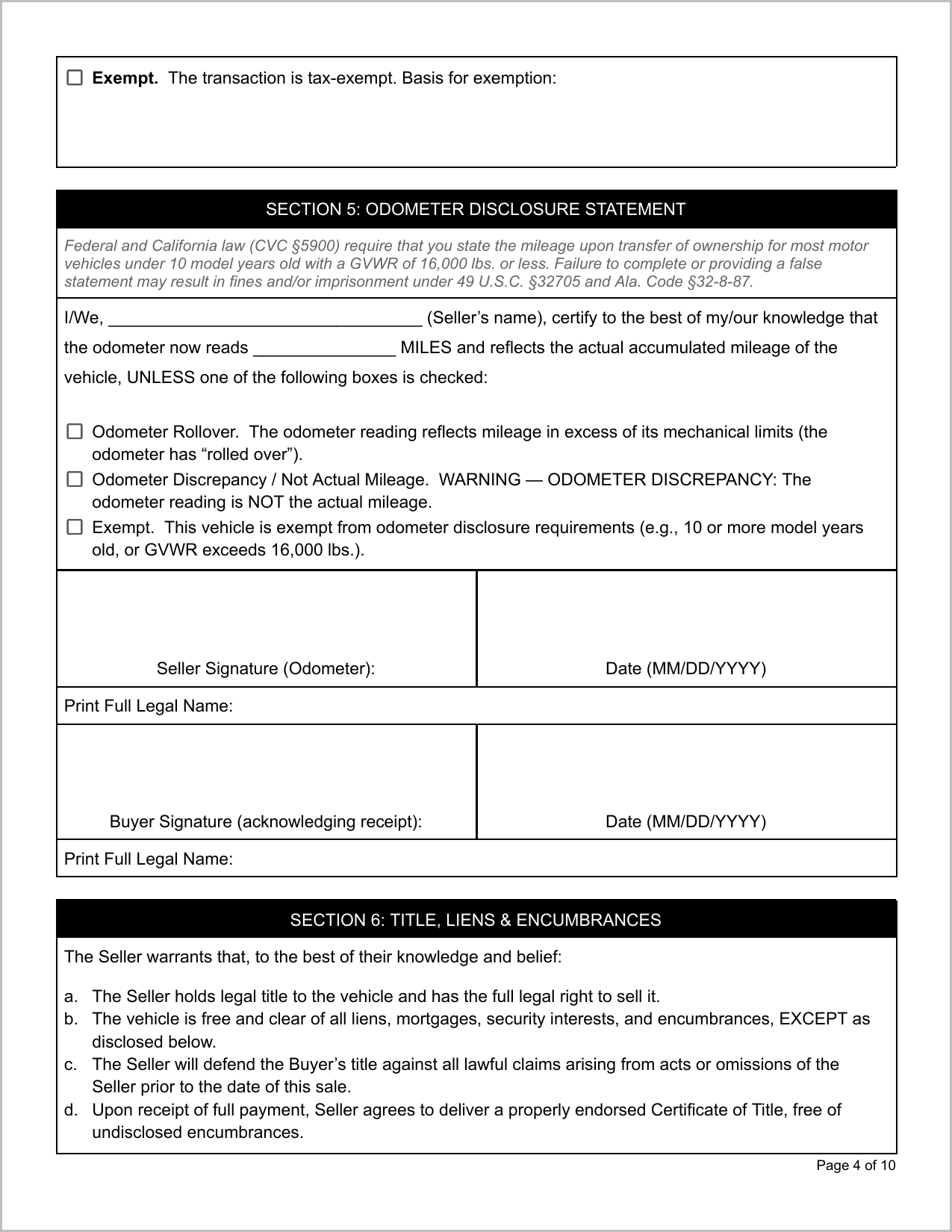
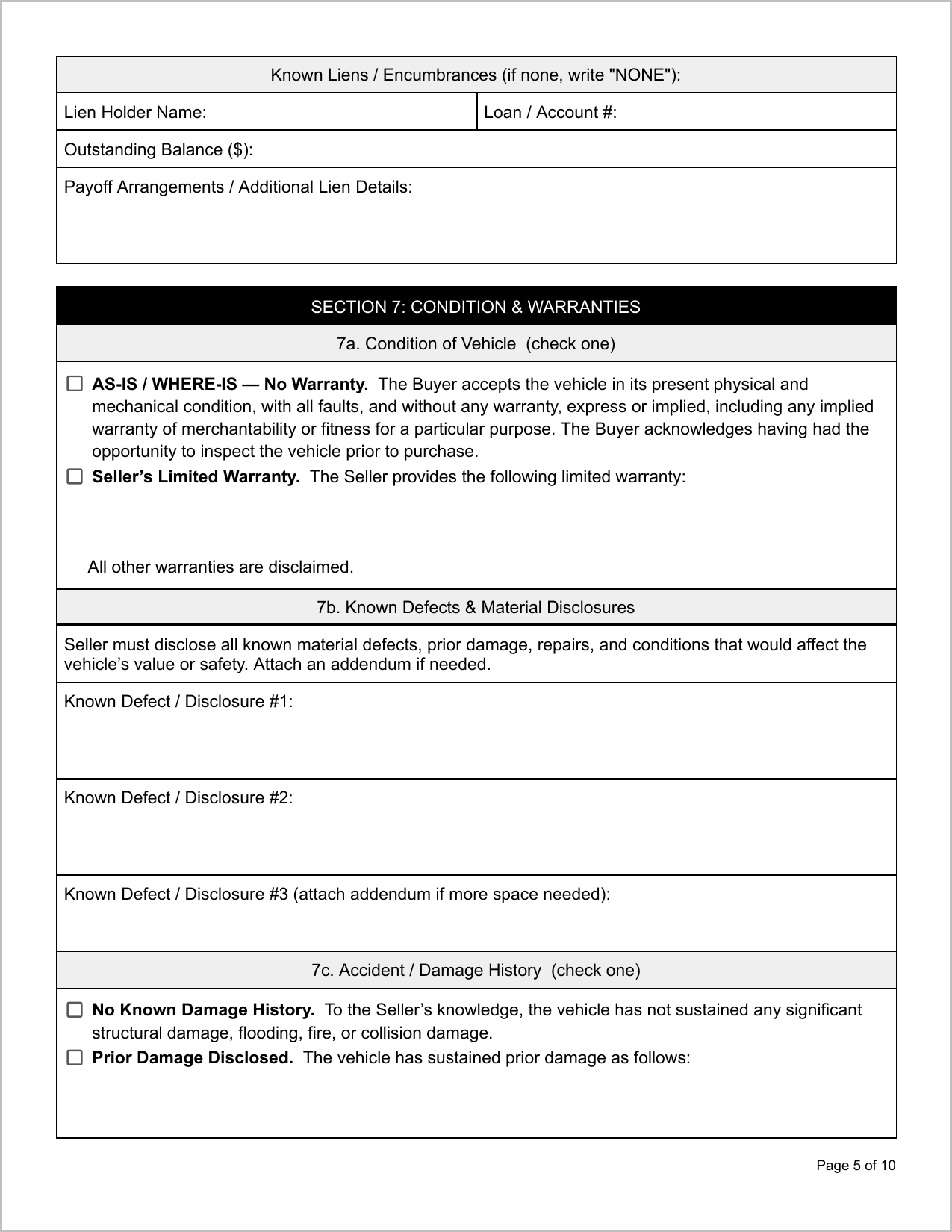
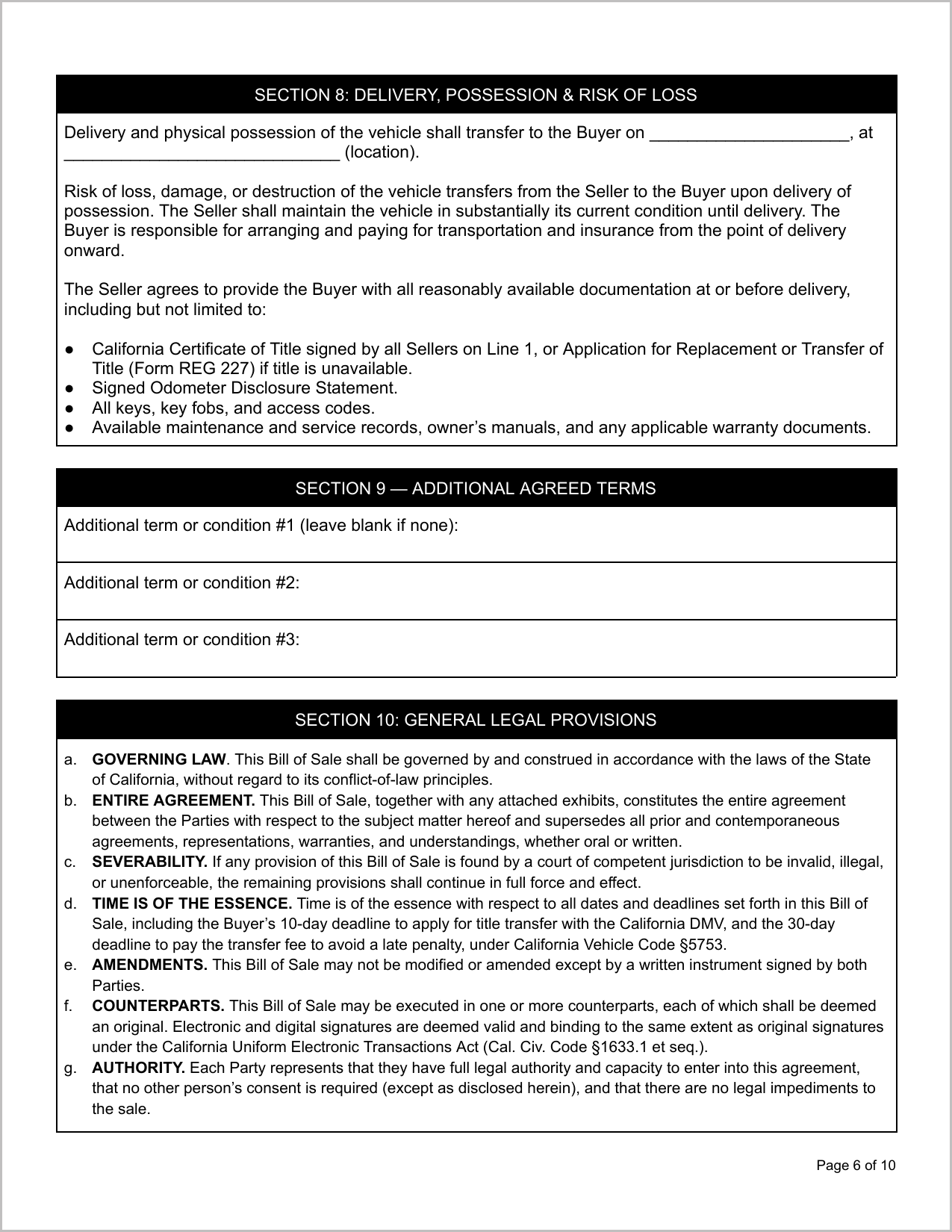
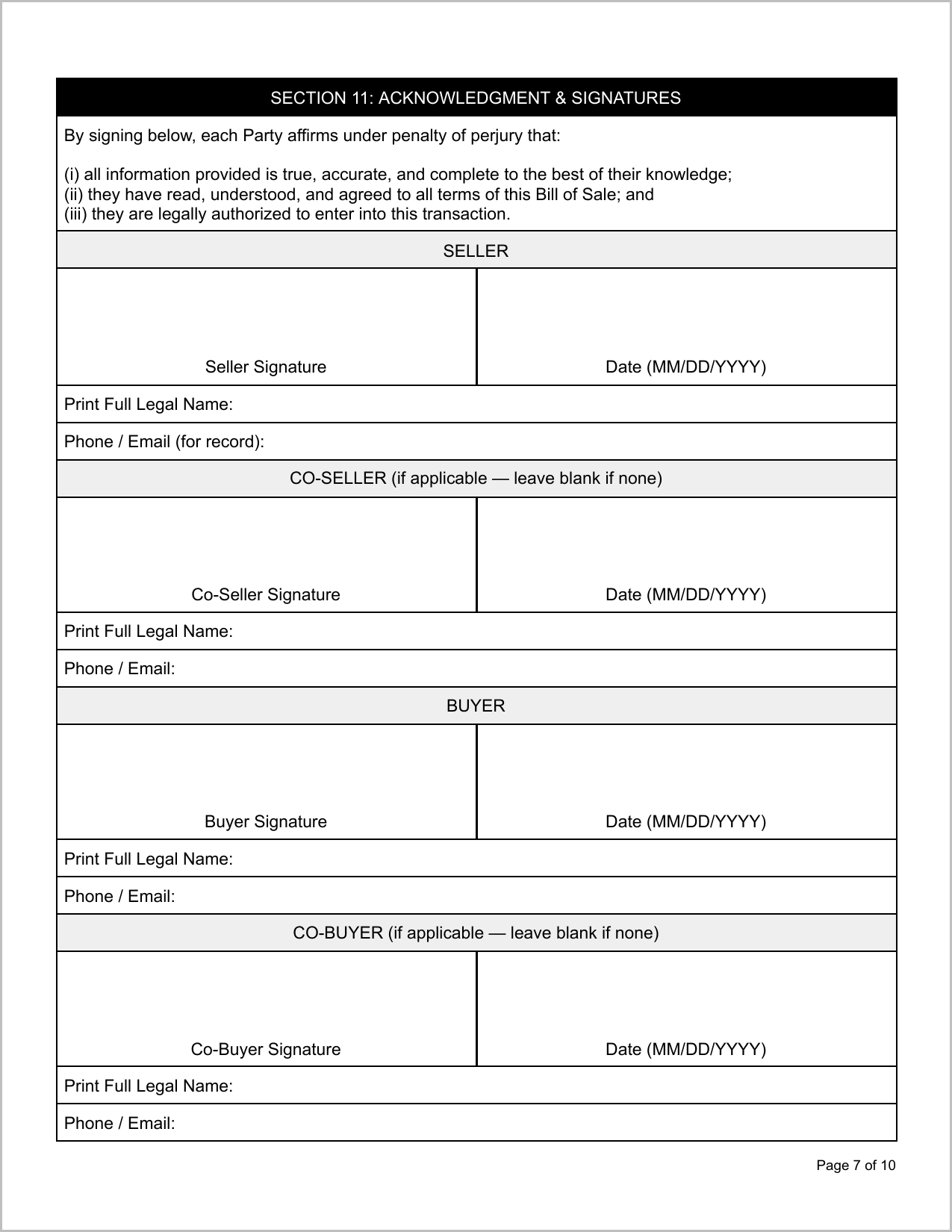
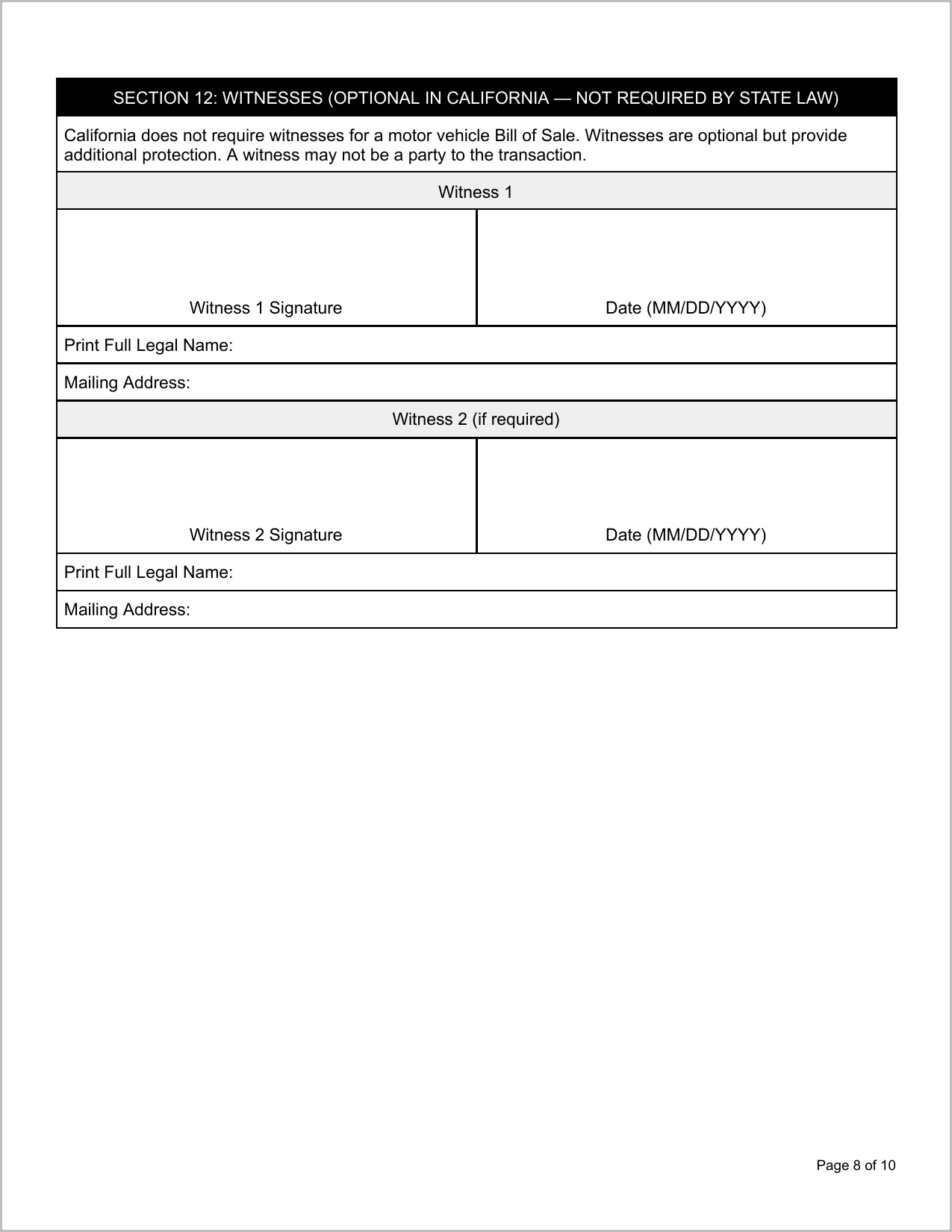
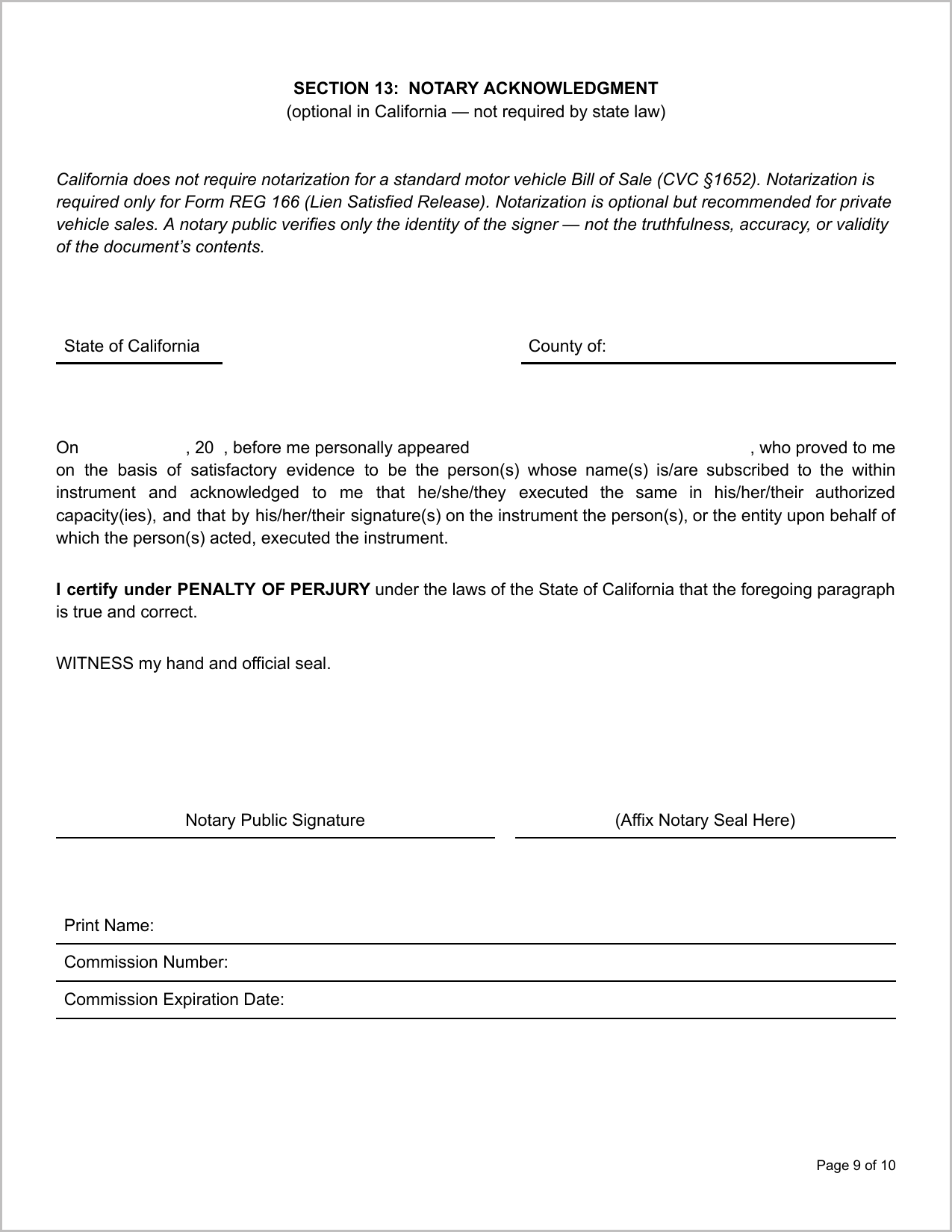
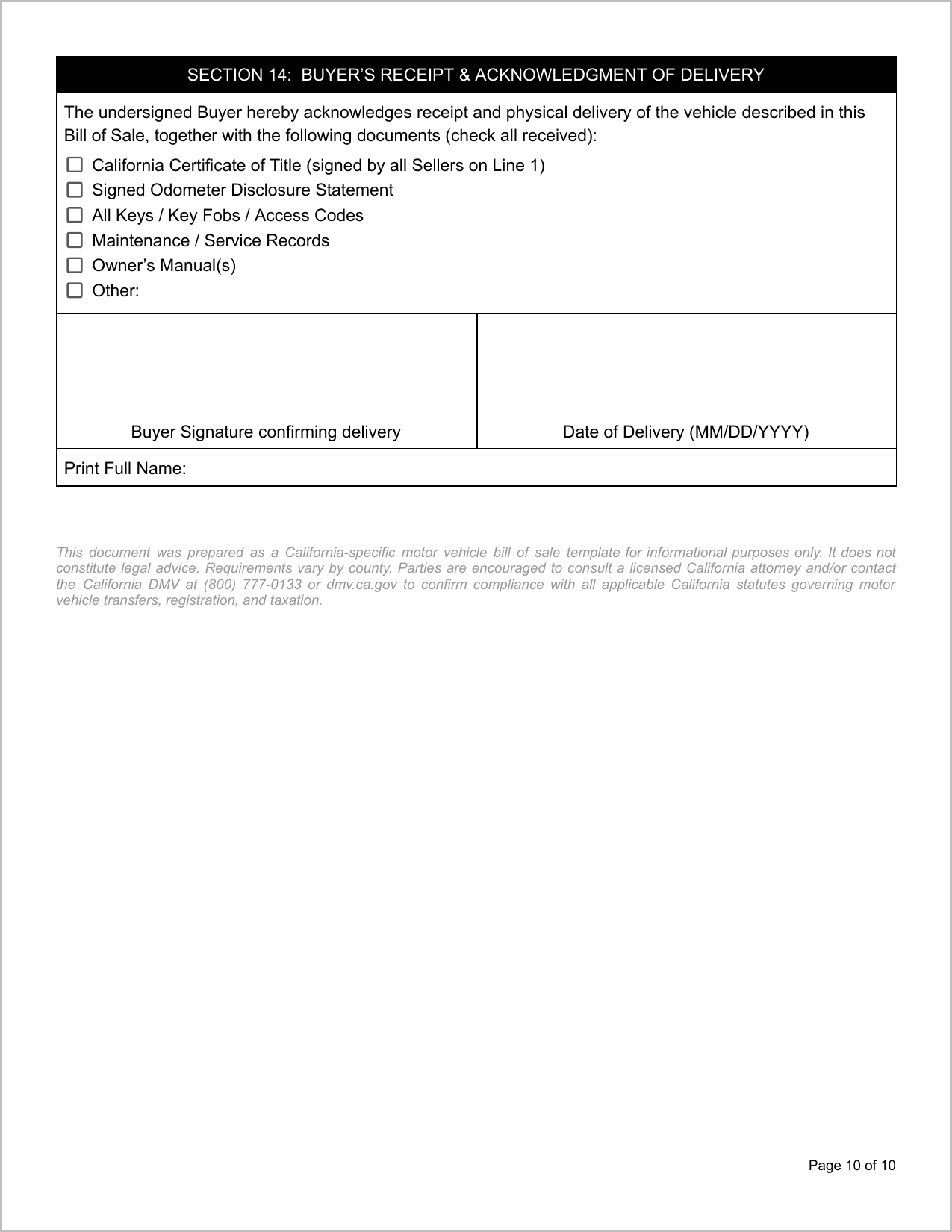
This template opens in Google Docs. Click Use Template to save a copy to your Drive, fill it out digitally, or print and complete by hand.
How to Fill Out the Template
Enter the seller’s name exactly as it appears on the California Certificate of Title. Enter the buyer’s name exactly as they want it on the new title.
In Section 3, copy the VIN character by character from the dashboard plate and the title. Include the odometer reading — required for vehicles less than 10 years old.
Enter the full agreed purchase price in Section 4. California calculates use tax on this figure. Both parties sign Section 11.
For a complete field-by-field walkthrough of every section, see: How to Fill Out a Motor Vehicle Bill of Sale →
How to Transfer a Car Title in California
For the Seller
Sign the title to release ownership. Include the odometer reading if the vehicle is less than 10 years old.
File the Notice of Transfer and Release of Liability (Form REG 138) online at dmv.ca.gov or by mail within 5 calendar days of the sale.
For the Buyer
Within 10 calendar days of the sale, visit a California DMV office with the signed title, this bill of sale, smog certificate (if required), valid ID, and payment for the $15 base transfer fee plus use tax and registration fees.
Lost Title
If the title is lost, complete Form REG 227 (Application for Replacement or Transfer of Title). Submit in person at a DMV office or by mail to: Department of Motor Vehicles, Vehicle Registration Operations, P.O. Box 942869, Sacramento, CA 94269.
Frequently Asked Questions
10 calendar days from the date of sale. Penalties apply after 10 days. The seller must also file a Notice of Transfer and Release of Liability (Form REG 138) within 5 days of the sale to remove their liability for the vehicle.
In California, license plates stay with the vehicle — they do not go with the seller. The seller leaves the plates on the car for the buyer. The buyer keeps the existing plates when they re-register the vehicle in their name.
Generally yes — the seller is responsible for providing a current smog certificate for vehicles more than four model years old. Exemptions include electric vehicles, diesel vehicles, vehicles sold to a family member, and natural gas vehicles over 14,000 lbs. Check with the California DMV for the complete list of exemptions.
No. California does not require notarization for a standard private party vehicle bill of sale. Notarization is optional but recommended for high-value sales.
The base title transfer fee in California is $15. Additional fees apply for late transfers, registration, and any applicable use tax. Use the DMV’s fee calculator at dmv.ca.gov to estimate your total fees.
Yes. California provides an optional Form REG 135, but any complete and signed bill of sale is acceptable. Your bill of sale should include the seller and buyer names, vehicle description, VIN, purchase price, odometer reading, and date of sale.
This template and all information on this page are provided for informational purposes only and do not constitute legal advice. Contact the California DMV at dmv.ca.gov to confirm current requirements before completing your transaction.