

In an age of automated bank feeds and expensive cloud software, the art of manual bookkeeping is often lost. Yet, for many small business owners, manually recording transactions is the only way to truly understand the pulse of their company.
Writing down your income and expenses forces you to acknowledge every dollar that leaves your account. To support this “back-to-basics” approach, we have released a comprehensive bundle of 5 Free Printable Accounting Ledger Templates.
These PDF forms range from simple single-entry logs for freelancers to complex double-entry journals for established businesses.
Here is how to use each template to keep your finances airtight.
1. The Double-Entry General Ledger
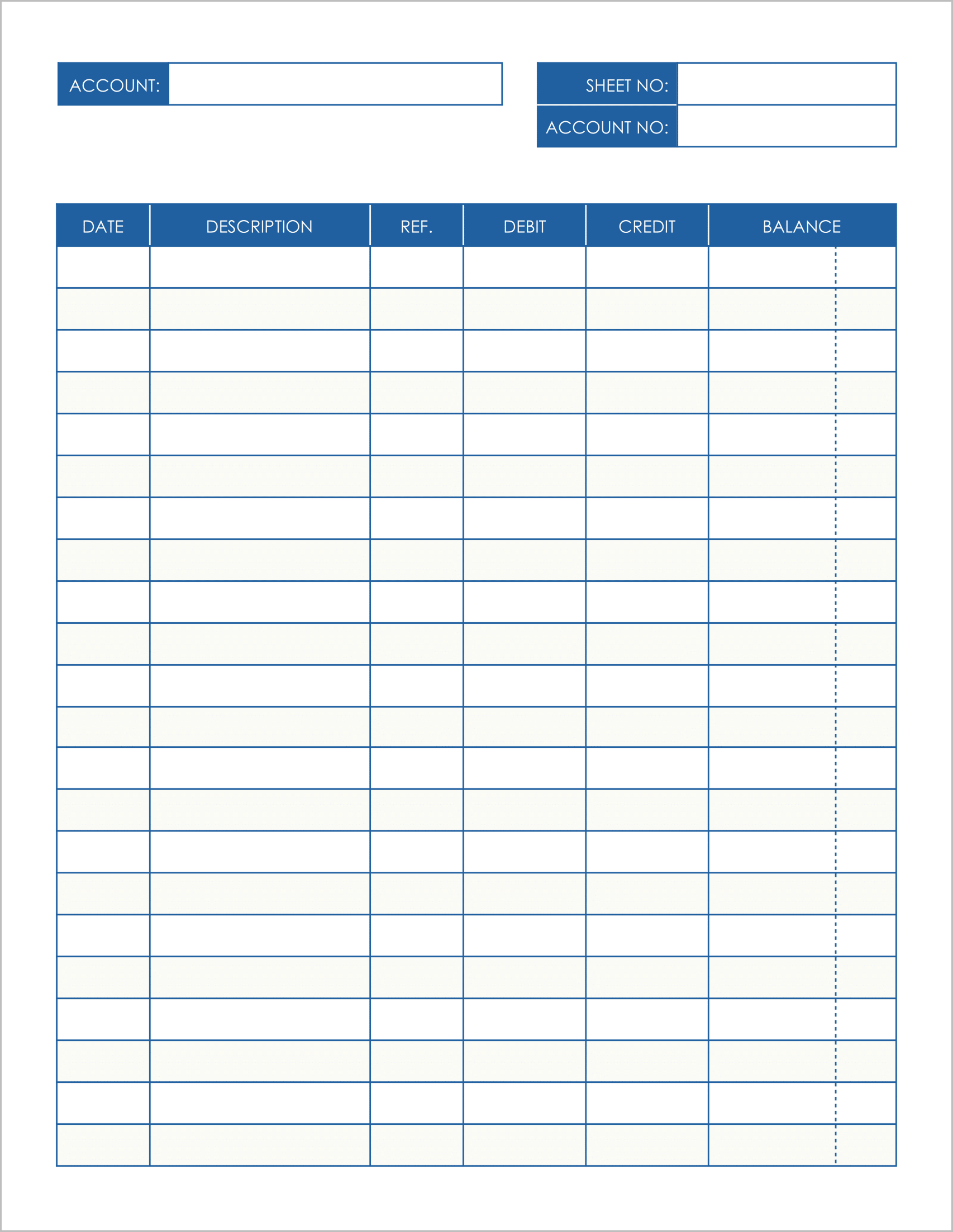
Best for: Accountants and businesses using the accrual method.
This is the standard tool for professional accounting. It utilizes the traditional “T-Account” structure. The template includes headers for Sheet No and Account No, allowing you to organize your binder by asset or liability class.
The columns allow you to record the Date, Description, Reference (Ref.), Debit, Credit, and running Balance. Use this for your core General Ledger entries.
2. The Chronological Journal
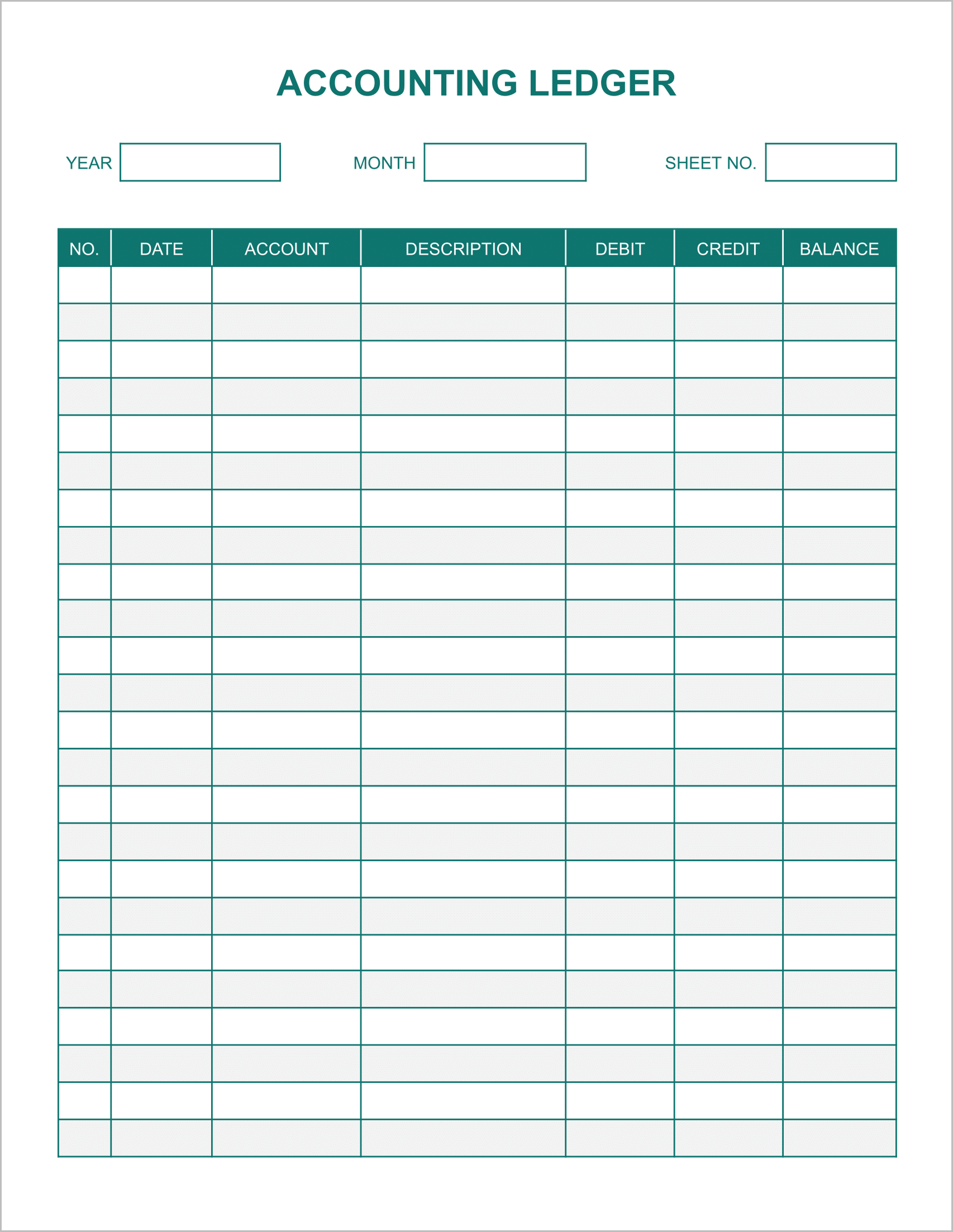
Best for: Recording daily transactions as they happen.
While the General Ledger separates accounts, this journal is designed to capture everything in order. It features Year and Month fields at the top, making it the perfect “Book of Original Entry.”
Unlike the standard ledger, this form includes a specific Account column within the table, so you can specify which account is being affected line-by-line without switching pages.
3. The Single-Entry Cash Log
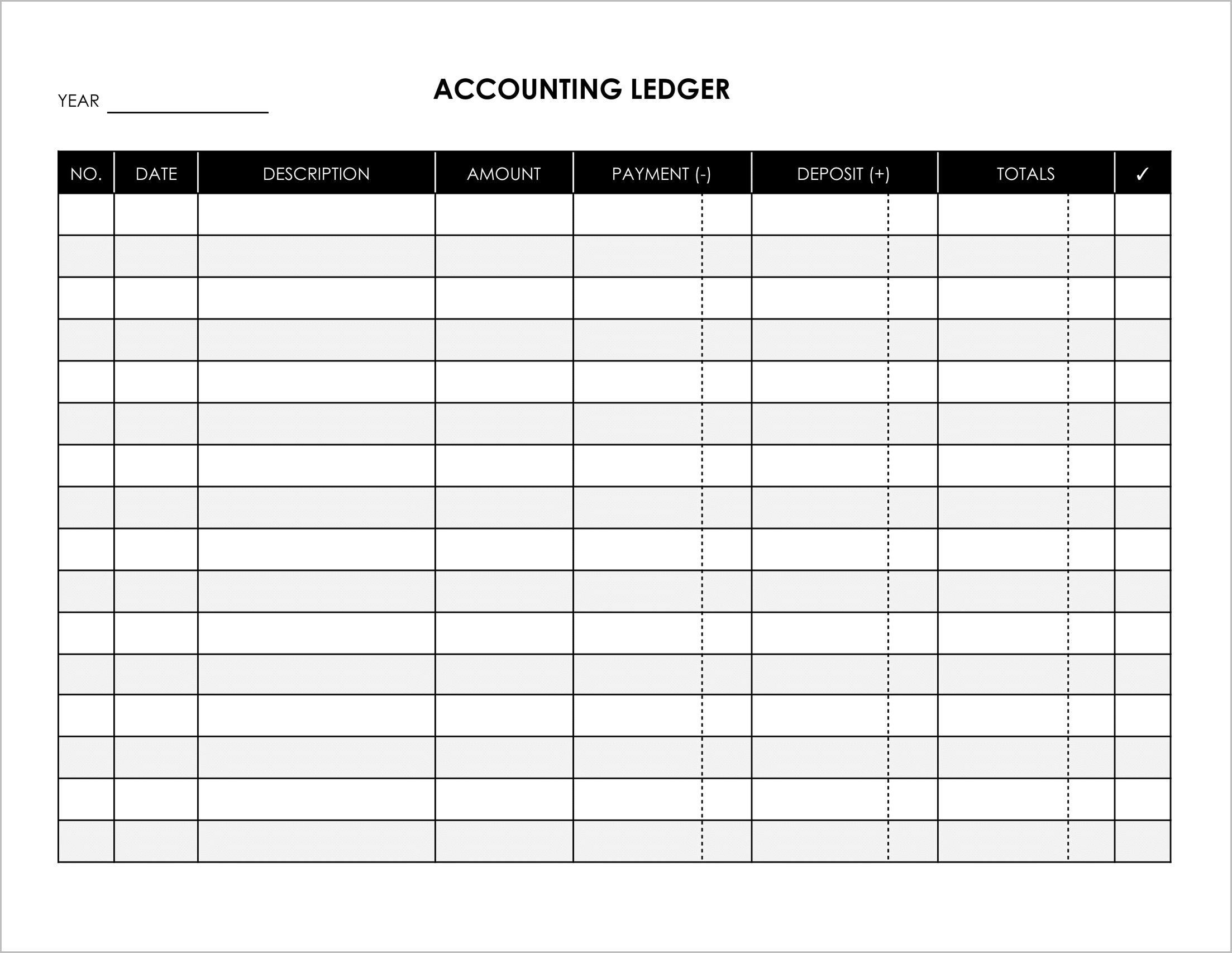
Best for: Freelancers, hobbyists, and cash-basis taxpayers.
If “Debits vs. Credits” gives you a headache, use this template. It simplifies accounting into two easy actions: money out and money in.
The columns are labeled Payment (-) and Deposit (+). It is perfect for a simple checkbook register or tracking petty cash, offering a straightforward running Amount and Total.
4. The Inventory & Expense Splitter
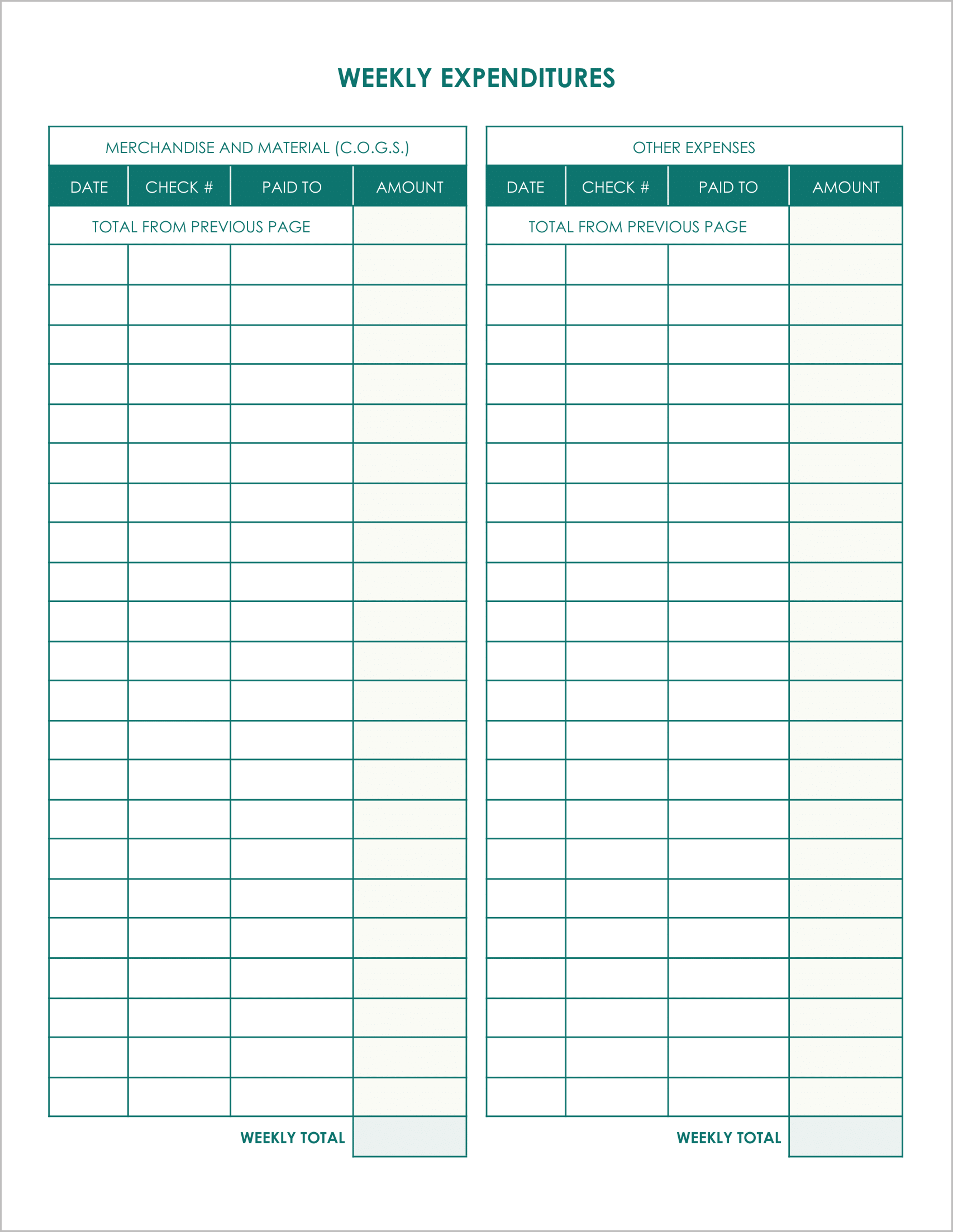
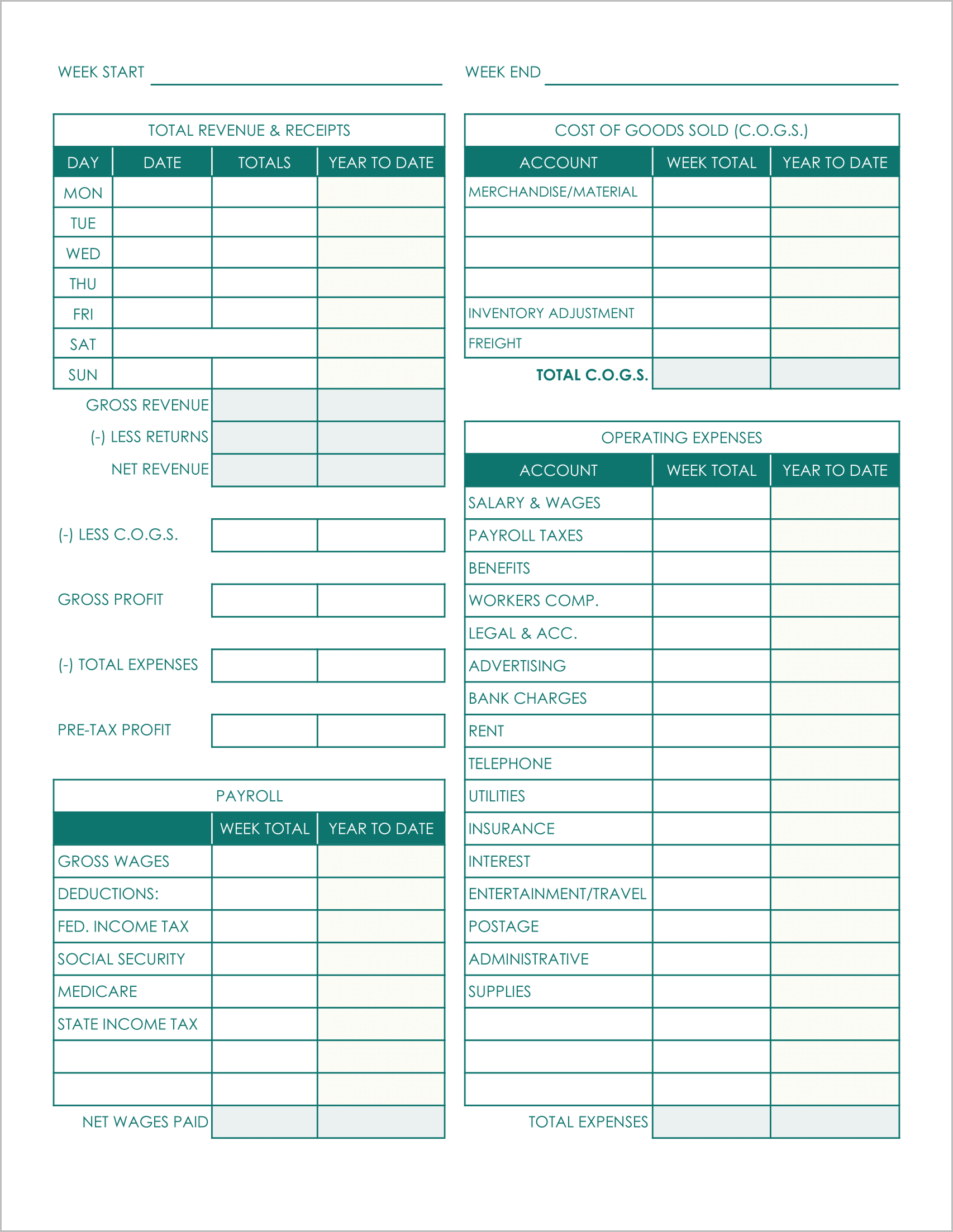
Best for: Retailers and makers who need to track Cost of Goods Sold (COGS).
Knowing your gross margin is critical. This template forces you to separate your variable costs from your fixed costs.
The top section is dedicated strictly to Merchandise and Material (C.O.G.S.) , while the bottom section handles Other Expenses.
This separation helps you instantly see if your product pricing is covering your materials before you even worry about rent or utilities.
It also acts as a weekly “report card” for your business. It tracks Total Revenue & Receipts day-by-day (Mon-Sun). It then leads you through the accounting equation: taking Gross Revenue less Returns, minus C.O.G.S., to find your Net Revenue.
It even includes a Payroll section to track Gross Wages versus Net Wages Paid , giving you a true Pre-Tax Profit figure for the week.
5. The Transaction Fee Auditor
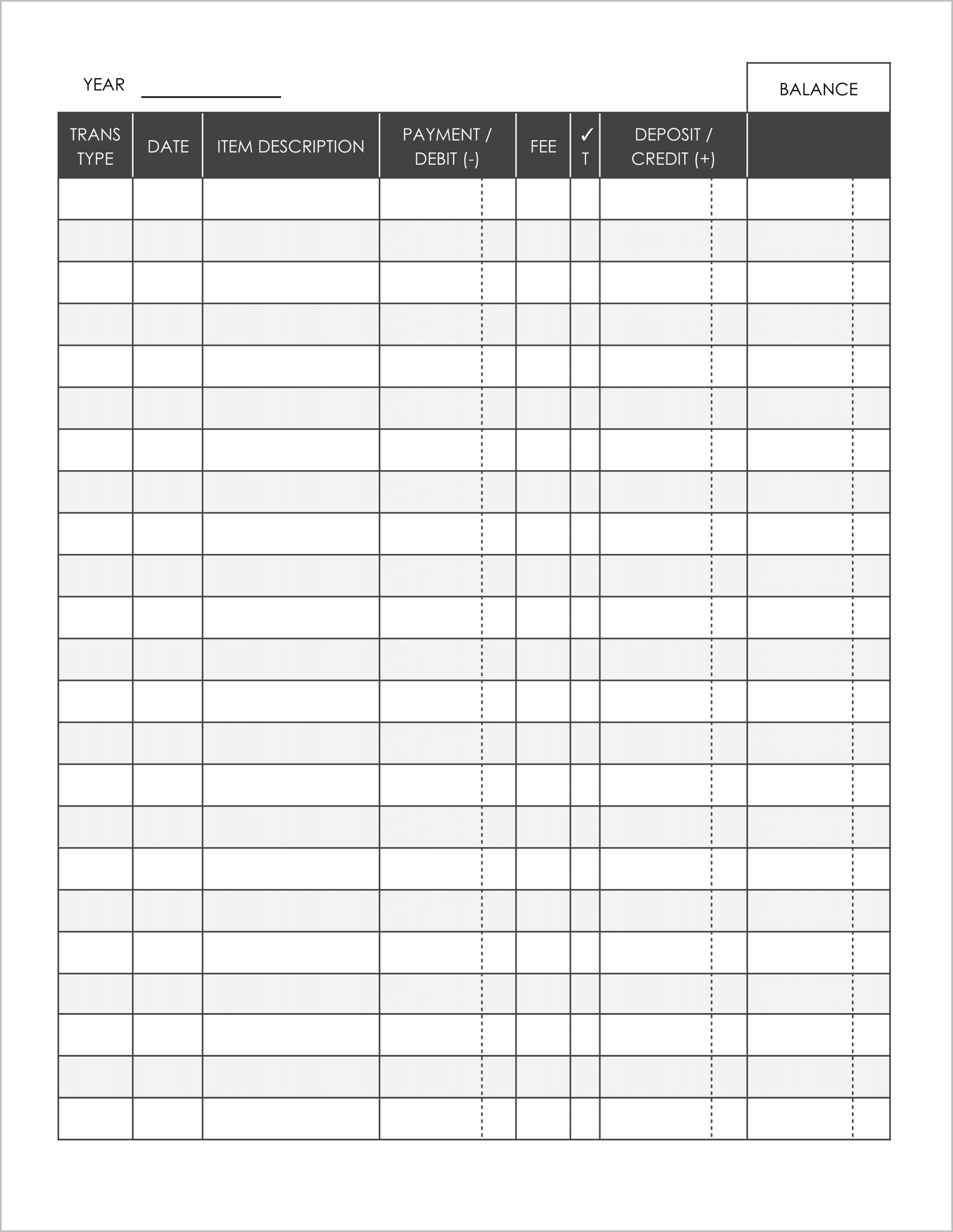
Best for: Reconciling bank statements and merchant accounts.
Hidden fees kill profit margins. This template is designed to catch them. It includes a specific column for Fee right next to the Payment/Debit column.
This is ideal for tracking PayPal, Stripe, or bank wire fees that often get forgotten in standard ledgers. It allows you to maintain an accurate Balance that matches your bank statement to the penny.
Tips for Manual Bookkeeping
- The “Monday Morning” Rule: Print the Weekly Expenditures sheet every Monday. Commit to logging expenses daily. If you wait until the end of the month, you will forget a receipt.
- Bind by Category: Use a 3-ring binder with dividers. Keep your Payroll records (from Template 5) separate from your Merchandise logs (Template 4) for easier tax filing.
- Don’t Ignore COGS: Use Template 4 to strictly track Merchandise/Material, Inventory Adjustment, and Freight. This number is vital for calculating your taxable income correctly.