
Selling or buying a vehicle in Texas? Title transfer must be completed within 30 days at the county tax assessor-collector’s office — and effective July 1, 2025, temporary tags are replaced with metal license plates issued at the time of sale.
This free template is formatted for Texas’s requirements and works alongside Form 130-U at your county tax assessor-collector’s office.
Click Get This Template below to open it in Google Docs, then click Use Template to save a copy to your Drive.
For templates for all 50 states, visit the Motor Vehicle Bill of Sale Templates →
On this page:
- What Is a Texas Motor Vehicle Bill of Sale?
- Is a Bill of Sale Required in Texas?
- Texas-Specific Requirements
- Free Texas Motor Vehicle Bill of Sale Template
- How to Fill Out the Template
- How to Transfer a Car Title in Texas
- Frequently Asked Questions
What Is a Texas Motor Vehicle Bill of Sale?
A Texas motor vehicle bill of sale is a written record of a private vehicle sale.
Texas uses Form 130-U (Application for Texas Title and/or Registration) as the primary title transfer document. A signed bill of sale showing the sales price is required alongside Form 130-U when submitting to the county tax assessor-collector’s office.
Is a Bill of Sale Required in Texas?
A signed bill of sale is required for trailers and for vehicles 25 years old and older. For all other private party sales, Form 130-U serves as the primary document but a bill of sale showing the sales price should accompany the title application. A detailed written bill of sale protects the seller and documents the transaction price, which determines the 6.25% motor vehicle sales tax.
Texas-Specific Requirements
1. 30-Day Deadline
Vehicles must be titled in the buyer’s name within 30 days from the date of sale. Failing to transfer the title within 30 days may result in penalty fees and leave the seller responsible for tickets, toll violations, and other incidents associated with the vehicle.
2. Metal Plates at Point of Sale (July 1, 2025)
Effective July 1, 2025, temporary paper tags are replaced with metal license plates issued at the point of sale. Buyers receive metal plates when completing the title transfer at the county tax office.
3. Sales Tax: 6.25% (SPV Applies)
Texas charges 6.25% motor vehicle sales and use tax on private party sales. Standard Presumptive Value (SPV) applies — tax is calculated on the greater of the sales price or the SPV (a percentage of the vehicle’s wholesale value based on similar vehicles sold at auction). SPV does not apply to vehicles more than 25 years old.
4. Seller: File Vehicle Transfer Notification
The seller should file a Vehicle Transfer Notification with TxDMV at txdmv.gov to protect against liability after the sale. This can be done online. The seller also has the option to remove their license plates and registration sticker — Texas plates may be transferred to a vehicle of the same classification.
5. Where to Complete the Transfer
Title transfers are completed at the county tax assessor-collector’s office in the buyer’s county of residence. Buyers in 17 specific counties (including Dallas, Harris, Travis, Tarrant) must also obtain a passing vehicle emissions inspection before registering.
6. Odometer Disclosure
Odometer disclosure is required for vehicles model year 2011 and newer that are less than 20 years old. The disclosure is completed on the title assignment.
7. Notarization
Texas does not require notarization for a standard private party vehicle bill of sale. Notarization is required for a Gift Transfer Affidavit (Form 14-317). It is optional but recommended for all high-value sales.
Free Texas Motor Vehicle Bill of Sale Template
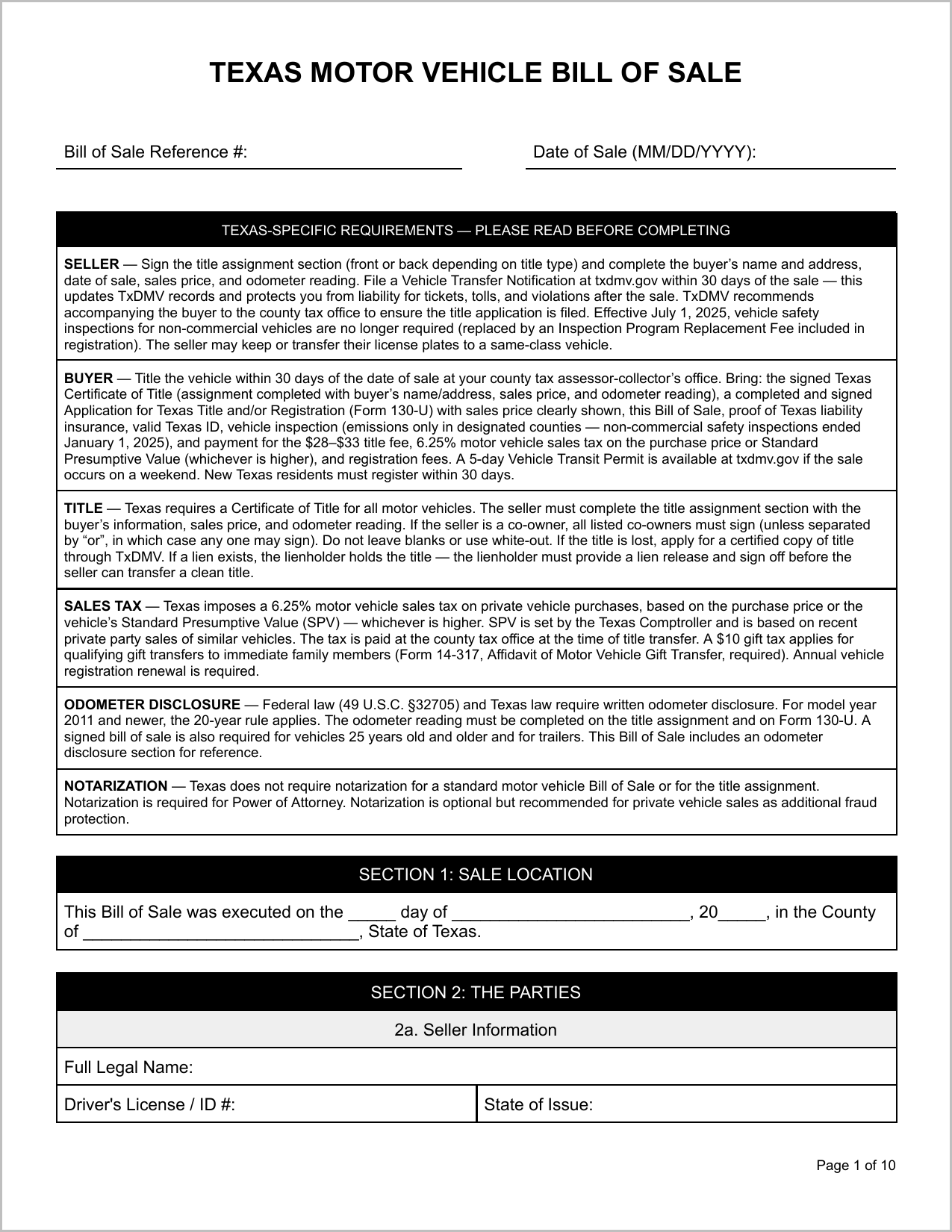
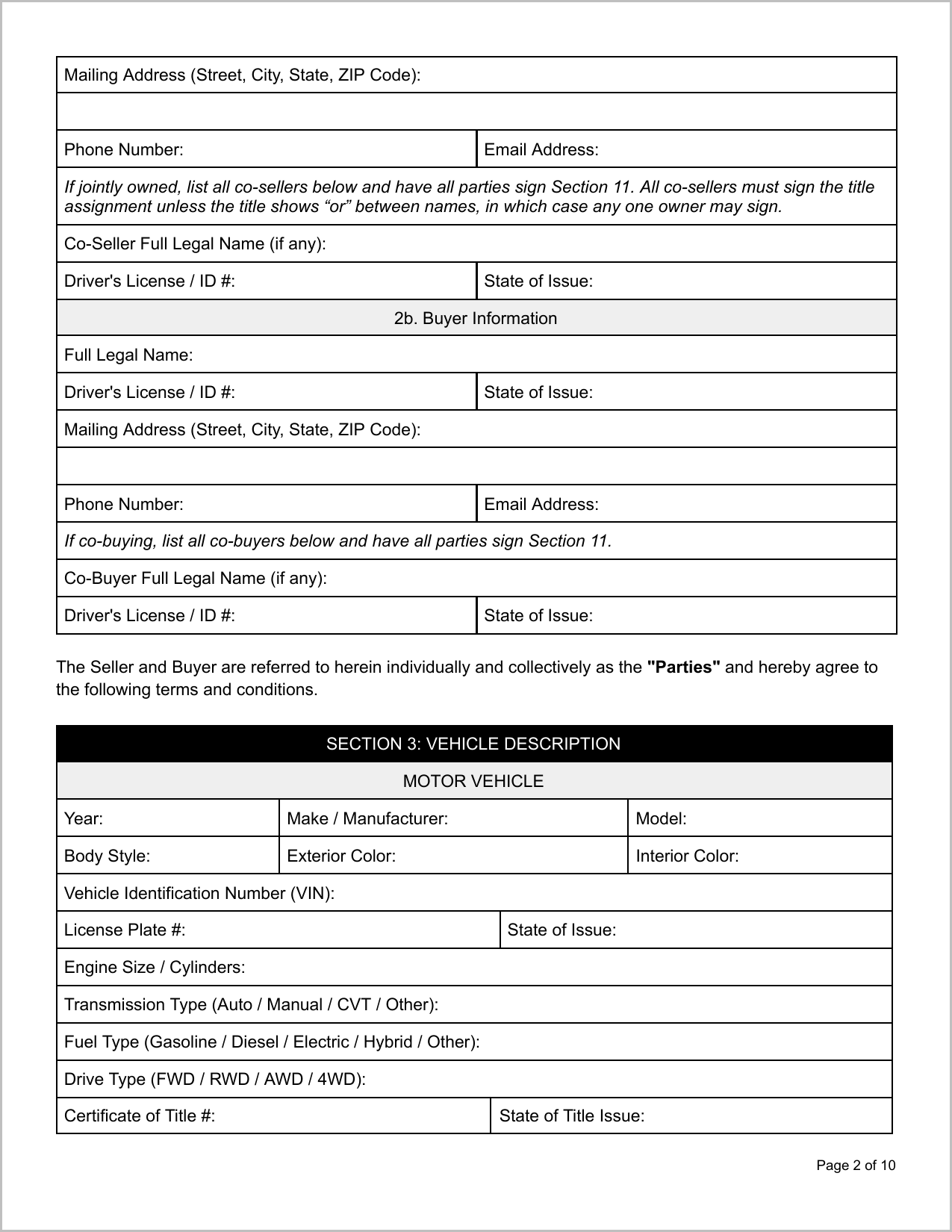
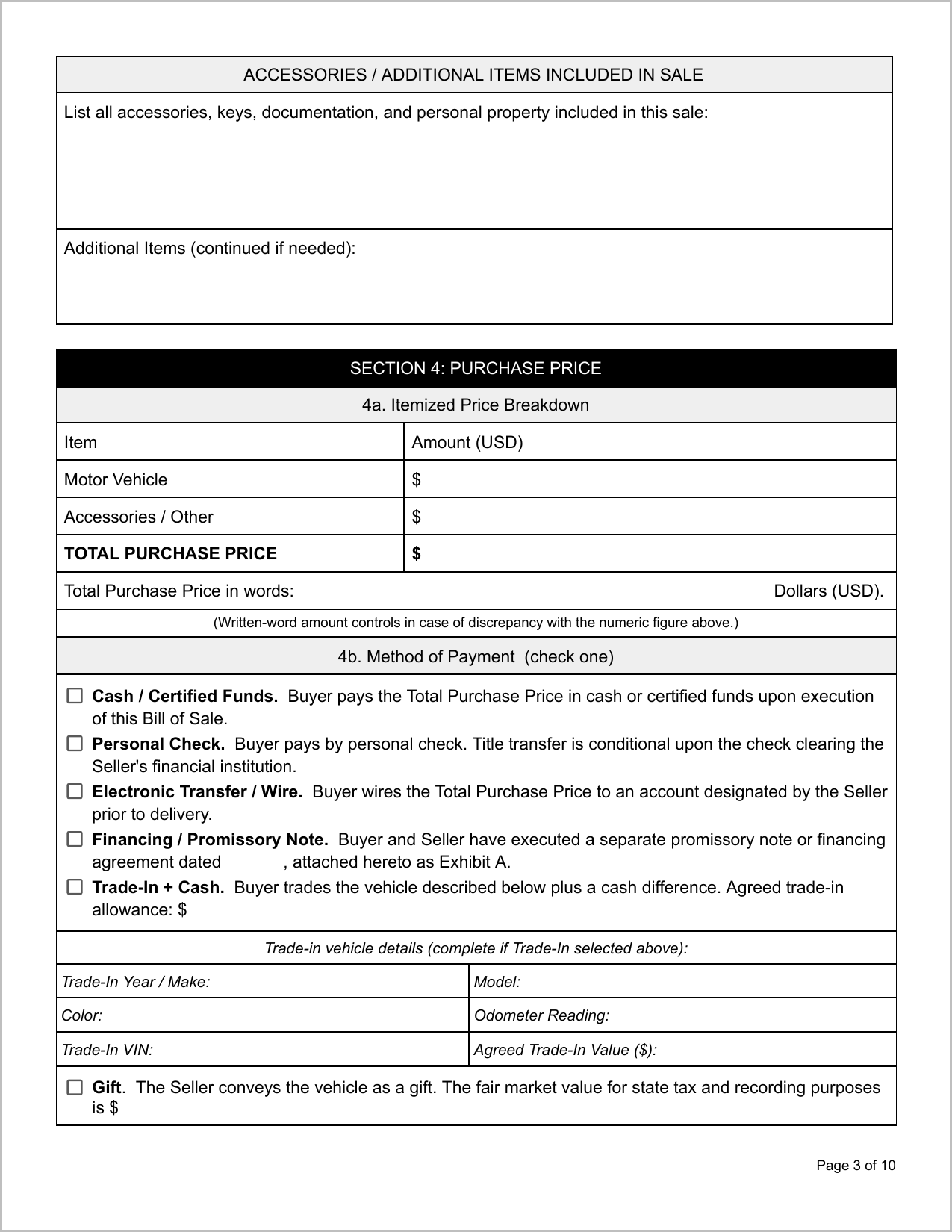
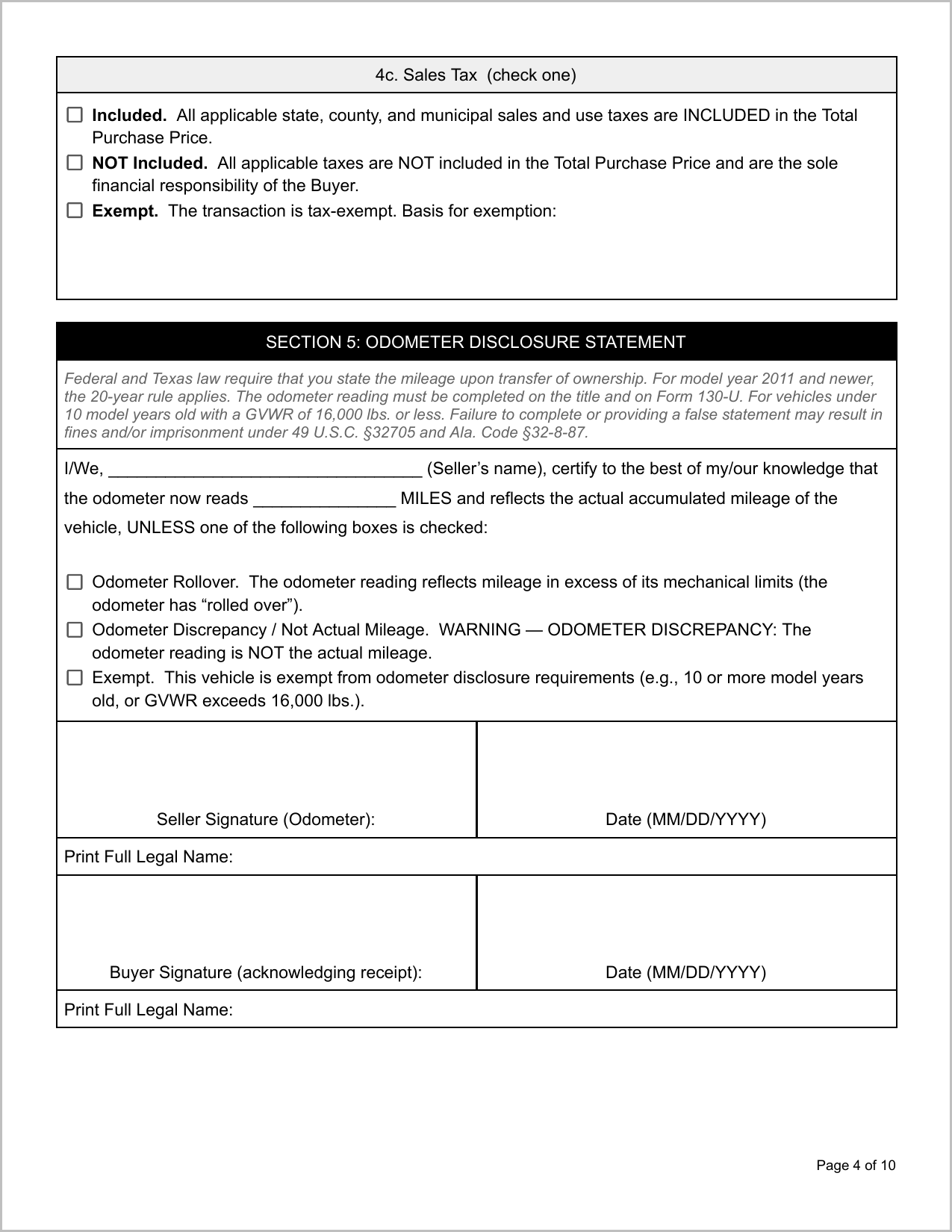
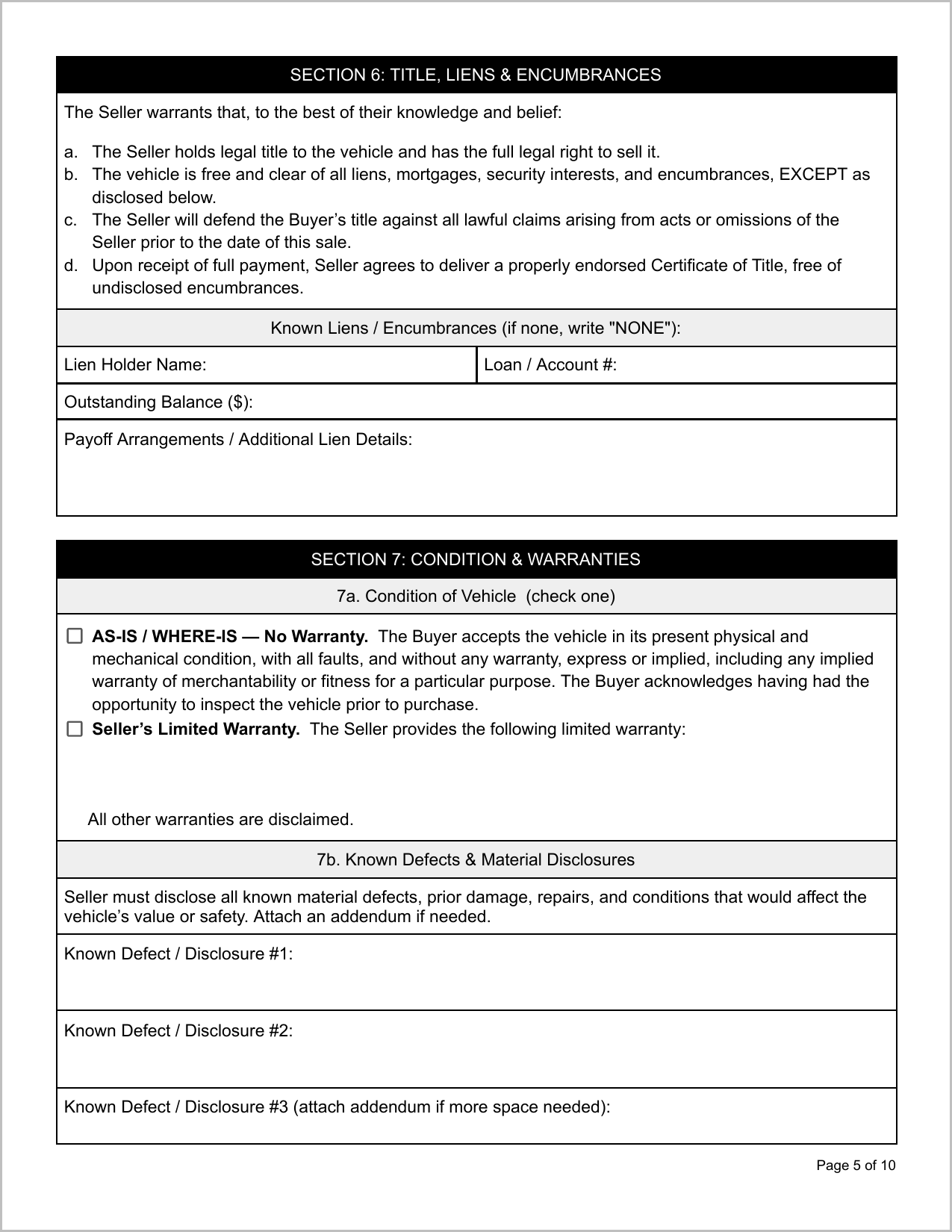
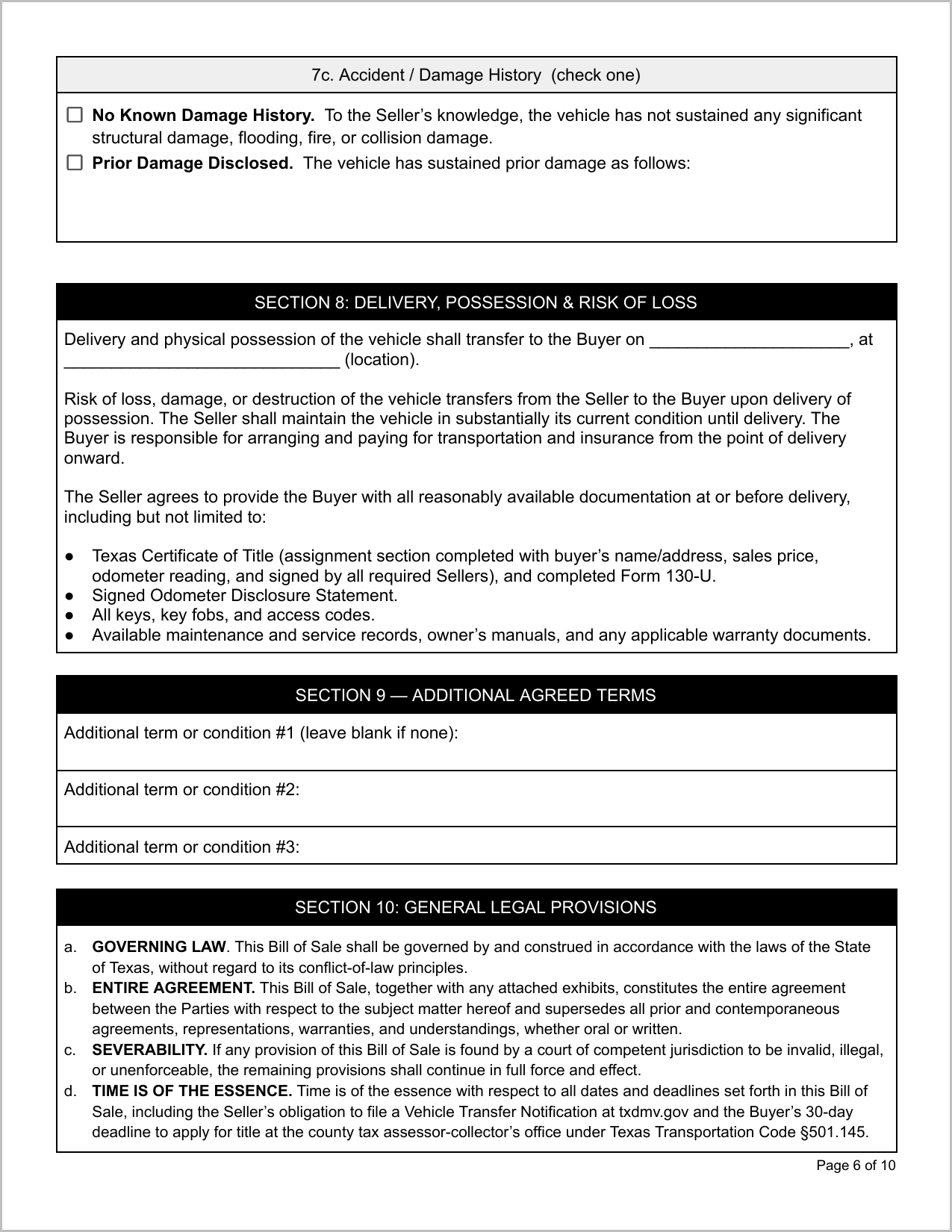
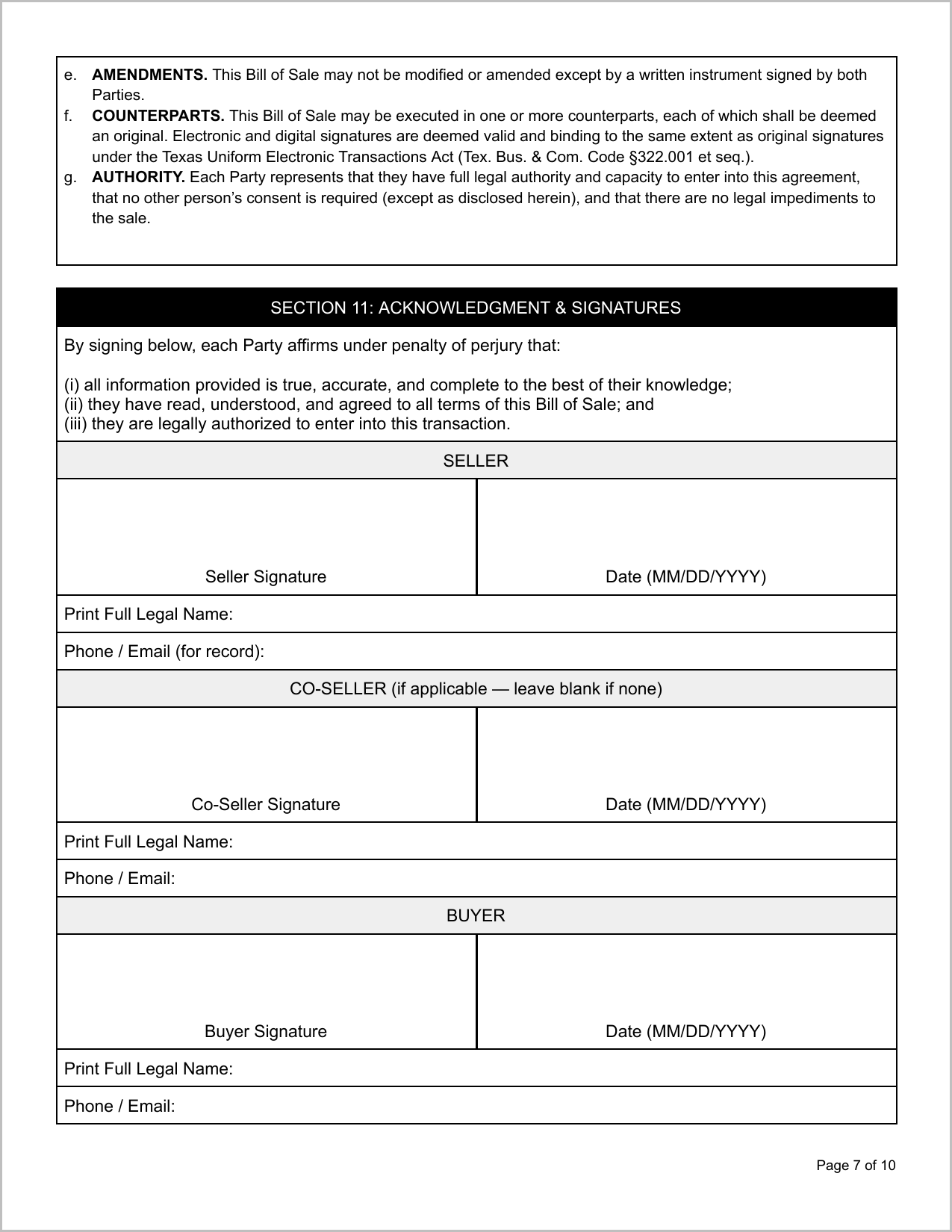
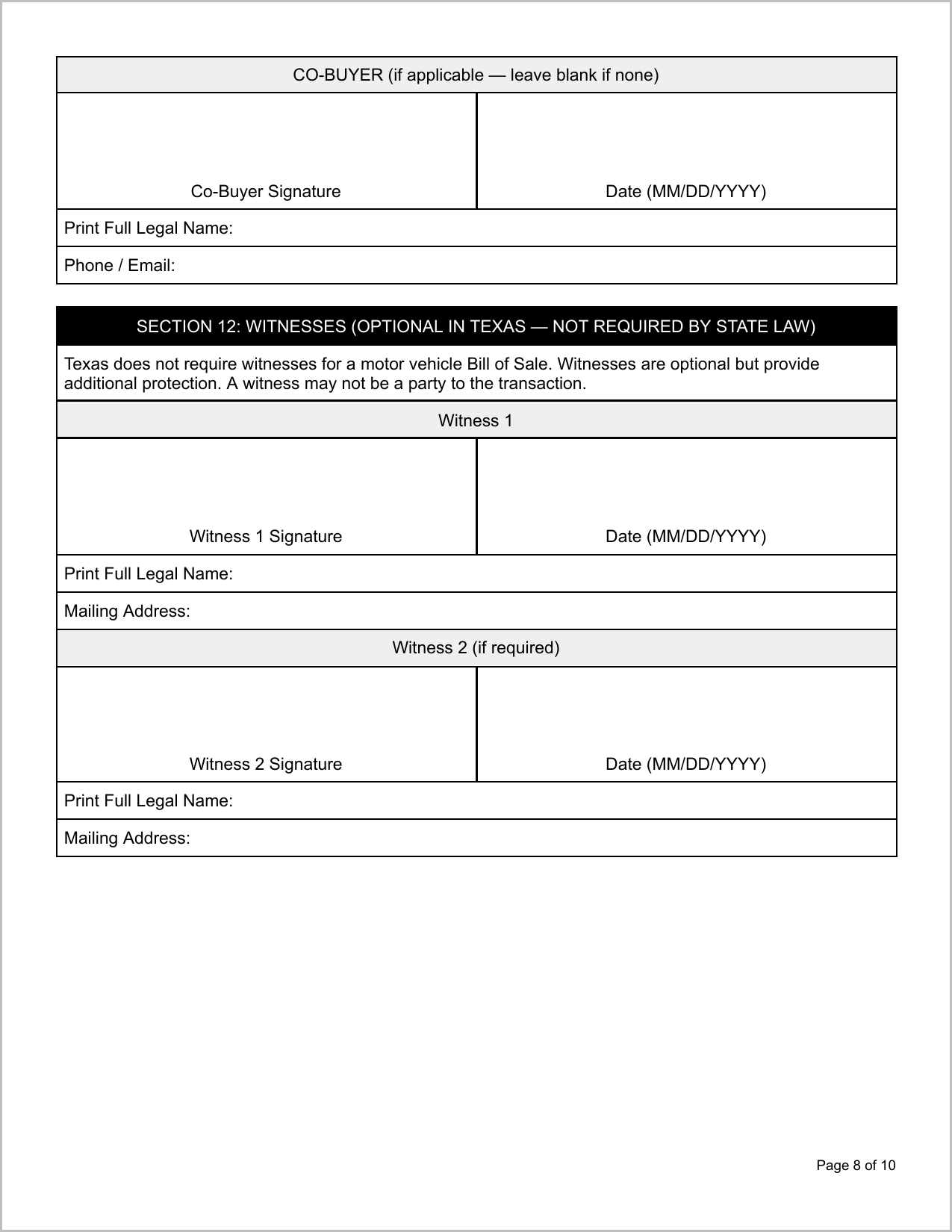
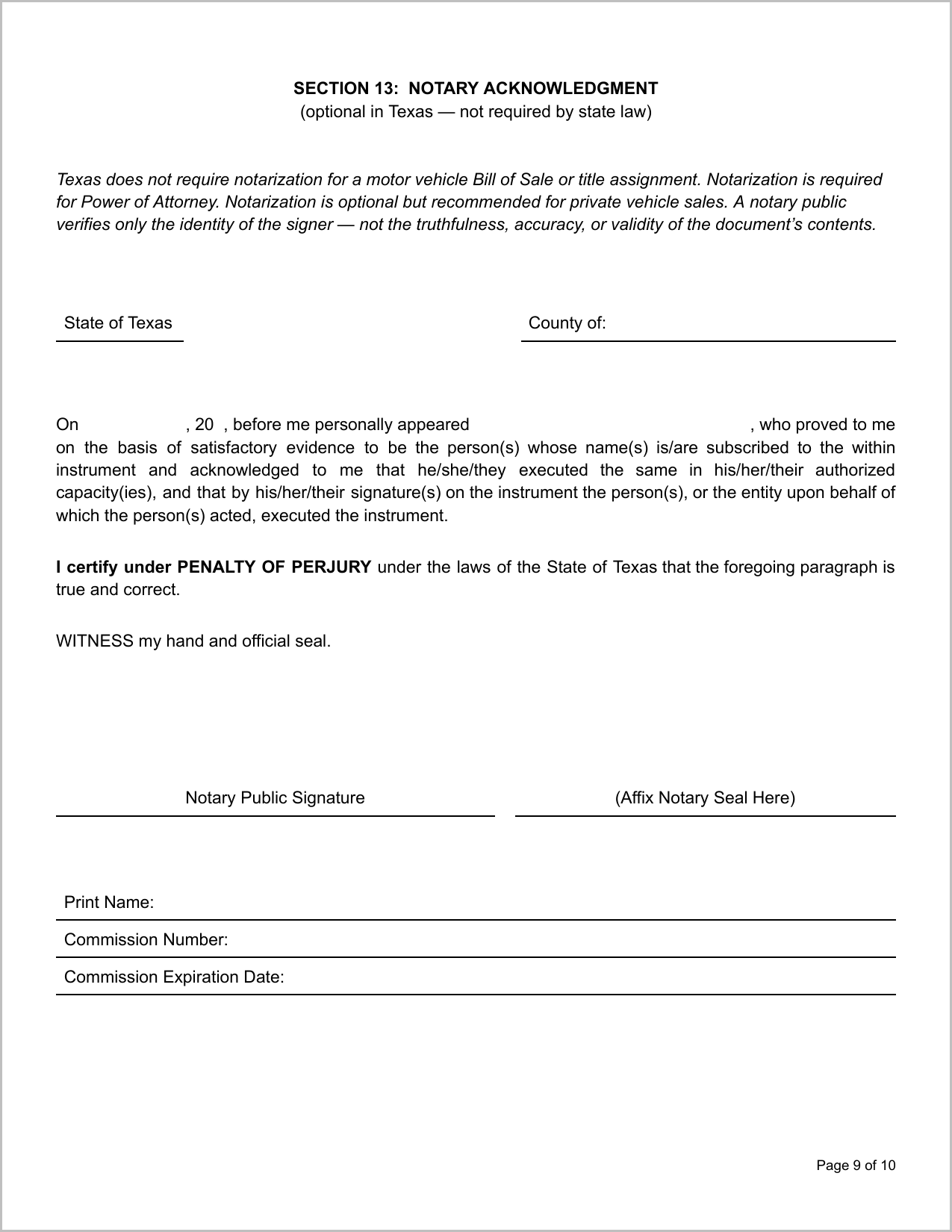
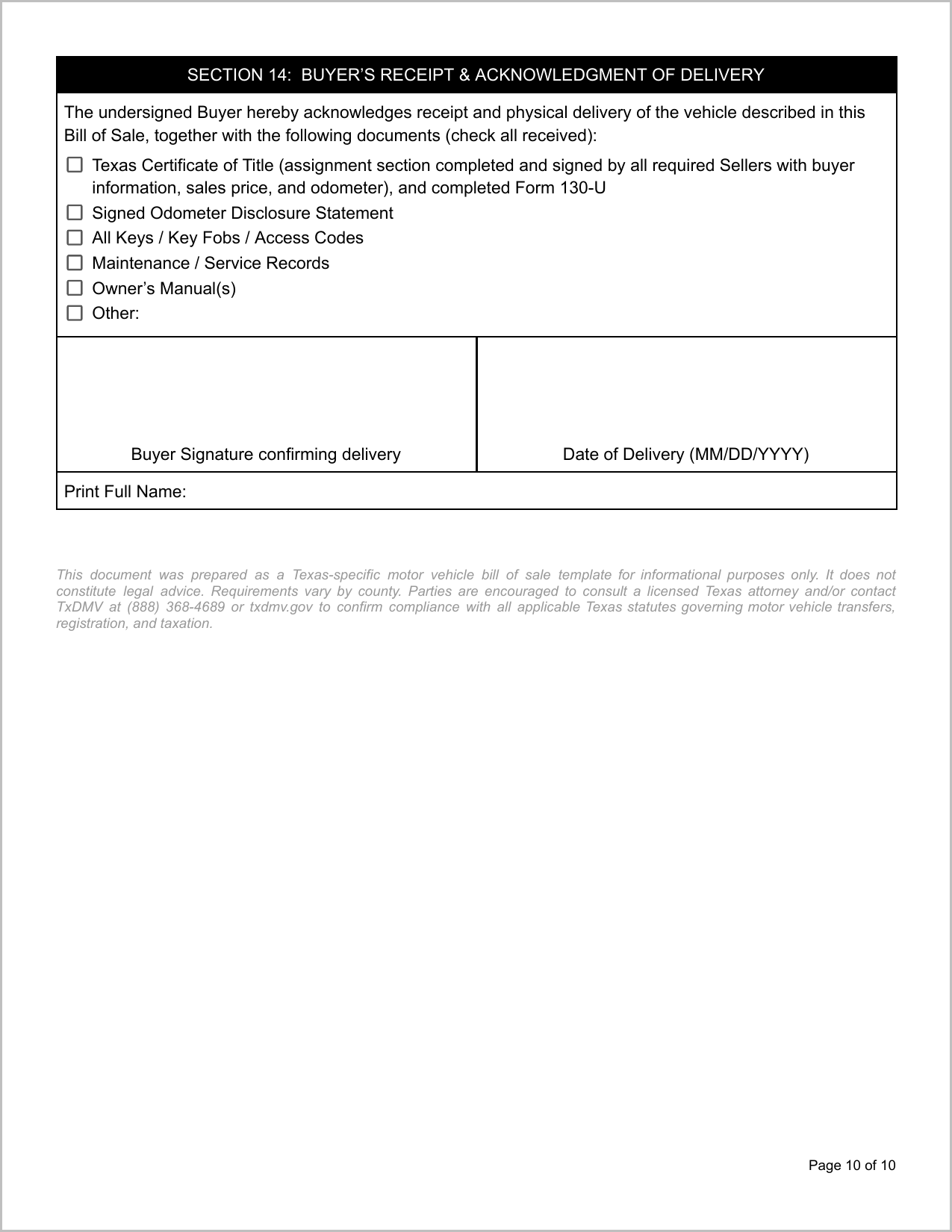
This template opens in Google Docs. Click Use Template to save a copy to your Drive, fill it out digitally, or print and complete by hand.
How to Fill Out the Template
Enter the seller’s name exactly as it appears on the Certificate of Title. Enter the buyer’s name exactly as they want it on the new title.
In Section 3, copy the VIN character by character. Enter the full agreed purchase price in Section 4 — Texas calculates 6.25% motor vehicle sales tax on the greater of this price or the Standard Presumptive Value.
Both parties sign Section 11. The seller should also file a Vehicle Transfer Notification with TxDMV at txdmv.gov after the sale.
For a complete field-by-field walkthrough of every section, see: How to Fill Out a Motor Vehicle Bill of Sale →
How to Transfer a Car Title in Texas
For the Seller
Sign the title assignment on the “Seller” line. Complete the buyer’s name, address, date of sale, and odometer reading on the title. File a Vehicle Transfer Notification at txdmv.gov. You have the option to remove your license plates — Texas plates may be transferred to a vehicle of the same classification.
For the Buyer
Within 30 days of the sale, visit your county tax assessor-collector’s office with the signed title, this bill of sale, completed Form 130-U, odometer disclosure (if required), proof of Texas liability insurance, valid Texas ID, and payment for the 6.25% motor vehicle sales tax and title/registration fees.
Lost Title
Apply for a certified copy of the title (Form VTR-34) at any county tax office or by mail to TxDMV. Contact TxDMV at txdmv.gov or (888) 368-4689.
Frequently Asked Questions
30 days from the date of sale. Failing to transfer the title within 30 days may result in penalty fees and leave the seller responsible for tickets, toll violations, and other incidents associated with the vehicle.
Standard Presumptive Value (SPV) is a percentage of the vehicle’s wholesale value based on similar vehicles sold at auction. Texas motor vehicle sales tax is calculated on the greater of the actual sale price or the SPV. SPV does not apply to vehicles more than 25 years old. Check your vehicle’s SPV at txdmv.gov before finalizing the sale price.
A filing the seller submits to TxDMV at txdmv.gov after the sale to protect against liability. Filing it ensures TxDMV records the sale date and protects the seller from tickets, toll violations, or crimes committed with the vehicle after the sale. It is strongly recommended for all sellers.
No for standard private party sales. Notarization is required for a Gift Transfer Affidavit (Form 14-317) when the vehicle is being gifted. For standard sales, notarization is optional but recommended for high-value transactions.
Effective July 1, 2025, temporary paper tags were replaced with metal license plates issued at the point of sale. Buyers now receive metal plates when completing the title transfer at the county tax office, per House Bill 718.
Yes. Texas does not require a specific state-issued bill of sale form. A signed bill of sale showing the sales price should accompany Form 130-U at the county tax assessor-collector’s office. A signed bill of sale is required for trailers and vehicles 25 years old and older.
This template and all information on this page are provided for informational purposes only and do not constitute legal advice. Contact TxDMV at txdmv.gov or (888) 368-4689, or your county tax assessor-collector’s office to confirm current requirements before completing your transaction.