
Selling or buying a vehicle in Ohio? The seller’s signature on the title must be notarized — and Ohio titles are issued by the county Clerk of Courts, not the state BMV.
This free template is formatted for Ohio’s requirements and works alongside the notarized Certificate of Title at your county Clerk of Courts title office.
Click Get This Template below to open it in Google Docs, then click Use Template to save a copy to your Drive.
For templates for all 50 states, visit the Motor Vehicle Bill of Sale Templates →
On this page:
- What Is an Ohio Motor Vehicle Bill of Sale?
- Is a Bill of Sale Required in Ohio?
- Ohio-Specific Requirements
- Free Ohio Motor Vehicle Bill of Sale Template
- How to Fill Out the Template
- How to Transfer a Car Title in Ohio
- Frequently Asked Questions
What Is an Ohio Motor Vehicle Bill of Sale?
An Ohio motor vehicle bill of sale is a written record of a private vehicle sale.
Ohio titles are issued exclusively by the county Clerk of Courts title office — the Ohio BMV does not issue titles. For private party sales, the purchase price must be listed on the title itself in lieu of a bill of sale; for casual sales the purchase price on the title suffices. A separate bill of sale is recommended for additional documentation.
Is a Bill of Sale Required in Ohio?
For private party (casual) sales, the purchase price listed on the title is sufficient — a separate bill of sale is not always required. However, a bill of sale is required when the purchase price is not on the title, and strongly recommended for all private sales.
Legal transfer of vehicle ownership occurs when both seller and buyer sign the Ohio title — the seller’s signature must be notarized.
Ohio-Specific Requirements
1. 30-Day Deadline
The buyer must apply for a new Ohio title within 30 days of purchase. A $5 late fee applies after 30 days. The title application is submitted to the county Clerk of Courts title office, not the BMV.
2. ⚠️ Notarized Title Required
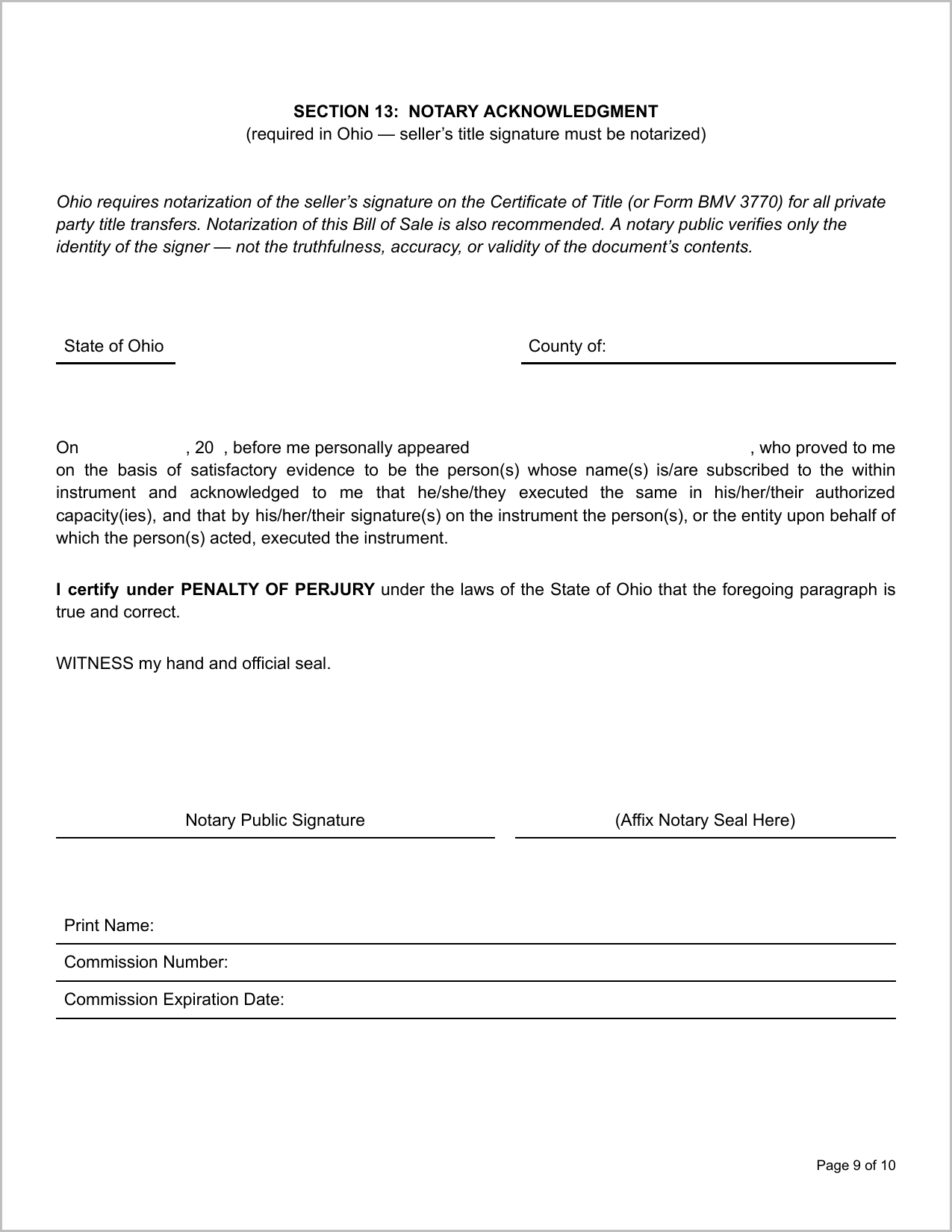
Ohio requires the seller to complete the “assignment of ownership” section on the back of the title and have their signature(s) notarized. Legal transfer occurs when both seller and buyer sign the title before a notary.
Do not pre-sign the title — bring it to the notary unsigned and sign in their presence.
3. Where to Transfer — County Clerk of Courts
Ohio titles are issued by the county Clerk of Courts title office in the buyer’s county of residence. The Ohio BMV does not issue titles. Each of Ohio’s 88 counties has its own Clerk of Courts title office.
4. Sales Tax
Ohio charges sales tax on private vehicle purchases. The rate varies by county. Tax is paid at the Clerk of Courts title office at the time of title transfer. The purchase price on the title or bill of sale is used to calculate the tax.
5. Title Fee: $15
The standard Ohio title transfer fee is $15. Additional registration fees apply. Contact your county Clerk of Courts title office for current fee schedules.
6. Electronic Title Option
If the vehicle has an electronic title on record (no paper title was issued), the seller uses the Application for Certificate of Title to a Motor Vehicle (Form BMV 3774) to complete the transfer rather than a paper title.
7. License Plates
Ohio license plates stay with the seller. Remove your plates before handing over the vehicle. You may transfer them to another vehicle or surrender them to the BMV.
Free Ohio Motor Vehicle Bill of Sale Template
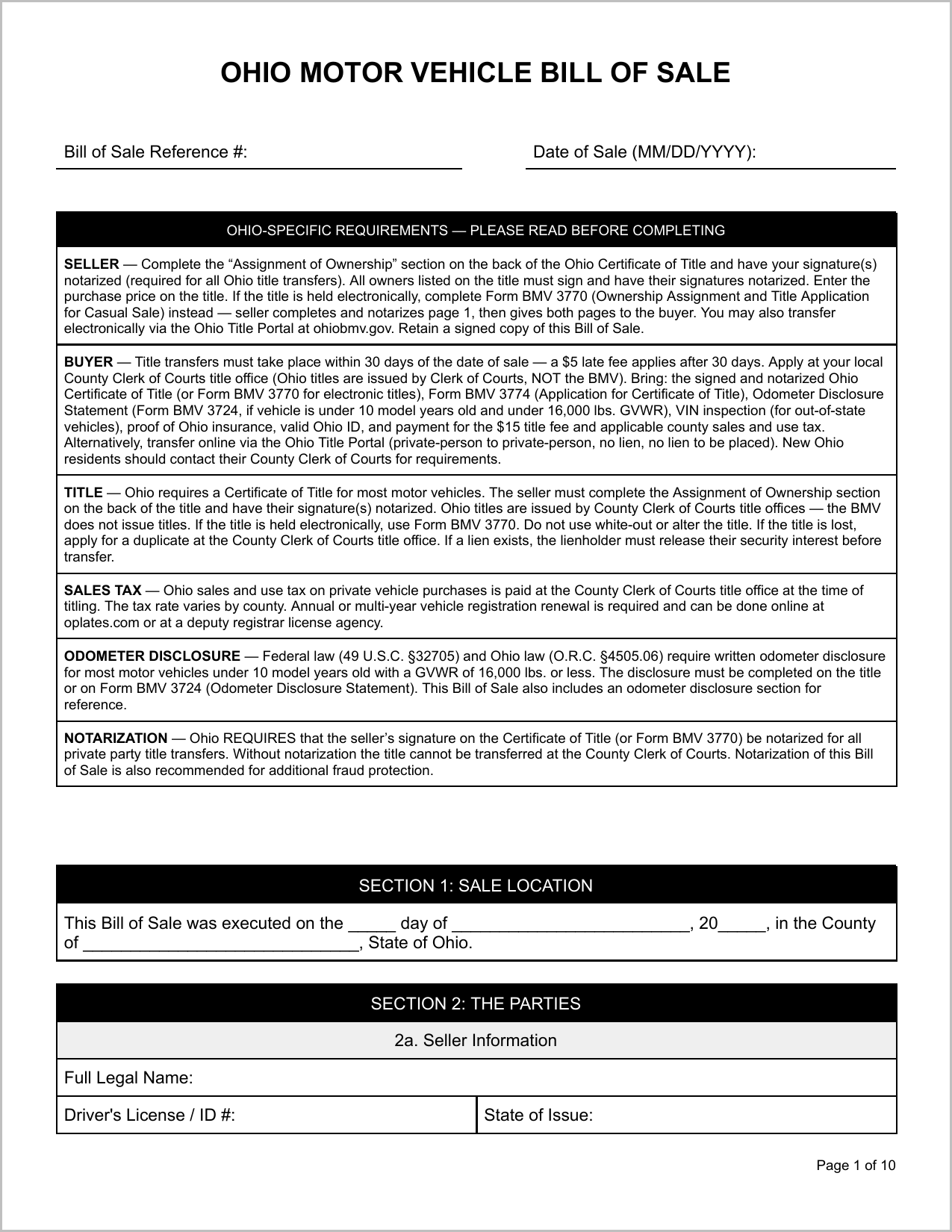
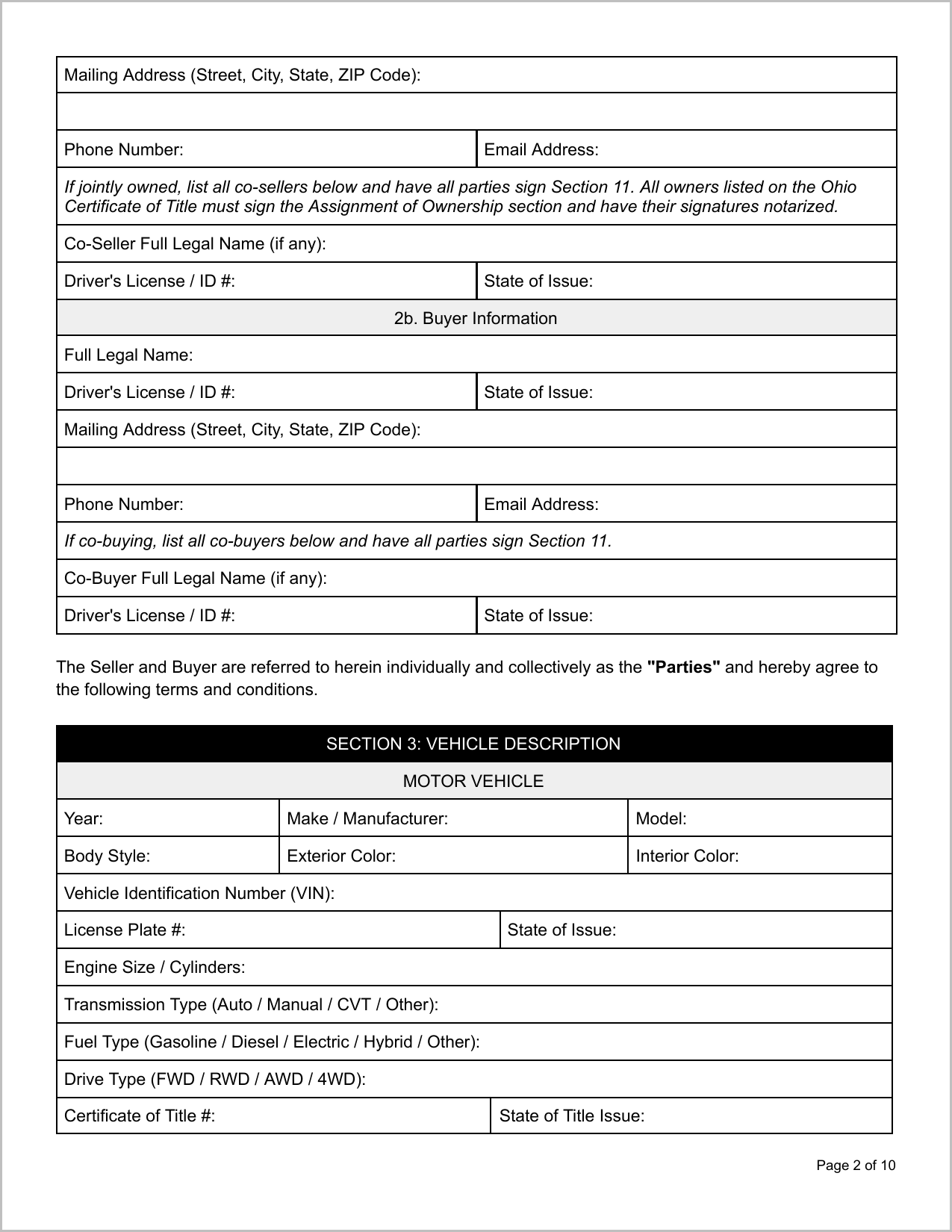
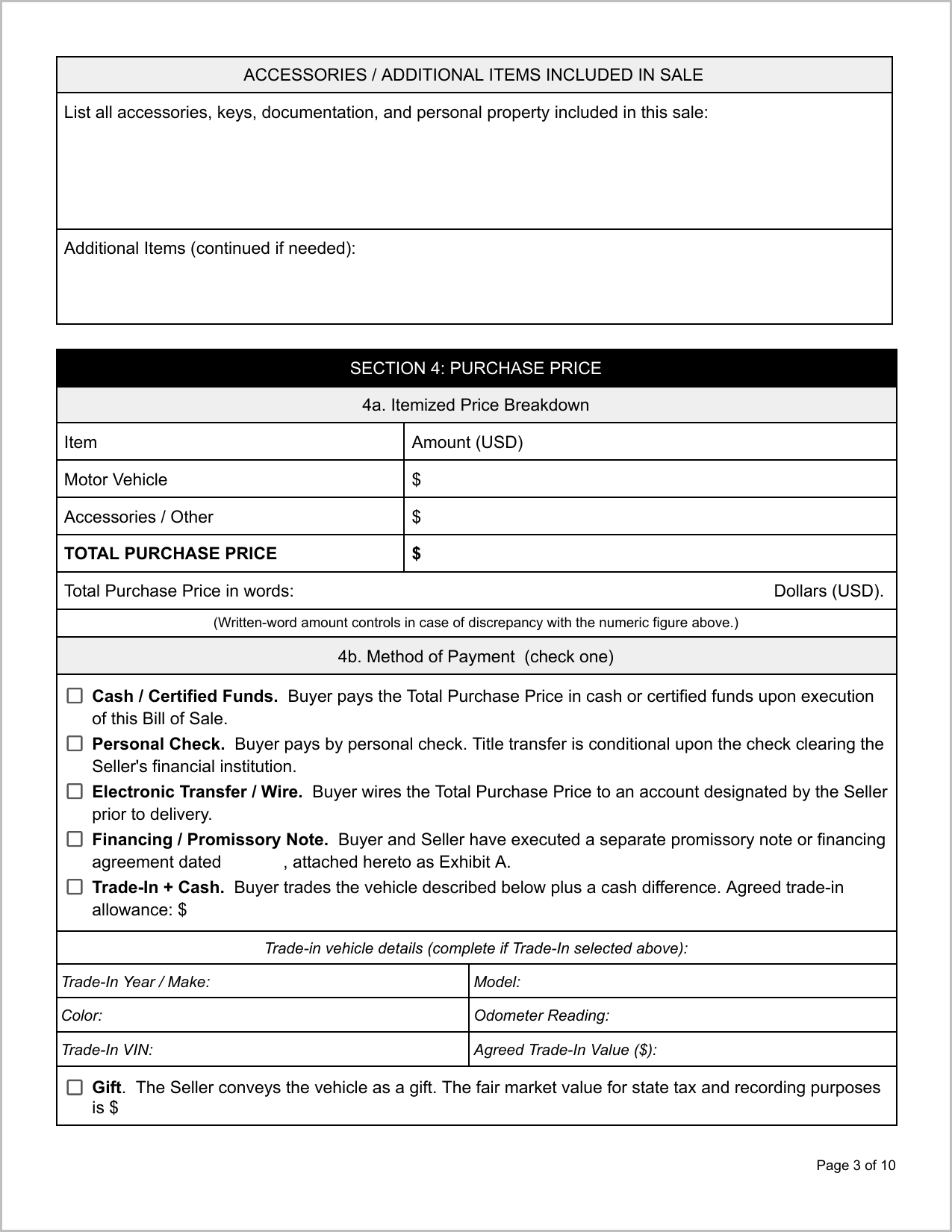
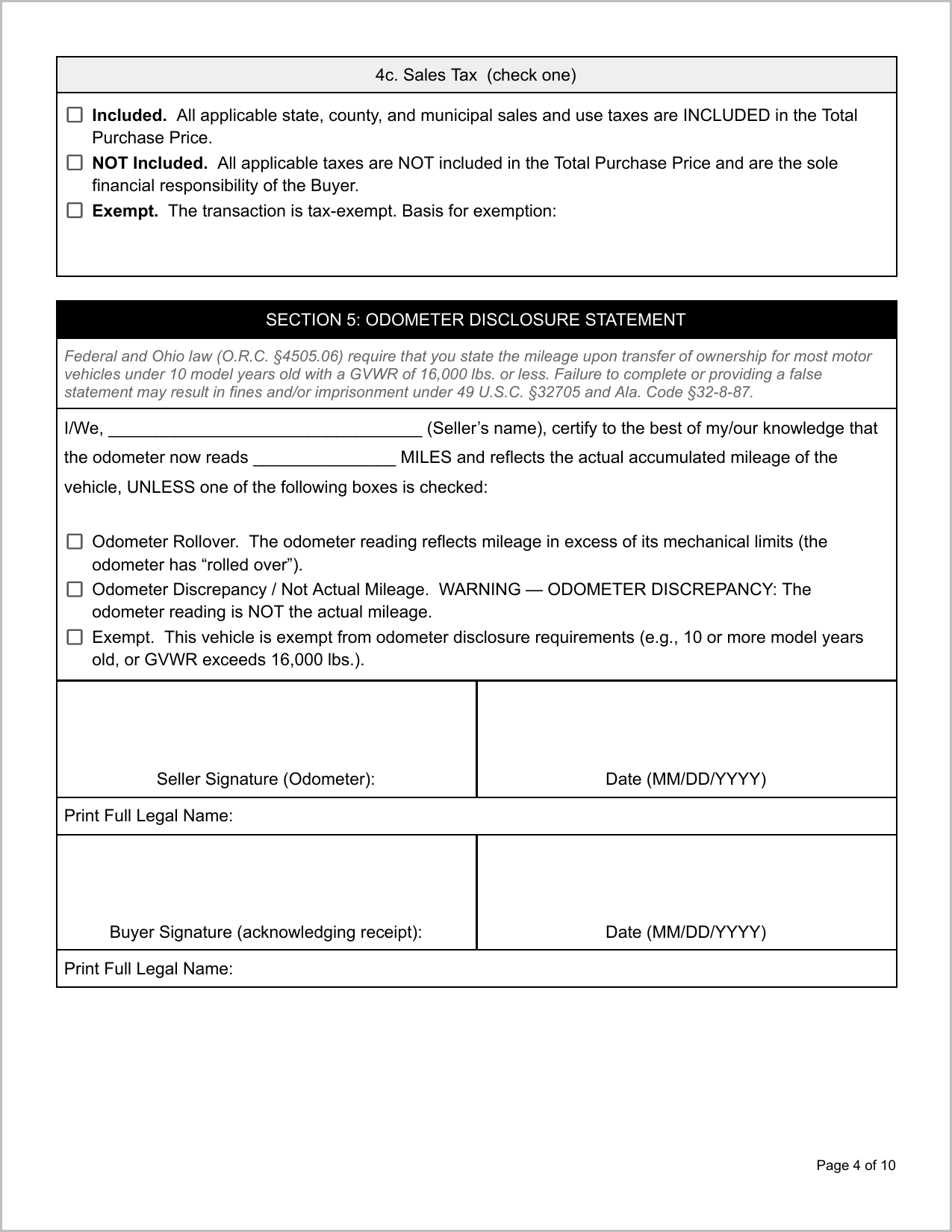
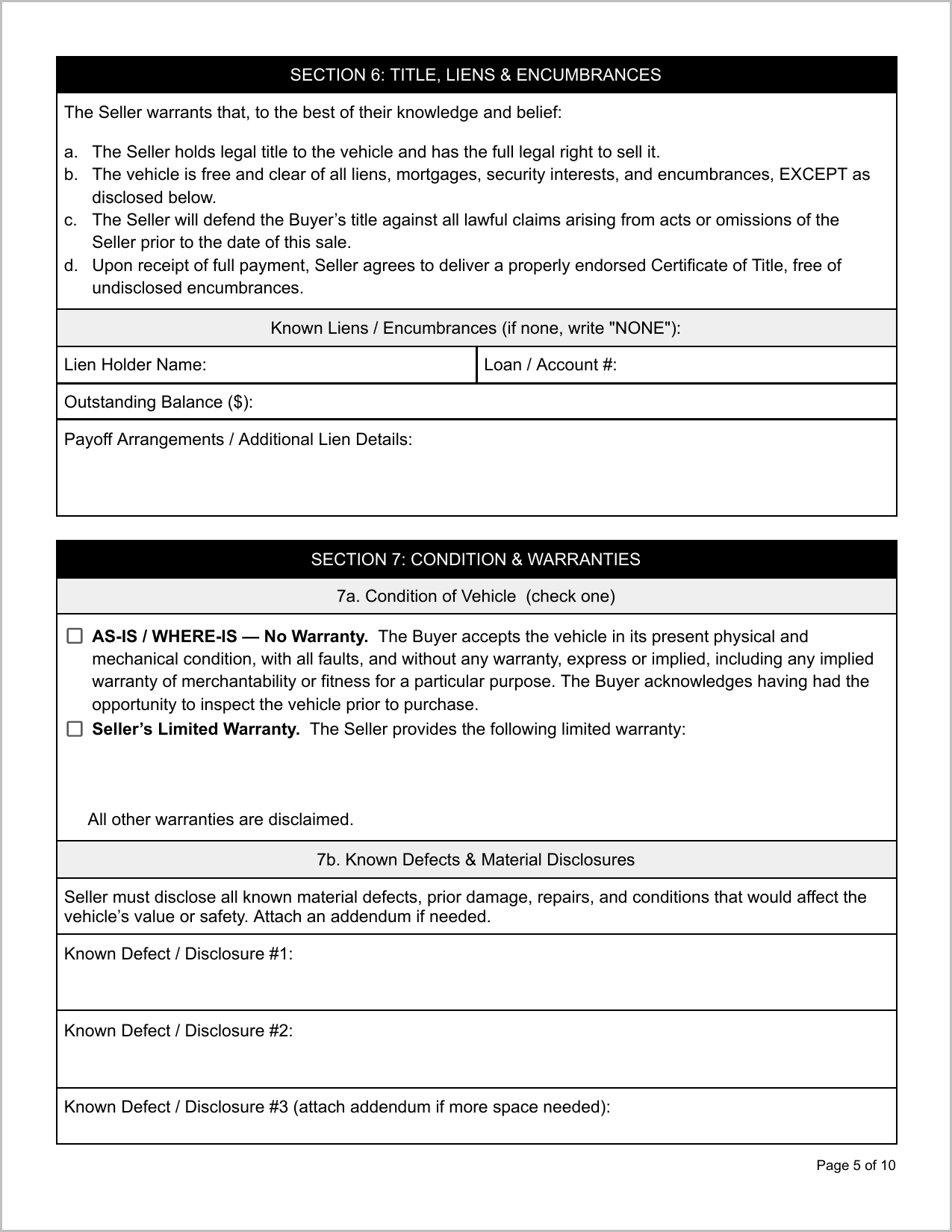
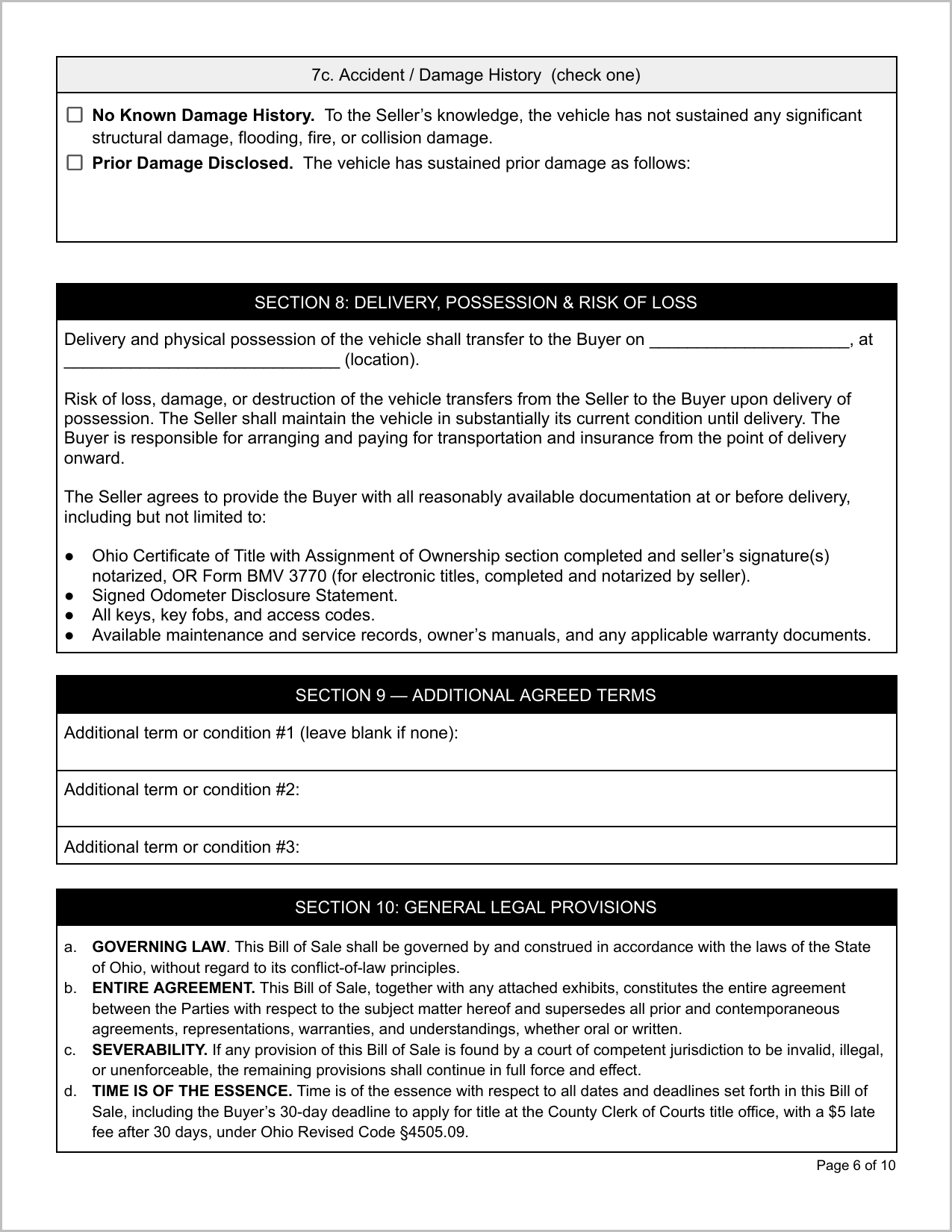
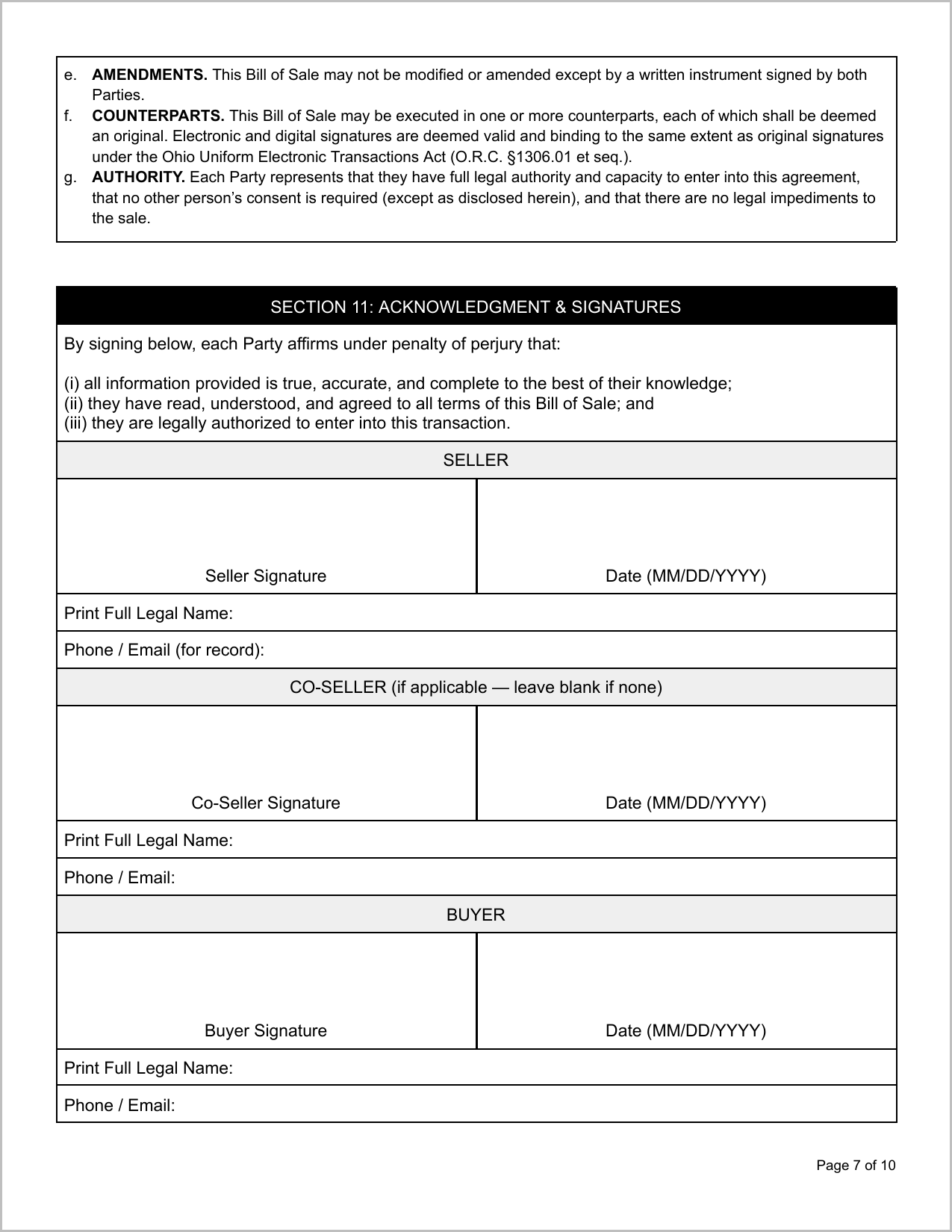
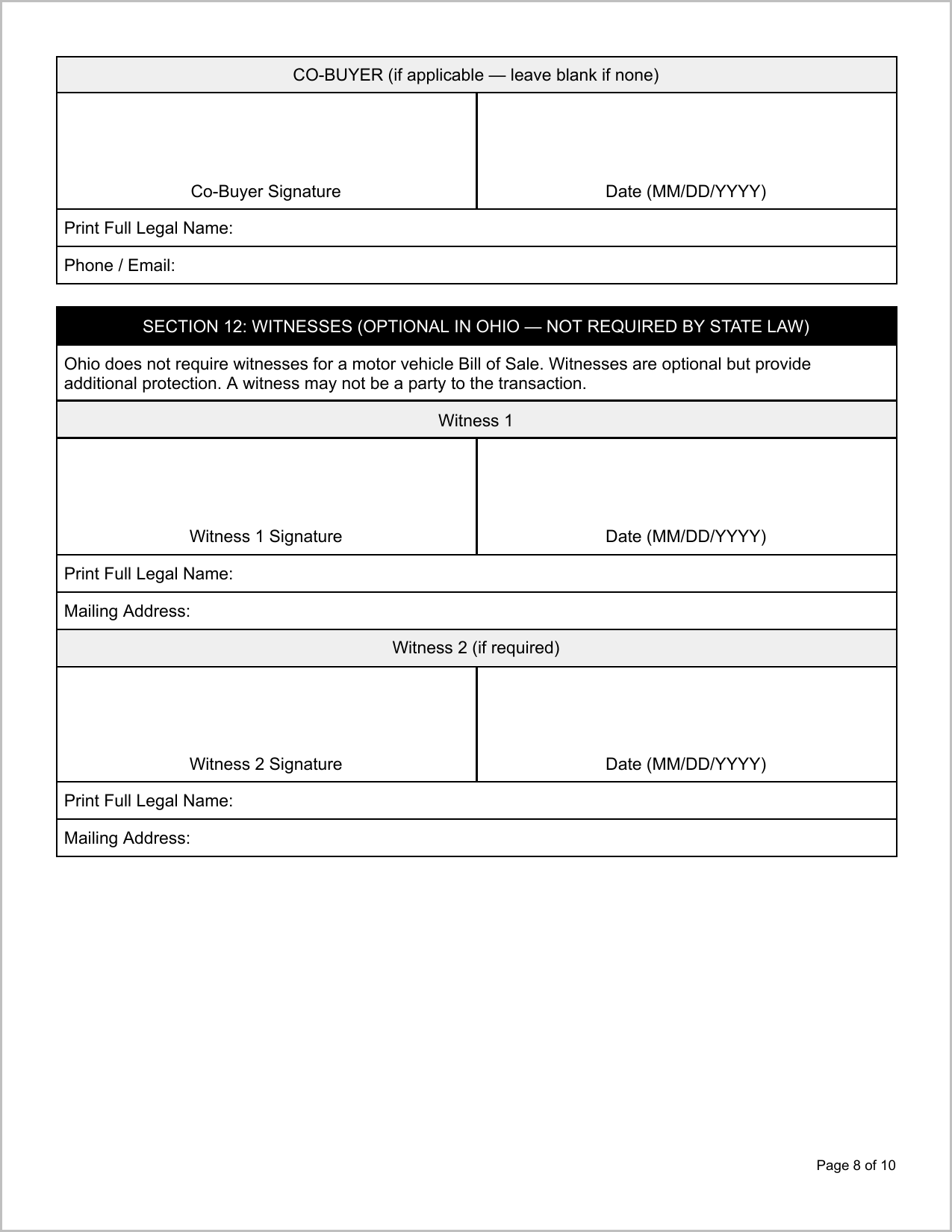
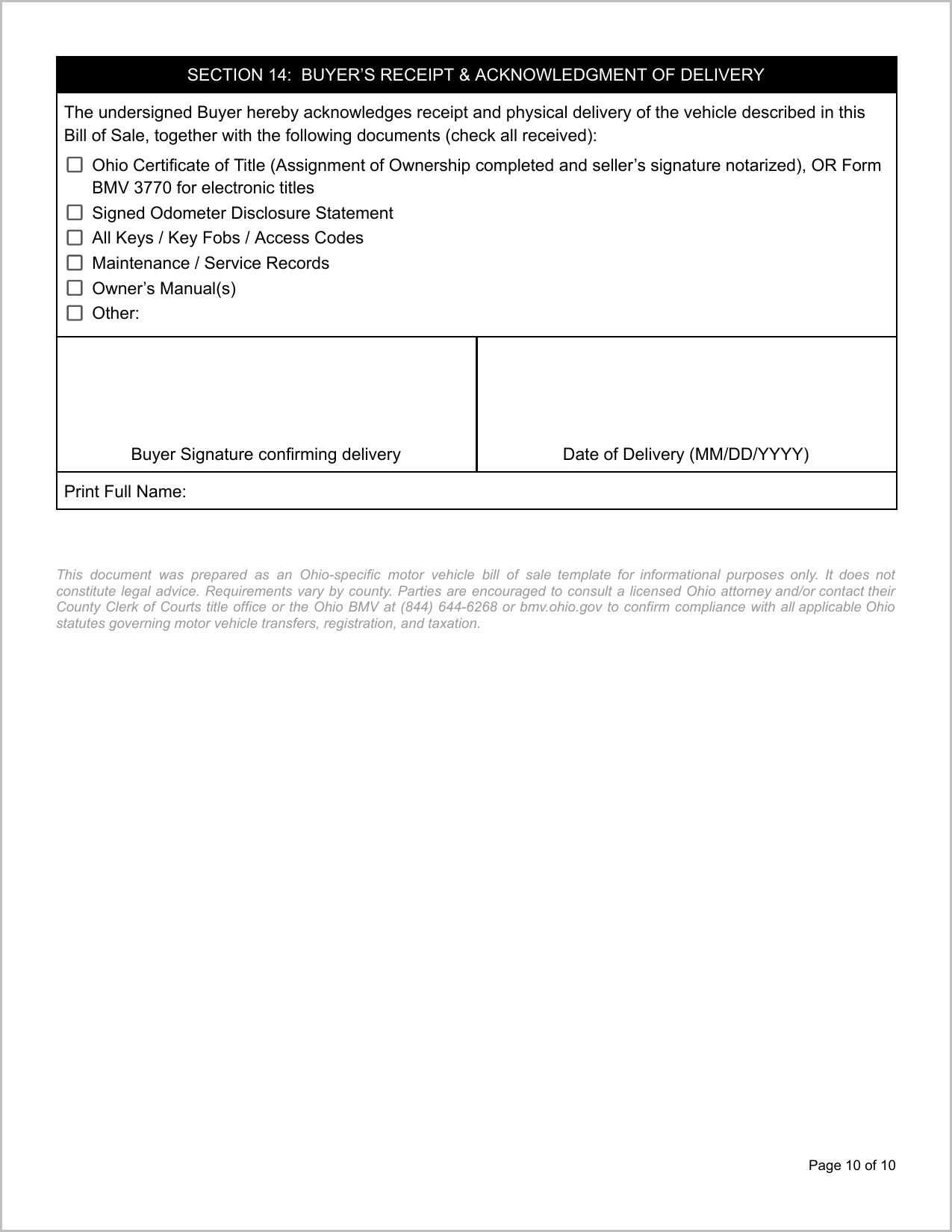
This template opens in Google Docs. Click Use Template to save a copy to your Drive, fill it out digitally, or print and complete by hand.
How to Fill Out the Template
Enter the seller’s name exactly as it appears on the Certificate of Title. Enter the buyer’s name exactly as they want it on the new title.
In Section 3, copy the VIN character by character. Enter the full agreed purchase price in Section 4 — Ohio calculates sales tax on this figure.
Both parties sign Section 11 before a notary. Also complete the assignment of ownership section on the back of the title before the same or a different notary. Do not pre-sign.
For a complete field-by-field walkthrough of every section, see: How to Fill Out a Motor Vehicle Bill of Sale →
How to Transfer a Car Title in Ohio
For the Seller
Complete and notarize the assignment of ownership section on the back of the title. Remove your license plates before handing over the vehicle. Retain a copy of this bill of sale.
For the Buyer
Within 30 days of purchase, visit the county Clerk of Courts title office in your county of residence with the notarized title (or Form BMV 3774 for electronic titles), this bill of sale, Form BMV 3774 (Application for Certificate of Title), odometer disclosure, proof of Ohio insurance, valid Ohio ID, and payment for the $15 title fee and applicable sales tax.
Lost Title
Apply for a duplicate title at the county Clerk of Courts title office before proceeding. Contact the Ohio BMV at bmv.ohio.gov or 614-752-7500.
Frequently Asked Questions
Yes. Ohio requires the seller to complete the assignment of ownership section on the back of the title and have their signature notarized. Legal transfer of ownership occurs when both seller and buyer sign the Ohio title — do not pre-sign the title before visiting the notary.
At your county Clerk of Courts title office — not the Ohio BMV. Ohio titles are issued exclusively by the county Clerk of Courts. The Ohio BMV does not issue titles. There are 88 counties in Ohio, each with their own title office.
30 days from the date of purchase. A $5 late fee applies after 30 days. The title application is submitted to the county Clerk of Courts title office in the buyer’s county of residence.
The standard Ohio title transfer fee is $15. Sales tax on the purchase price is also due at the time of transfer. Tax rates vary by county. Contact your county Clerk of Courts title office for current fee and tax information.
If the vehicle has an electronic title on record, the seller uses Form BMV 3774 (Application for Certificate of Title to a Motor Vehicle) to complete the transfer rather than a paper title. Contact your county Clerk of Courts title office for specific procedures.
Yes. Ohio does not require a specific state-issued bill of sale form. For casual private party sales, the purchase price listed on the title is often sufficient. A separate bill of sale is required when the purchase price is not on the title, and is strongly recommended for all private sales.
This template and all information on this page are provided for informational purposes only and do not constitute legal advice. Contact your county Clerk of Courts title office or the Ohio BMV at bmv.ohio.gov to confirm current requirements before completing your transaction.