
Selling or buying a vehicle in New Hampshire? A bill of sale is required for all vehicle transactions — and all vehicle registrations begin at your local town or city clerk’s office, not the DMV.
This free template is formatted for New Hampshire’s requirements and works alongside the Certificate of Title at your town clerk’s office.
Click Get This Template below to open it in Google Docs, then click Use Template to save a copy to your Drive.
For templates for all 50 states, visit the Motor Vehicle Bill of Sale Templates →
On this page:
- What Is a New Hampshire Motor Vehicle Bill of Sale?
- Is a Bill of Sale Required in New Hampshire?
- New Hampshire-Specific Requirements
- Free New Hampshire Motor Vehicle Bill of Sale Template
- How to Fill Out the Template
- How to Transfer a Car Title in New Hampshire
- Frequently Asked Questions
What Is a New Hampshire Motor Vehicle Bill of Sale?
A New Hampshire motor vehicle bill of sale is a written record of a private vehicle sale.
New Hampshire is a title-required state for vehicles model year 2000 and newer. For vehicles model year 1999 and older, a bill of sale plus prior registration or title documentation is used instead. All registrations in New Hampshire begin at the town or city clerk’s office — not at the state DMV.
Is a Bill of Sale Required in New Hampshire?
Yes. A bill of sale is required for all New Hampshire vehicle transactions. For titled vehicles (model year 2000 and newer), the bill of sale accompanies the signed title at the town clerk’s office. For title-exempt vehicles (1999 and older), the bill of sale is required alongside a prior registration or title document.
Important: a bill of sale by itself does not establish a change in ownership — the title must also be transferred to complete the ownership change.
New Hampshire-Specific Requirements
1. Register at Your Town or City Clerk’s Office
All New Hampshire vehicle registrations begin at the town or city clerk’s office in the buyer’s town of residence. The town clerk prepares the title application and sends it to the NH DMV Title Bureau for processing. The DMV itself only handles some specialized transactions. As of November 2025, all NH DMV locations require appointments.
2. No State Sales Tax
New Hampshire has no state sales tax on vehicle purchases — one of only five states with this benefit. The buyer pays only the registration fees and $35 title fee at the town clerk’s office.
3. Title Fee: $35
The New Hampshire title fee is $35. Registration fees vary based on vehicle weight. The town clerk will calculate total fees at the time of registration.
4. Vehicles 2000 and Newer — Title Required
For model year 2000 and newer vehicles, bring the title (with transfer of ownership completed on the back) and this bill of sale to the town clerk’s office. A VIN verification may be required for some transactions.
5. Vehicles 1999 and Older — Title Exempt
Vehicles with a model year of 1999 or older are not titled in New Hampshire. For these, bring this bill of sale plus either a current or expired NH registration, a valid NH or out-of-state title (or copy), or a completed VIN Verification Form (TDMV 19A). For non-titled vehicles, use Form TDMV 22A (Report of Sale or Transfer of a Non Titled Motor Vehicle) as the bill of sale.
6. Seller: Notify the State
The last registered owner remains liable for vehicle abandonment costs until ownership is officially transferred. Notify the state of the sale by ensuring the buyer applies for a new title or registration, or by contacting the NH DMV directly.
7. Notarization
New Hampshire does not require notarization for a standard private party vehicle bill of sale. Notarization is optional but recommended for high-value sales.
Free New Hampshire Motor Vehicle Bill of Sale Template
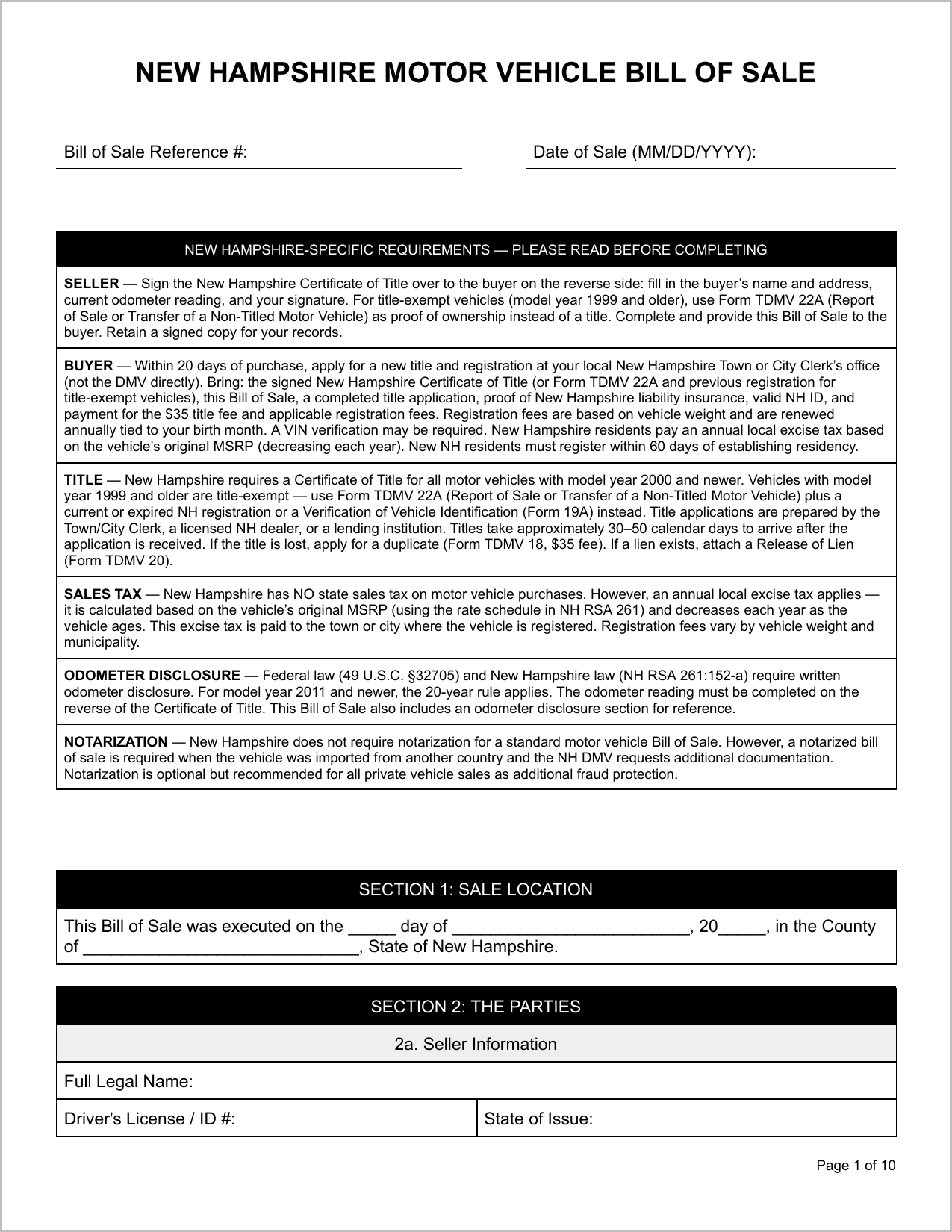
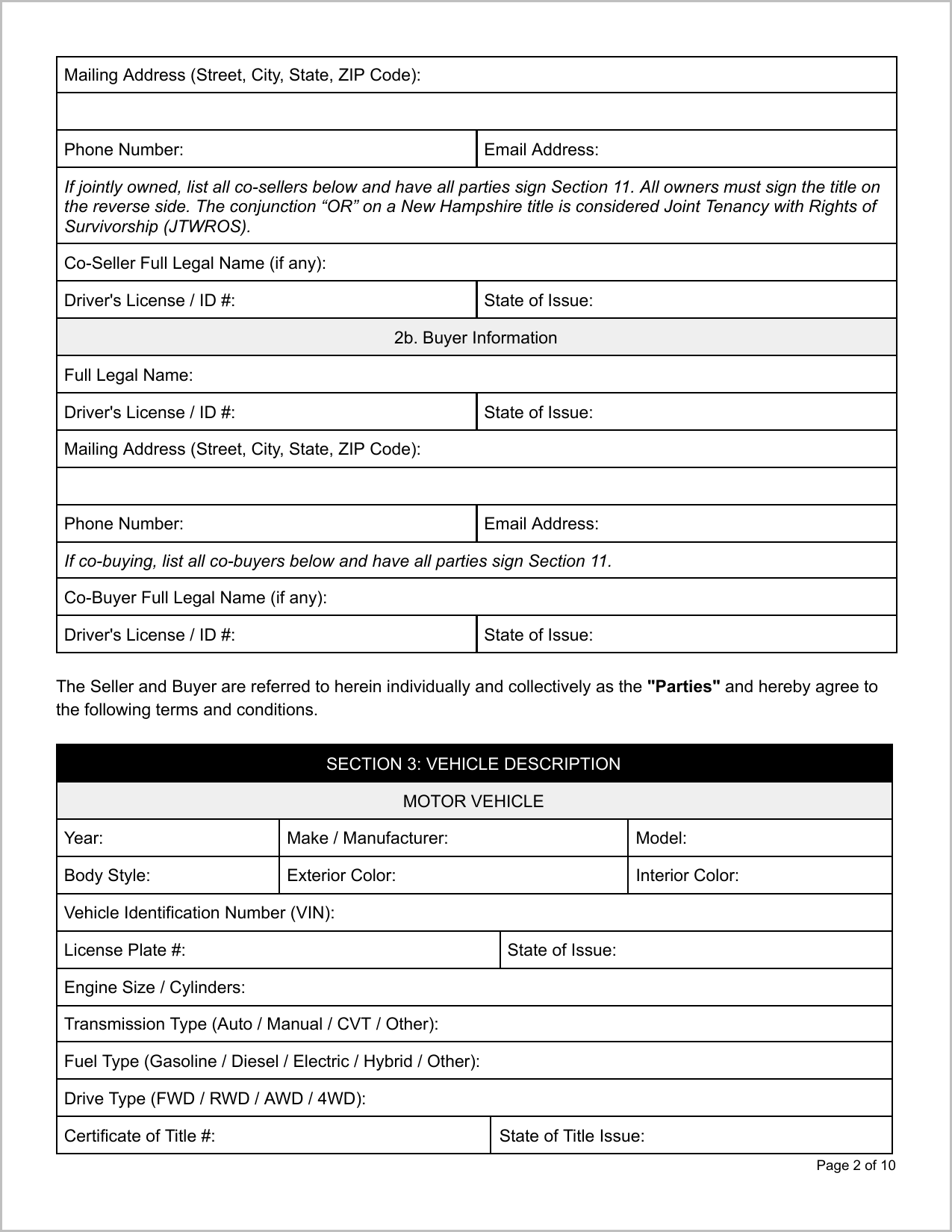
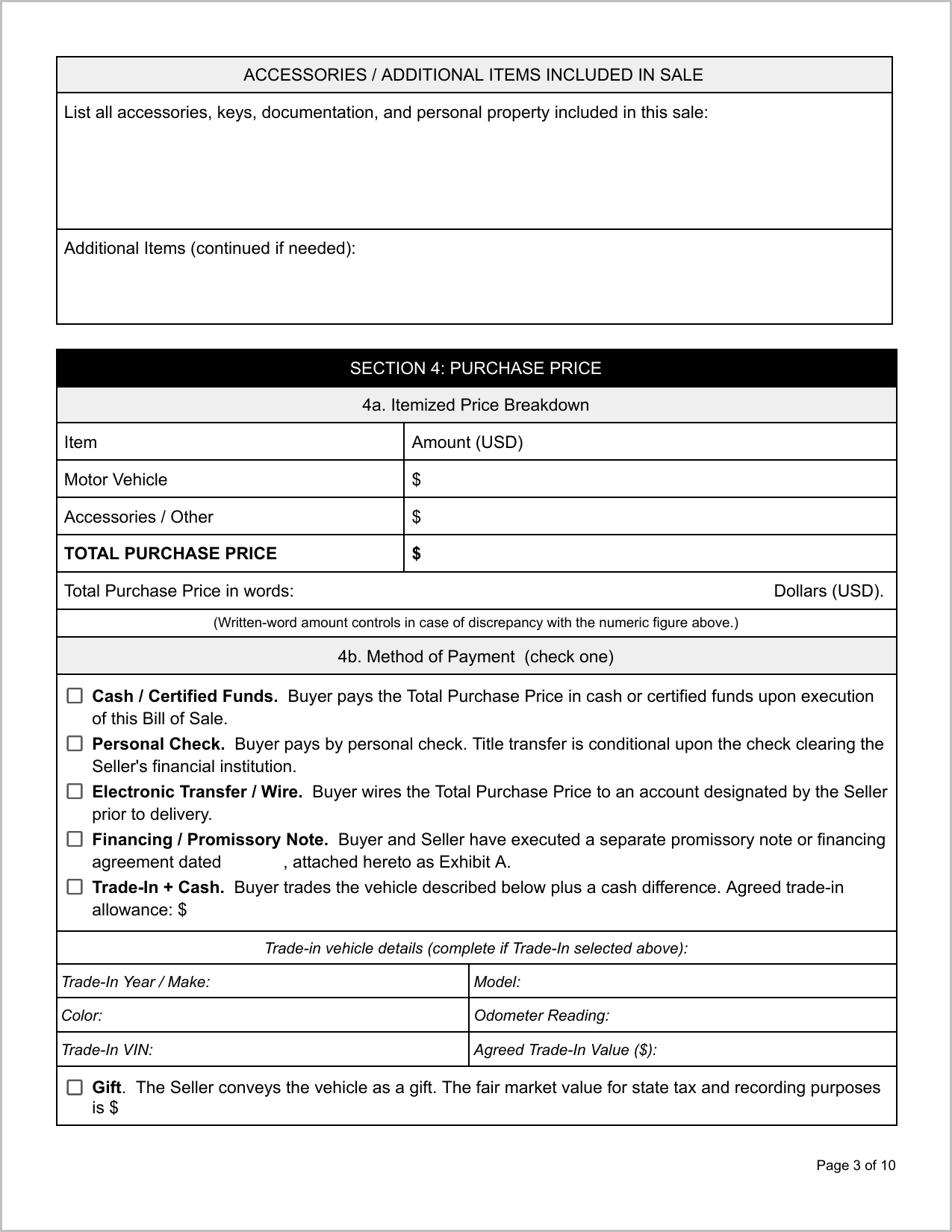
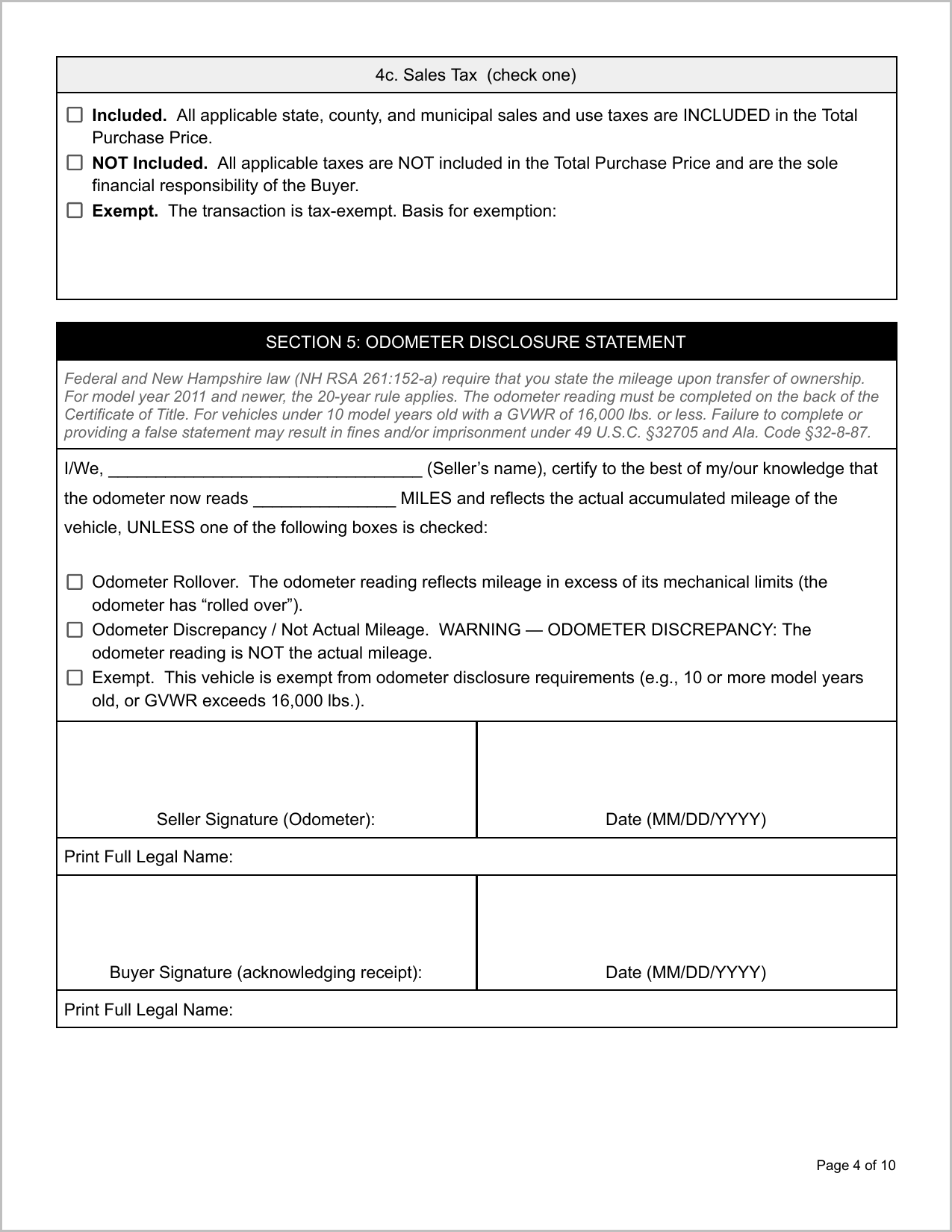
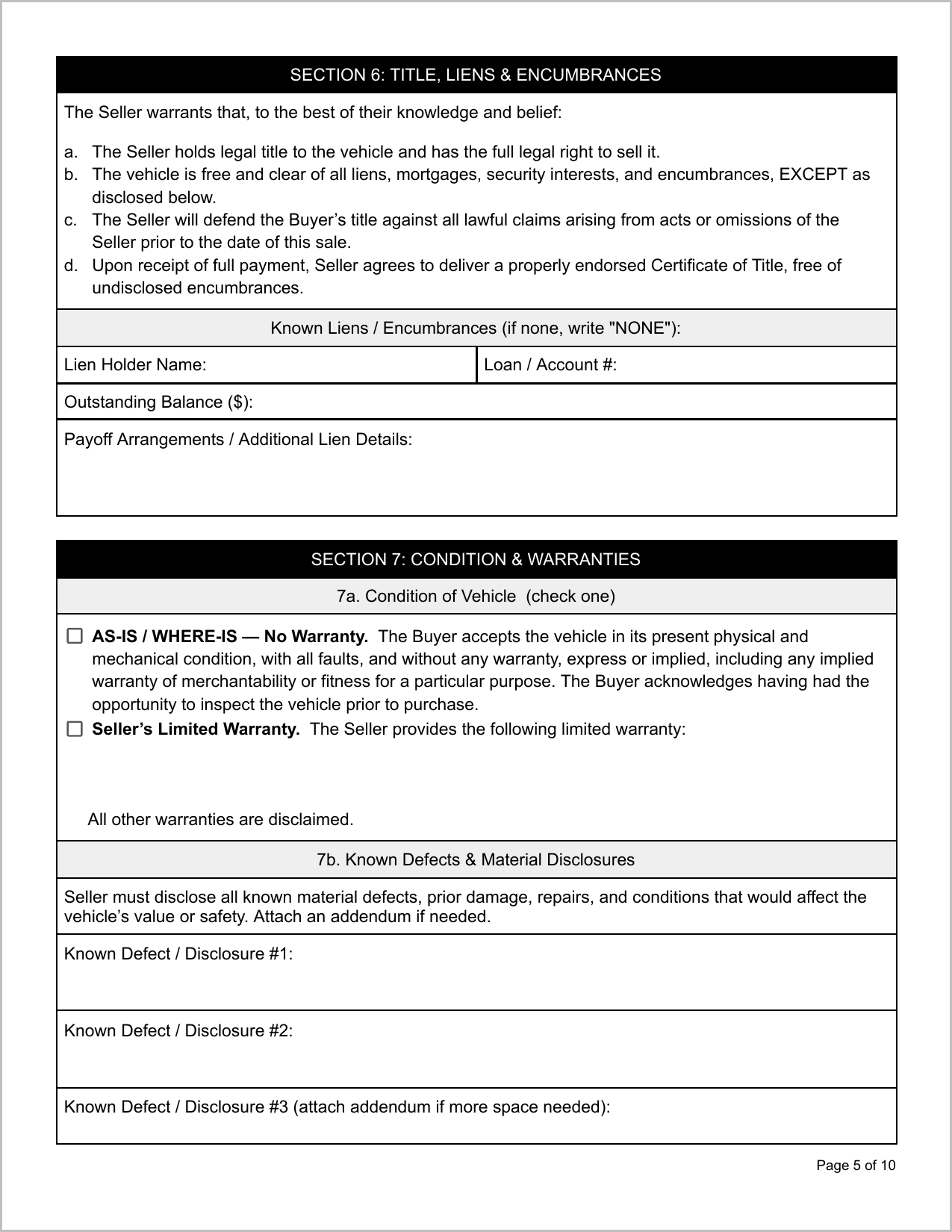
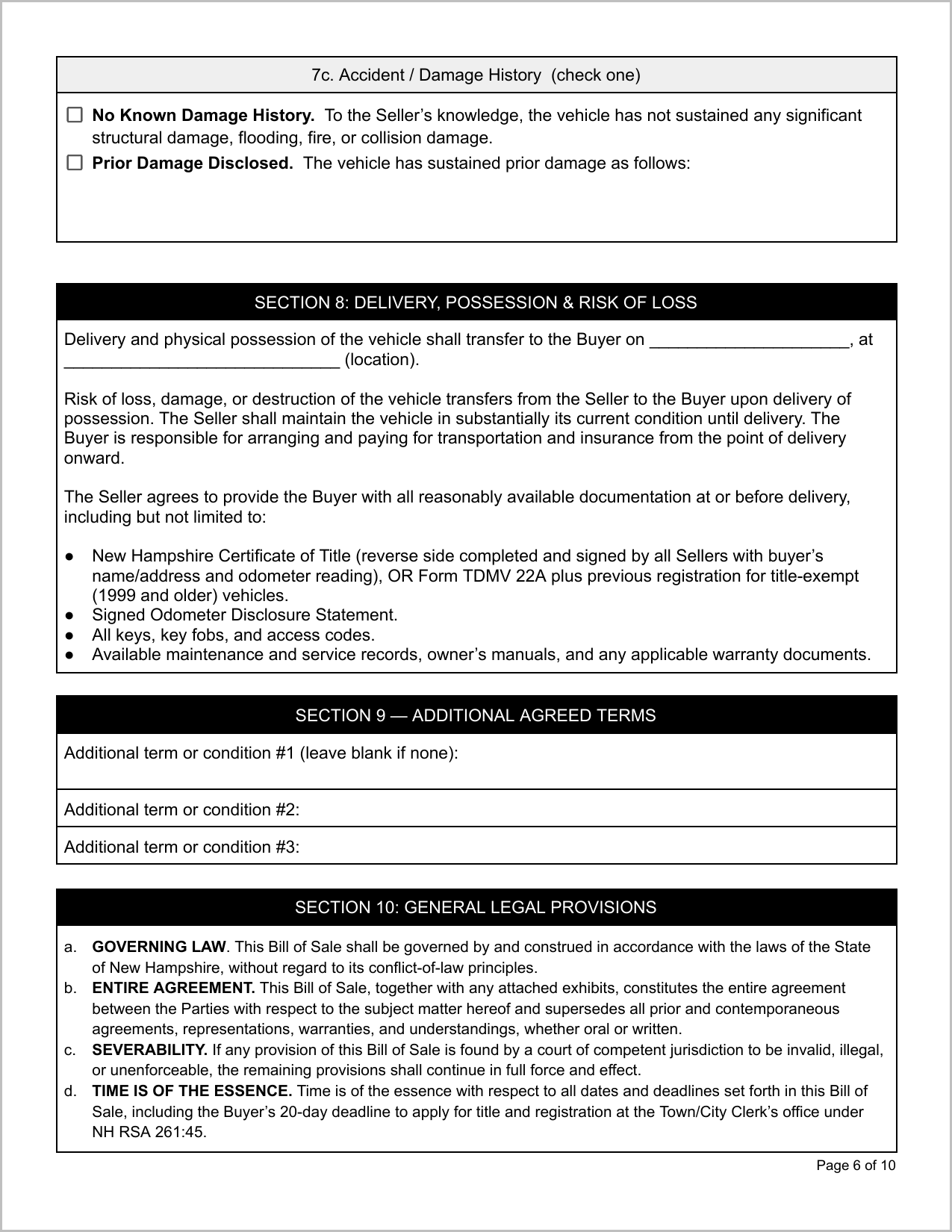
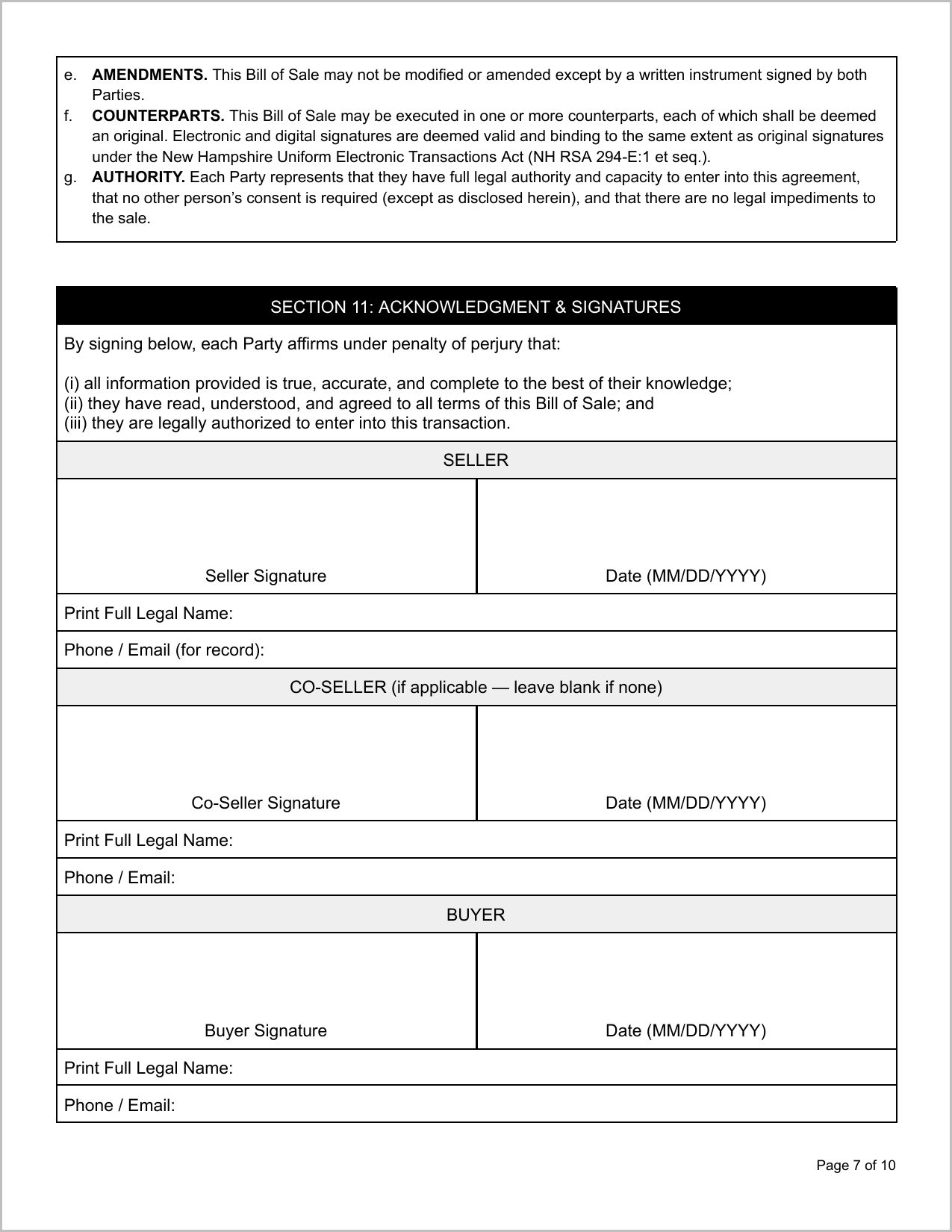
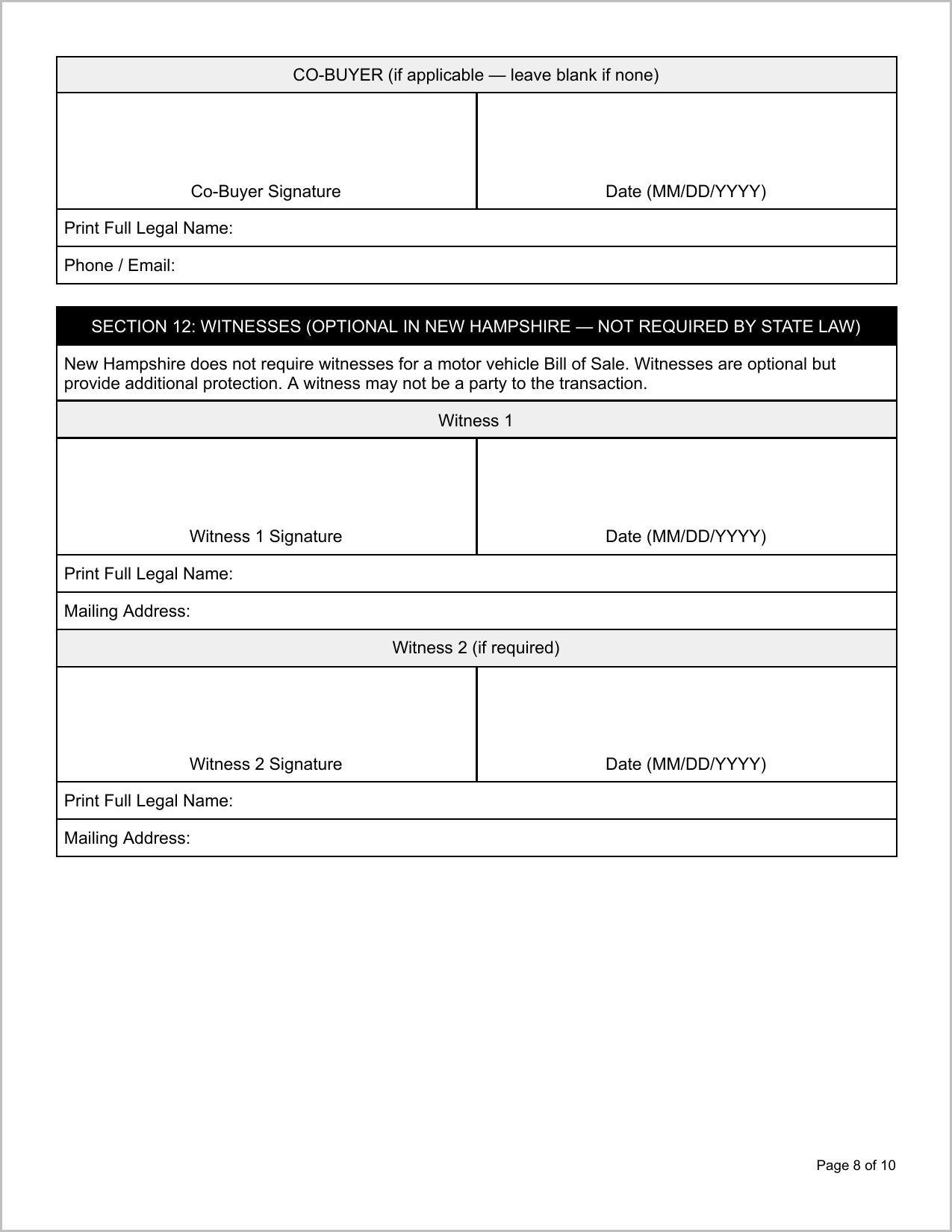
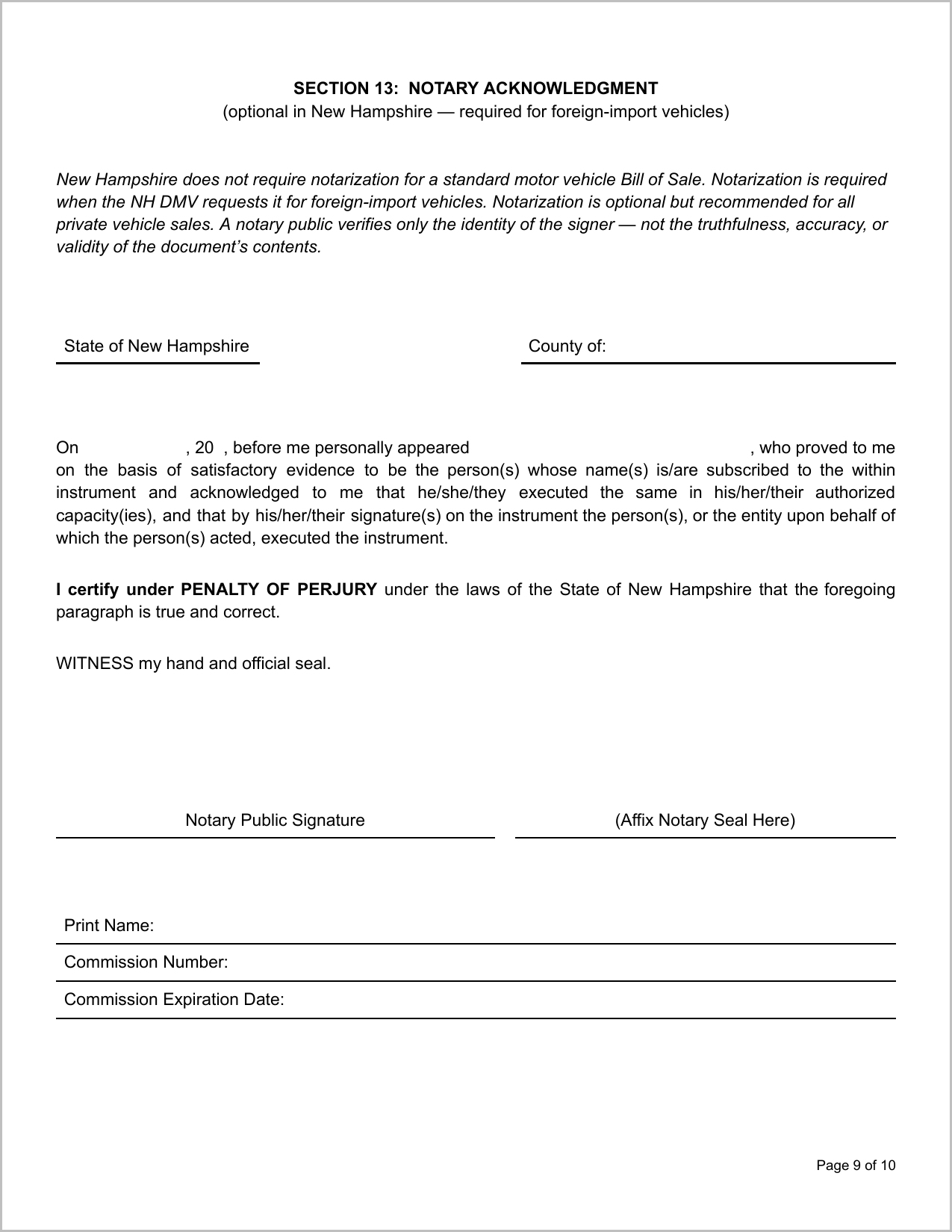
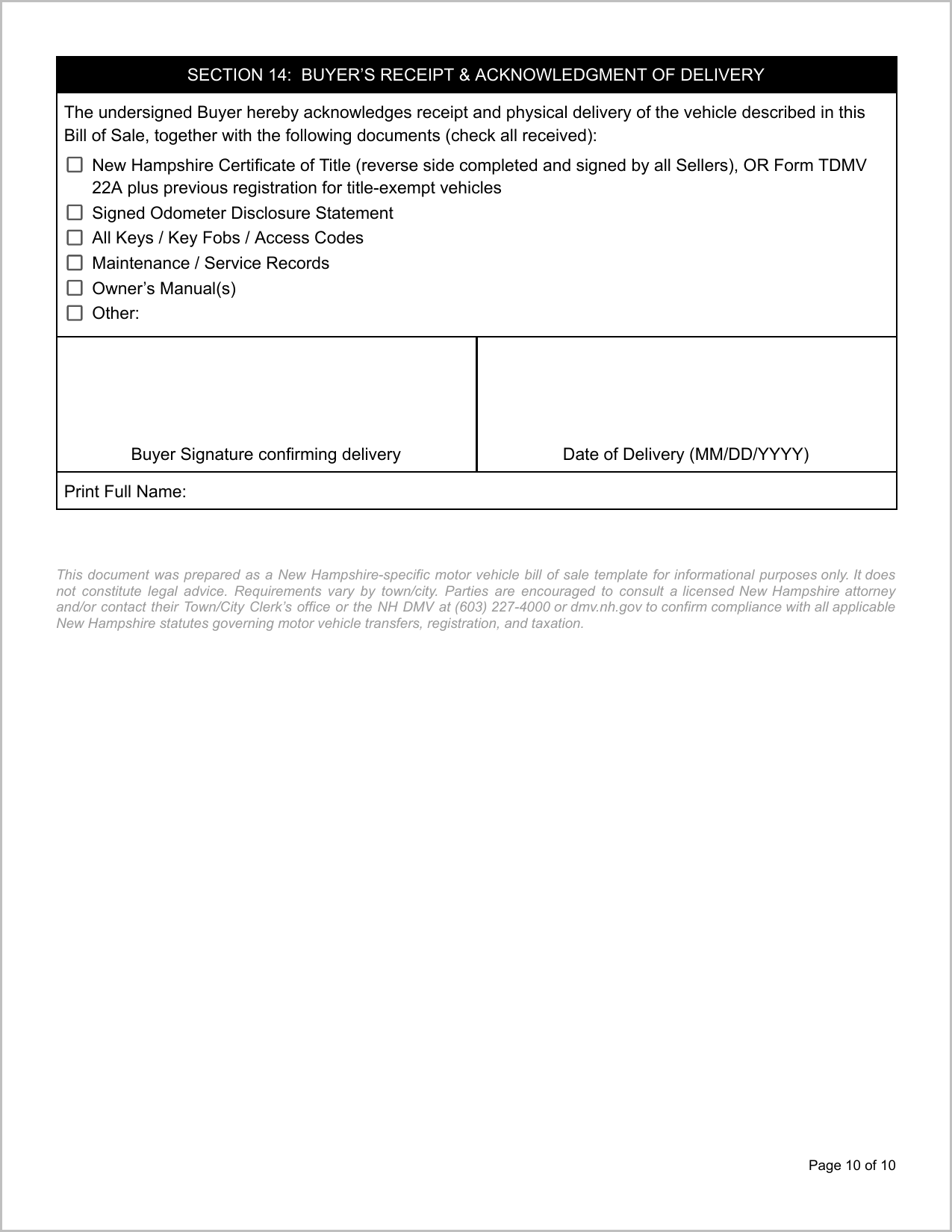
This template opens in Google Docs. Click Use Template to save a copy to your Drive, fill it out digitally, or print and complete by hand.
How to Fill Out the Template
Enter the seller’s name exactly as it appears on the Certificate of Title. Enter the buyer’s name and address exactly as they want it on the new title and registration.
In Section 3, copy the VIN character by character from the dashboard plate and the title. Enter the full agreed purchase price in Section 4 — New Hampshire has no sales tax, but the price is still required for the record.
Both parties sign Section 11. The seller also completes the transfer of ownership section on the back of the title.
For a complete field-by-field walkthrough of every section, see: How to Fill Out a Motor Vehicle Bill of Sale →
How to Transfer a Car Title in New Hampshire
For the Seller
Complete the transfer of ownership section on the back of the title — including the buyer’s name, buyer’s address, and current odometer reading. Provide the buyer with the signed title and this bill of sale. Keep a copy of both.
For the Buyer
Visit your town or city clerk’s office with the signed title, this bill of sale, proof of NH insurance, valid NH driver’s license or ID, and payment for the $35 title fee and registration fees. The town clerk will prepare the title application and forward it to the NH DMV Title Bureau.
Lost Title
Apply for a duplicate title through the NH DMV before proceeding. Contact the NH Division of Motor Vehicles at dmv.nh.gov or your town clerk’s office.
Frequently Asked Questions
No. New Hampshire has no state sales tax on vehicle purchases. The buyer pays only the $35 title fee and applicable registration fees at the town or city clerk’s office.
At your local town or city clerk’s office — not the state DMV. All New Hampshire vehicle registrations begin at the town clerk. The town clerk prepares the title application and forwards it to the NH DMV Title Bureau. As of November 2025, all NH DMV locations require appointments for specialized transactions.
No. Vehicles with a model year of 1999 or older are not titled in New Hampshire. For these vehicles, bring a bill of sale plus either a current or expired NH registration, a valid NH or out-of-state title (or copy), or a completed VIN Verification Form (TDMV 19A) to the town clerk.
No. A bill of sale alone does not establish a change in ownership in New Hampshire. The title must also be transferred — the bill of sale supports the title transfer but does not replace it.
No. New Hampshire does not require notarization for a standard private party vehicle bill of sale. Notarization is optional but recommended for high-value sales.
Yes. New Hampshire does not require a specific state-issued form for titled vehicles. Any bill of sale with the required information — buyer and seller names and addresses, vehicle description, VIN, odometer reading, purchase price, date of sale, and signatures — is acceptable alongside the signed title.
This template and all information on this page are provided for informational purposes only and do not constitute legal advice. Contact your local town or city clerk’s office or the NH Division of Motor Vehicles at dmv.nh.gov to confirm current requirements before completing your transaction.